Search
Invitrogen
MIER3 Polyclonal Antibody
{{$productOrderCtrl.translations['antibody.pdp.commerceCard.promotion.promotions']}}
{{$productOrderCtrl.translations['antibody.pdp.commerceCard.promotion.promocode']}}: {{promo.promoCode}} {{promo.promoTitle}} {{promo.promoDescription}}. {{$productOrderCtrl.translations['antibody.pdp.commerceCard.promotion.learnmore']}}
{{$ctrl.translations['antibody.pdp.skuNotes.additionalInformation']}}:
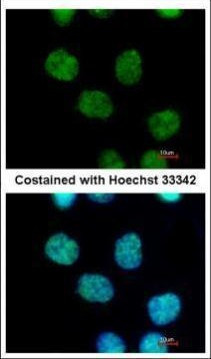
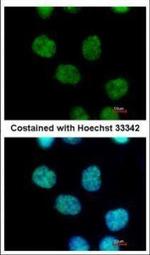
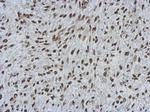
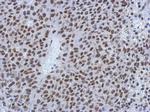
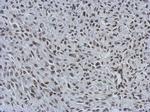
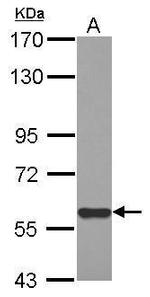
Please note: We are reviewing Western blot images included in the antibody testing data in our catalog, including those provided by third parties. Unless expressly labeled or annotated as “raw-unedited”, Western blot images included in the antibody testing data in our catalog may have been edited, optimized or otherwise adjusted for presentation.


产品信息
PA5-31879
应用
建议稀释比
已发表文章
产品规格
种属反应
Human,
Mouse,
Rat
已发表种属
Human
宿主/亚型
Rabbit
/ IgG
分类
Polyclonal
类型
Antibody
抗原
Recombinant protein encompassing a sequence within the center region of human MIER3. The exact sequence is proprietary.
偶联物
Unconjugated
Unconjugated
Unconjugated
形式
Liquid
浓度
0.58 mg/mL
规格
58 µg
纯化类型
Antigen affinity chromatography
保存液
0.1M tris glycine, pH 7, with 20% glycerol
内含物
0.01% thimerosal
保存条件
Store at 4°C short term. For long term storage, store at -20°C, avoiding freeze/thaw cycles.
运输条件
Ambient (domestic); Wet ice (international)
RRID
产品详细信息
Recommended positive controls: A431.
Predicted reactivity: Mouse (93%), Rat (93%), Chimpanzee (99%), Bovine (98%).
Store product as a concentrated solution. Centrifuge briefly prior to opening the vial.
靶标信息
MIER3, known as Mesoderm Induction Early Response 1, Family Member 3, is a gene associated with epithelial-mesenchymal transition (EMT) processes particularly in cancer research. The gene is located on chromosome 7 and has been identified in studies as playing a crucial role in the progression of colorectal and breast cancers. Structurally, MIER3 is involved in chromatin remodeling and histone acetylation, functioning together with HDAC1/2 and Snail proteins. Its expression profile has been characterized using bioinformatics, real-time PCR, and Western blotting, indicating that MIER3 interacts closely with cellular mechanisms that modulate gene expression and cellular differentiation. The gene's role in cancer has been explored through its capacity to induce EMT, which affects tumor metastasis and cell migration, highlighting its potential as a therapeutic target in oncology.
⚠WARNING: This product can expose you to chemicals including mercury, which is known to the State of California to cause birth defects or other reproductive harm. For more information go to www.P65Warnings.ca.gov.
仅用于科研。不用于诊断过程。未经明确授权不得转售。
生物信息学
蛋白别名: mesoderm induction early response 1, family member 3; mi-er3; unnamed protein product
基因别名: 5730509D14; D130064H19Rik; RGD1311241
UniProt ID: (Human) Q7Z3K6, (Mouse) Q3UHF3
Entrez Gene ID: (Human) 166968, (Mouse) 218613, (Rat) 310086
Disclaimer

Clicking the images or links will redirect you to a website hosted by BenchSci that provides third-party scientific content. Neither the content nor the BenchSci technology and processes for selection have been evaluated by us; we are providing them as-is and without warranty of any kind, including for use or application of the Thermo Fisher Scientific products presented.

