Search
Invitrogen
Nectin 4 Polyclonal Antibody
{{$productOrderCtrl.translations['antibody.pdp.commerceCard.promotion.promotions']}}
{{$productOrderCtrl.translations['antibody.pdp.commerceCard.promotion.viewpromo']}}
{{$productOrderCtrl.translations['antibody.pdp.commerceCard.promotion.promocode']}}: {{promo.promoCode}} {{promo.promoTitle}} {{promo.promoDescription}}. {{$productOrderCtrl.translations['antibody.pdp.commerceCard.promotion.learnmore']}}
Additional Information:
{{banner.description}}
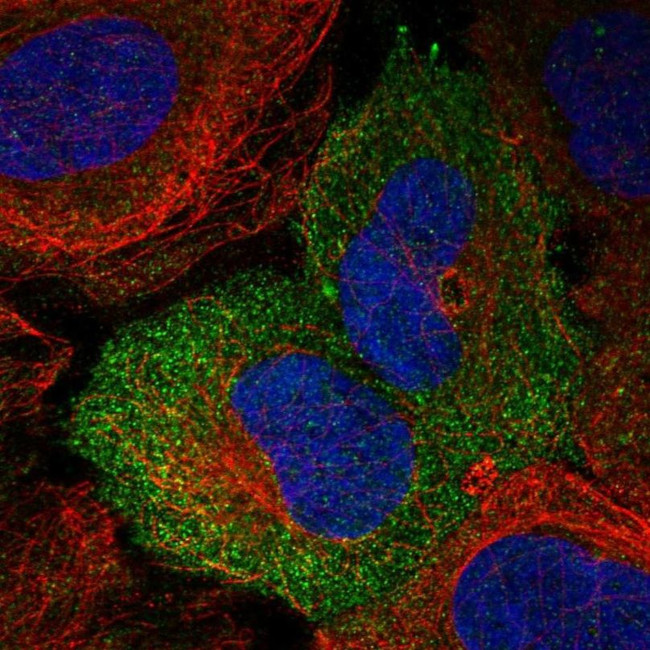
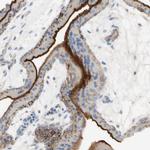
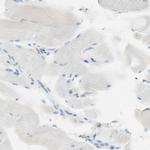
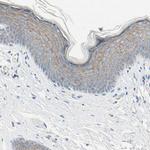
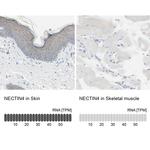


产品信息
PA5-52738
产品规格
宿主/亚型
Rabbit
/ IgG
分类
Polyclonal
类型
Antibody
抗原
Recombinant protein corresponding to Human Nectin 4
偶联物
Unconjugated
Unconjugated
Unconjugated
形式
Liquid
浓度
0.1 mg/mL
规格
10 µg
保存条件
Store at 4°C short term. For long term storage, store at -20°C, avoiding freeze/thaw cycles.
运输条件
Wet ice
RRID
产品详细信息
Immunogen sequence: KLPCFYRGDS GEQVGQVAWA RVDAGEGAQE LALLHSKYGL HVSPAYEGRV EQPPPPRNPL DGSVLLRNAV QADEGEYECR VSTFPAGSFQ ARLRLRVLVP PLPSLNPGPA L
Highest antigen sequence identity to the following orthologs: Mouse - 90%, Rat - 90%.
靶标信息
Nectin 4 (PVRL4) is a gene located on chromosome 1q23.3 that encodes a member of the nectin family of cellular adhesion molecules. These proteins are primarily involved in forming adherens junctions between epithelial cells, contributing to tissue integrity and maintenance in various tissues, including the skin, lungs, and mammary glands. Nectin 4 is highly expressed during embryonic development and is crucial for processes like tissue morphogenesis and repair. It acts as a ligand for the poliovirus receptor-related family and participates in cell signaling pathways that influence cell proliferation and survival. In the context of cancer, Nectin 4 is often upregulated, particularly in breast, ovarian, and lung cancers, where its expression is associated with tumor progression, metastasis, and poor prognosis. This makes Nectin 4 a potential target for therapeutic interventions and a candidate biomarker for cancer diagnosis and monitoring.
仅用于科研。不用于诊断过程。未经明确授权不得转售。
篇参考文献 (0)
您是否在文献中引用过该产品?请点击下方按钮邮件告知我们。
Disclaimer

Clicking the images or links will redirect you to a website hosted by BenchSci that provides third-party scientific content. Neither the content nor the BenchSci technology and processes for selection have been evaluated by us; we are providing them as-is and without warranty of any kind, including for use or application of the Thermo Fisher Scientific products presented.

