Search
Invitrogen
Oxytocin Polyclonal Antibody
{{$productOrderCtrl.translations['antibody.pdp.commerceCard.promotion.promotions']}}
{{$productOrderCtrl.translations['antibody.pdp.commerceCard.promotion.promocode']}}: {{promo.promoCode}} {{promo.promoTitle}} {{promo.promoDescription}}. {{$productOrderCtrl.translations['antibody.pdp.commerceCard.promotion.learnmore']}}
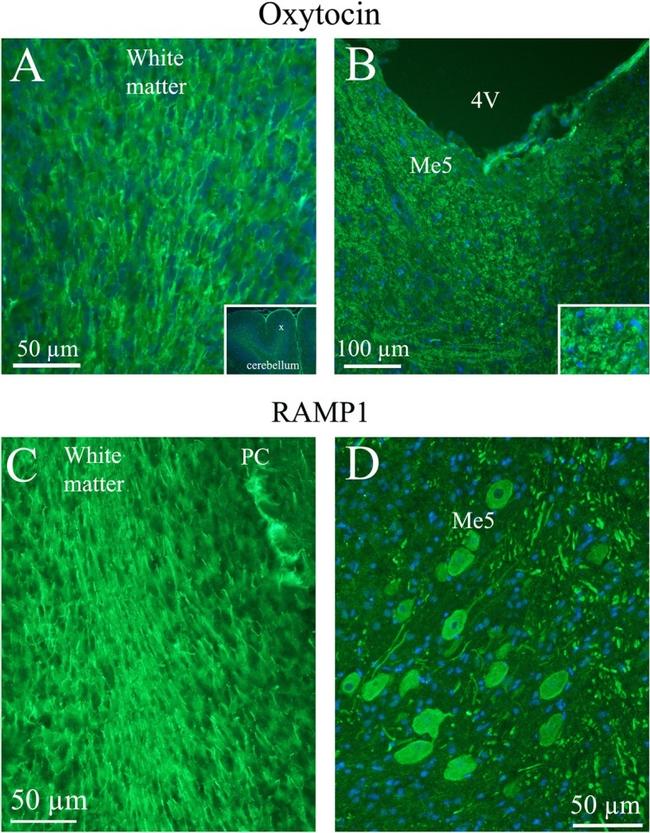
图: 1 / 13
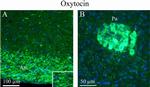
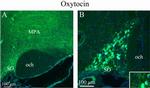
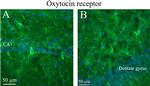
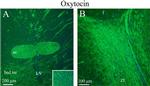
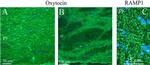
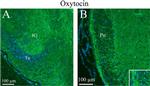
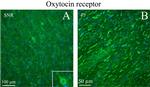
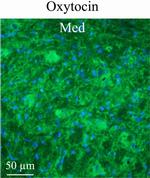
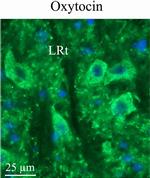
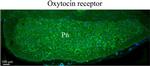
Oxytocin Antibody (PA1-18416) in IHC
The journal of headache and pain 2020 -
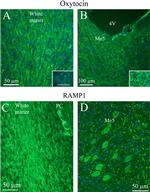
Fig. 5 Oxytocin immunohistochemistry in the cerebellum and the Mesencephalic trigeminal nucleus. a . Oxytocin immunoreactivity was found in fibers in the cerebellar white matter and to some extend in the granular cell layer. No oxytocin positivity was observed in the Purkinje cell layer (PC) or the molecular layer. Insert: a low magnification image of cerebellar lobes. X indicates where the large magnificat... View More
Please note: We are reviewing Western blot images included in the antibody testing data in our catalog, including those provided by third parties. Unless expressly labeled or annotated as “raw-unedited”, Western blot images included in the antibody testing data in our catalog may have been edited, optimized or otherwise adjusted for presentation.


产品信息
PA1-18416
产品规格
种属反应
Human,
Sheep
宿主/亚型
Guinea pig
/ IgG
分类
Polyclonal
类型
Antibody
抗原
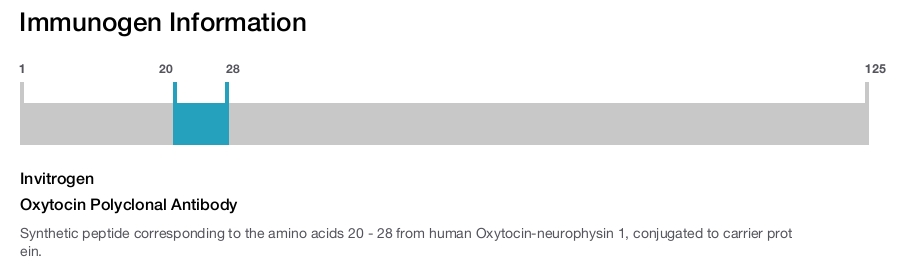
Synthetic peptide corresponding to the amino acids 20 - 28 from human Oxytocin-neurophysin 1, conjugated to carrier protein.
偶联物
Unconjugated
Unconjugated
Unconjugated
形式
Lyophilized
浓度
Conc. Not Determined
保存液
whole serum
内含物
no preservative
保存条件
-20°C, Avoid Freeze/Thaw Cycles
运输条件
Ambient (domestic); Wet ice (international)
RRID
产品详细信息
Reconstitute in 50 µL sterile water. Centrifuge to remove any insoluble material. It is recommended that a thawed sample is stored at 4 °C for no longer than 2 weeks. Allocation of appropriate anti-bacterial agent can increase shelf life by several weeks. Diluted serum should be prepared as required. Long term stability requires storage, preferably in small aliquots at -20 °C or lower. Glycerol (1:1) can be added to neat serum for additional stability if intended use does not prevent this.
靶标信息
There are two proteins encoded by this gene, oxytocin and neurophysin I. Oxytocin is posterior pituitary hormone which is synthesized as an inactive precursor in the hypothalamus along with its carrier protein neurophysin I. Together with neurophysin, it is packaged into neurosecretory vesicles and transported axonally to the nerve endings in the neurohypophysis, where it is either stored or secreted into the bloodstream. The precursor seems to be activated while it is being transported along the axon to the posterior pituitary. This hormone contracts smooth muscle during parturition and lactation. It is also involved in cognition, tolerance, adaptation and complex sexual and maternal behaviour, as well as in the regulation of water excretion and cardiovascular functions.
仅用于科研。不用于诊断过程。未经明确授权不得转售。
生物信息学
蛋白别名: neurophysin I; oxytocin, prepro- (neurophysin I); oxytocin, prepropeptide; oxytocin-neurophysin I; oxytocin-neurophysin I, preproprotein; prepropeptide for oxytocin and neurophysin; unnamed protein product
基因别名: OT; OT-NPI; OXT-NPI
UniProt ID: (Human) P01178, (Sheep) P13389
Entrez Gene ID: (Human) 5020, (Sheep) 443390
response to amphetamine
regulation of heart rate
maternal aggressive behavior
signal transduction
positive regulation of cytosolic calcium ion concentration
heart development
female pregnancy
memory
grooming behavior
response to sucrose
hormone transport
positive regulation of norepinephrine secretion
response to activity
response to food
positive regulation of prostaglandin secretion
response to estradiol
response to retinoic acid
response to progesterone
response to genistein
response to prostaglandin E
social behavior
intracellular signal transduction
negative regulation of urine volume
response to cocaine
maternal behavior
sperm ejaculation
eating behavior
drinking behavior
response to peptide hormone
response to ether
negative regulation of blood pressure
positive regulation of blood pressure
positive regulation of ossification
positive regulation of female receptivity
response to steroid hormone
positive regulation of synaptic transmission
response to glucocorticoid
response to cAMP
response to electrical stimulus
positive regulation of synapse assembly
fetal process involved in parturition
male mating behavior
positive regulation of penile erection
positive regulation of hindgut contraction
positive regulation of uterine smooth muscle contraction
positive regulation of cold-induced thermogenesis
Disclaimer

Clicking the images or links will redirect you to a website hosted by BenchSci that provides third-party scientific content. Neither the content nor the BenchSci technology and processes for selection have been evaluated by us; we are providing them as-is and without warranty of any kind, including for use or application of the Thermo Fisher Scientific products presented.

