Search
Invitrogen
PAI1 (Biosimilar) Recombinant Human Monoclonal Antibody
{{$productOrderCtrl.translations['antibody.pdp.commerceCard.promotion.promotions']}}
{{$productOrderCtrl.translations['antibody.pdp.commerceCard.promotion.promocode']}}: {{promo.promoCode}} {{promo.promoTitle}} {{promo.promoDescription}}. {{$productOrderCtrl.translations['antibody.pdp.commerceCard.promotion.learnmore']}}
{{$ctrl.translations['antibody.pdp.skuNotes.additionalInformation']}}:
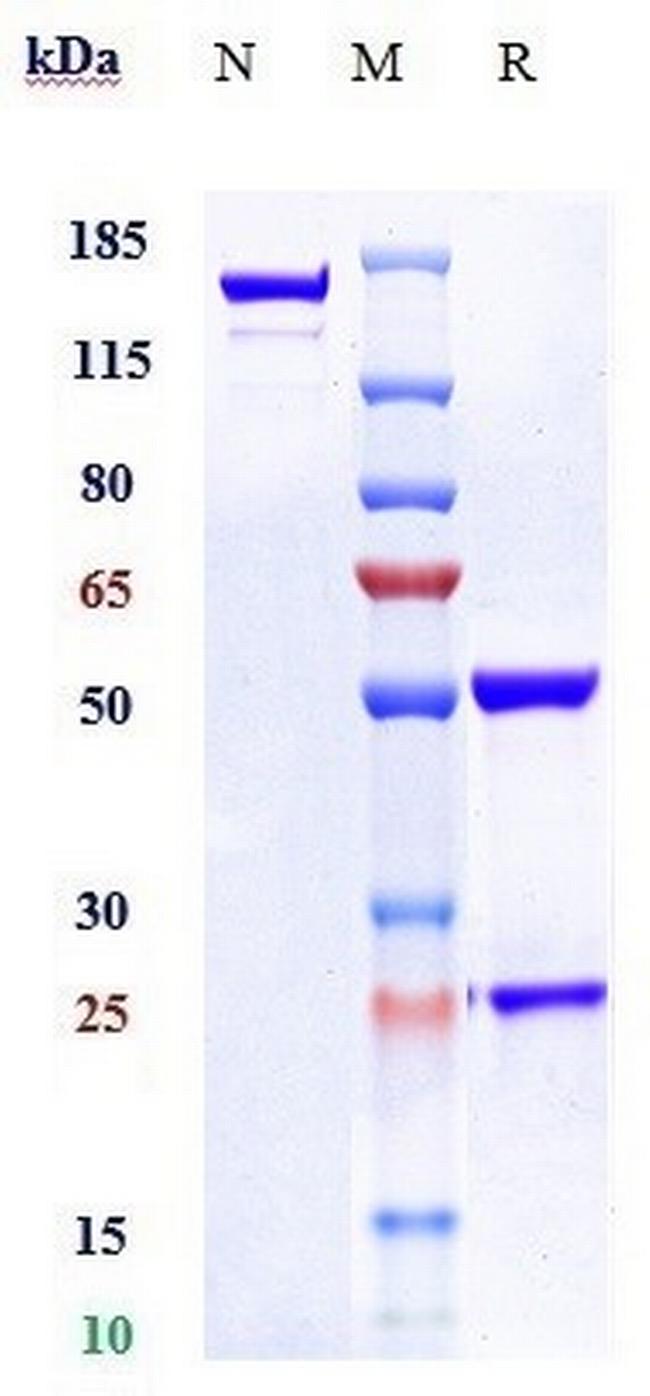
Please note: We are reviewing Western blot images included in the antibody testing data in our catalog, including those provided by third parties. Unless expressly labeled or annotated as “raw-unedited”, Western blot images included in the antibody testing data in our catalog may have been edited, optimized or otherwise adjusted for presentation.

产品信息
MA5-58921
应用
建议稀释比
已发表文章
产品规格
种属反应
Human
宿主/亚型
Human
/ IgG1
Expression System
CHO cells
分类
Recombinant Monoclonal
类型
Antibody
偶联物
Unconjugated
Unconjugated
Unconjugated
形式
Lyophilized
浓度
1 mg/mL once reconstituted
规格
100 µg
纯化类型
Protein A
保存液
25mM histidine, pH 6.2, with 0.01% Tween 80, 8% sucrose
内含物
no preservative
保存条件
-20°C, Avoid Freeze/Thaw Cycles
运输条件
Ambient (domestic); Dry ice (international)
RRID
产品详细信息
For reconstitution, add sterile, distilled water to achieve a final antibody concentration of 1 mg/mL. Gently shake to solubilize the protein completely. Do not vortex. Reconstituted products should be stored at -80 °.
This antibody can also be cross referenced by the term Sanofi patent anti-PAI-1.
靶标信息
PAI1 (plasminogen activator inhibitor 1) belongs to serine protease inhibitor superfamily, and is the principal inhibitor of tissue-type and urokinase-type plasminogen activators (tPA and uPA). Platelets are the main source of the circulating PAI11, but it is synthesized and secreted by many tissue and cell types, including fibroblasts, smooth muscle cells, endothelial cells, hepatocytes, and inflammatory cells. Expression of PAI11 can be regulated at the transcriptional level by many factors including growth factors, cytokines, hormones, inflammatory factors, glucose or lipid metabolites, vascular tone regulating factors, chemicals, and other environmental or physical factors. PAI1 is present at increased levels in various disease states, and has been linked to an increased occurrence of thrombosis in obesity, thrombophilia and the metabolic syndrome. Defects in PAI-1 are characterized by abnormal bleeding. PAI1 mediates inhibition of fibrinolysis by inhibiting the activity of plasminogen activator, and may promote neuronal survival. Other defects in PAI1 are the cause of plasminogen activator inhibitor-1 deficiency (PAI-1 deficiency). Alternatively spliced transcript variants encoding different isoforms of PAI1 have been found.
仅用于科研。不用于诊断过程。未经明确授权不得转售。
篇参考文献 (0)
您是否在文献中引用过该产品?请点击下方按钮邮件告知我们。
生物信息学
蛋白别名: endothelial plasminogen activator inhibitor; plas; plasminogen activator inhibitor-1; prebeta-migrating plasminogen activator inhibitor; serine (or cysteine) proteinase inhibitor, clade E (nexin, plasminogen activator inhibitor type 1), member 1; serpin E1; serpin peptidase inhibitor, clade E (nexin, plasminogen activator inhibitor type 1), member 1; SERPINE-1; unnamed protein product
基因别名: PAI; PAI-1; PAI1; PLANH1
UniProt ID: (Human) P05121
Entrez Gene ID: (Human) 5054
angiogenesis
response to bacterium
negative regulation of plasminogen activation
negative regulation of smooth muscle cell migration
positive regulation of blood coagulation
negative regulation of blood coagulation
negative regulation of cell migration
positive regulation of interleukin-8 production
negative regulation of cell adhesion mediated by integrin
positive regulation of leukotriene production involved in inflammatory response
fibrinolysis
positive regulation of angiogenesis
negative regulation of proteolysis
positive regulation of receptor-mediated endocytosis
positive regulation of inflammatory response
positive regulation of coagulation
defense response to Gram-negative bacterium
negative regulation of fibrinolysis
negative regulation of vascular wound healing
negative regulation of wound healing
negative regulation of thrombin receptor signaling pathway
cellular response to lipopolysaccharide
positive regulation of monocyte chemotaxis
replicative senescence
dentinogenesis
positive regulation of odontoblast differentiation
negative regulation of extrinsic apoptotic signaling pathway via death domain receptors
negative regulation of smooth muscle cell-matrix adhesion
negative regulation of endothelial cell apoptotic process
negative regulation of integrin-mediated signaling pathway
Disclaimer

Clicking the images or links will redirect you to a website hosted by BenchSci that provides third-party scientific content. Neither the content nor the BenchSci technology and processes for selection have been evaluated by us; we are providing them as-is and without warranty of any kind, including for use or application of the Thermo Fisher Scientific products presented.

