Search
Invitrogen
PCYT2 Polyclonal Antibody
{{$productOrderCtrl.translations['antibody.pdp.commerceCard.promotion.promotions']}}
{{$productOrderCtrl.translations['antibody.pdp.commerceCard.promotion.viewpromo']}}
{{$productOrderCtrl.translations['antibody.pdp.commerceCard.promotion.promocode']}}: {{promo.promoCode}} {{promo.promoTitle}} {{promo.promoDescription}}. {{$productOrderCtrl.translations['antibody.pdp.commerceCard.promotion.learnmore']}}
Additional Information:
{{banner.description}}
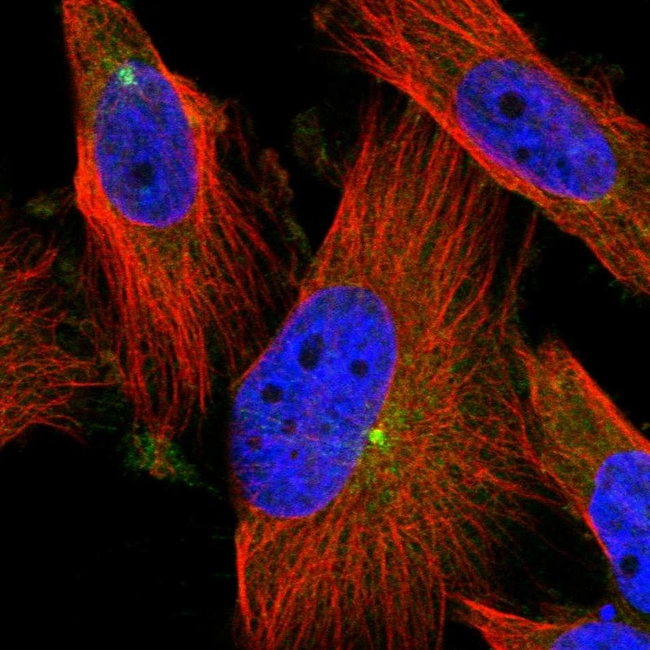
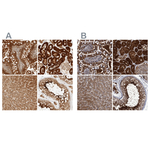
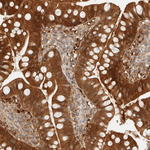
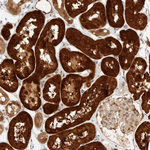
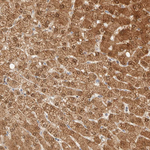
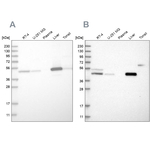
Please note: We are reviewing Western blot images included in the antibody testing data in our catalog, including those provided by third parties. Unless expressly labeled or annotated as “raw-unedited”, Western blot images included in the antibody testing data in our catalog may have been edited, optimized or otherwise adjusted for presentation.


产品信息
PA5150683
应用
建议稀释比
已发表文章
产品规格
种属反应
Human
宿主/亚型
Rabbit
/ IgG
分类
Polyclonal
类型
Antibody
偶联物
Unconjugated
Unconjugated
Unconjugated
形式
Liquid
浓度
0.8 mg/mL
规格
80 µg
纯化类型
Affinity chromatography
保存液
PBS, pH 7.2, with 40% glycerol
内含物
0.02% sodium azide
保存条件
Store at 4°C short term. For long term storage, store at -20°C, avoiding freeze/thaw cycles.
运输条件
Ambient (domestic); Wet ice (international)
产品详细信息
Highest antigen sequence identity to the following orthologs: Mouse- 86%, Rat- 87%.
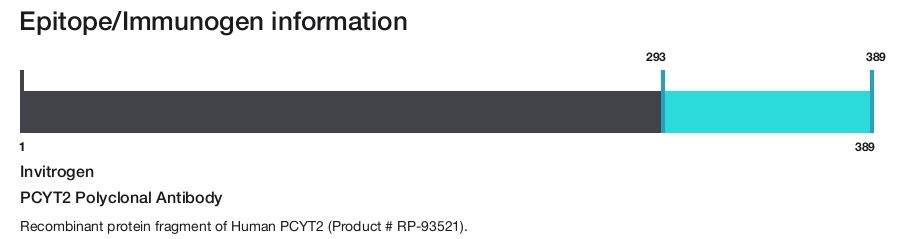
Sequence of this protein is as follows: TAELLSHFKV DLVCHGKTEI IPDRDGSDPY QEPKRRGIFR QIDSGSNLTT DLIVQRIITN RLEYEARNQK KEAKELAFLE AARQQAAQPL GERDGDF
靶标信息
ECT (ethanolaminephosphate cytidyltransferase) is an important regulatory enzyme in the pathway for phosphatidylethanolamine (PE) biosynthesis. PE functions in cell signalling, membrane fusion, platelet activation, and cell cycle progression. Specialized forms of PE exist as plasmologens, natural cannabinoid anadimade, and glycosylated PE. The ECT enzyme acts in the second of three catalysis steps to produce CDP-ethanolamine from phosphoethanolamine (P-Etn). Study of ECT could help determine the role of plasmologens in disease, specifically lipid disorders such as peroxisomal diseases as well as neuronal degeneration associated with Alzheimer's disease.
仅用于科研。不用于诊断过程。未经明确授权不得转售。
篇参考文献 (0)
您是否在文献中引用过该产品?请点击下方按钮邮件告知我们。
生物信息学
蛋白别名: CTP:phosphoethanolamine cytidylyltransferase; Ethanolamine-phosphate cytidylyltransferase; Phosphorylethanolamine transferase
基因别名: PCYT2
Entrez Gene ID: (Human) 5833
Disclaimer

Clicking the images or links will redirect you to a website hosted by BenchSci that provides third-party scientific content. Neither the content nor the BenchSci technology and processes for selection have been evaluated by us; we are providing them as-is and without warranty of any kind, including for use or application of the Thermo Fisher Scientific products presented.

