Search
Invitrogen
Phosphotyrosine Monoclonal Antibody (SPM102)
{{$productOrderCtrl.translations['antibody.pdp.commerceCard.promotion.promotions']}}
{{$productOrderCtrl.translations['antibody.pdp.commerceCard.promotion.viewpromo']}}
{{$productOrderCtrl.translations['antibody.pdp.commerceCard.promotion.promocode']}}: {{promo.promoCode}} {{promo.promoTitle}} {{promo.promoDescription}}. {{$productOrderCtrl.translations['antibody.pdp.commerceCard.promotion.learnmore']}}
Additional Information:
{{banner.description}}

产品信息
MA1-38452
产品规格
宿主/亚型
Mouse
/ IgG1
分类
Monoclonal
类型
Antibody
克隆号
SPM102
抗原
Phosphotyrosine conjugated to protein carriers.
偶联物
Unconjugated
Unconjugated
Unconjugated
形式
Liquid
保存条件
4°C, do not freeze
运输条件
Wet ice
产品详细信息
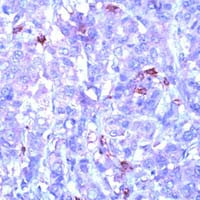
Heat-mediated antigen retrieval is recommended prior to staining, using a 10mM citrate buffer, pH 6.0, for 10 minutes followed by cooling at room temperature for 20 min. Following antigen retrieval, incubate samples with primary antibody for 10 min at room temperature. Milk-derived blocking solutions reportedly contain phosphoproteins that may inhibit phosphoamino acid antibody binding and therefore should be avoided. A suggested positive control is MCF-7 cells, EGF-stimulated A431 cells or breast carcinoma.
靶标信息
The role of tyrosine phosphorylation in transduction of the mitogenic signal from transmembrane receptors and in transformation by oncogene tyrosine kinases has been the subject of intense investigation for several years. While the phosphorylation of specific tyrosine residues has been shown to be a primary mechanism of signal transduction during normal mitogenesis, cell cycle progression and oncogenic transformation, its role in other areas such as differentiation and gap junction communication, is a matter of active and ongoing research. Antibodies that specifically recognize phosphorylated tyrosine residues have proved to be invaluable to the study of tyrosine -phosphorylated proteins and the biochemical pathways in which they function. The fluorescein (FITC) conjugate of clone PY20 anti-phosphotyrosine is especially useful for the detection of these P-Tyr proteins in immunohistochemical and immunocytochemical protocols in situations wherein the use of a secondary antibody would complicate detection of the protein(s) of interest.
仅用于科研。不用于诊断过程。未经明确授权不得转售。
篇参考文献 (0)
您是否在文献中引用过该产品?请点击下方按钮邮件告知我们。
Disclaimer

Clicking the images or links will redirect you to a website hosted by BenchSci that provides third-party scientific content. Neither the content nor the BenchSci technology and processes for selection have been evaluated by us; we are providing them as-is and without warranty of any kind, including for use or application of the Thermo Fisher Scientific products presented.

