Search
Proteintech
SEC5/EXOC2 Monoclonal Antibody (1C11G2)
{{$productOrderCtrl.translations['antibody.pdp.commerceCard.promotion.promotions']}}
{{$productOrderCtrl.translations['antibody.pdp.commerceCard.promotion.promocode']}}: {{promo.promoCode}} {{promo.promoTitle}} {{promo.promoDescription}}. {{$productOrderCtrl.translations['antibody.pdp.commerceCard.promotion.learnmore']}}
{{$ctrl.translations['antibody.pdp.skuNotes.additionalInformation']}}:
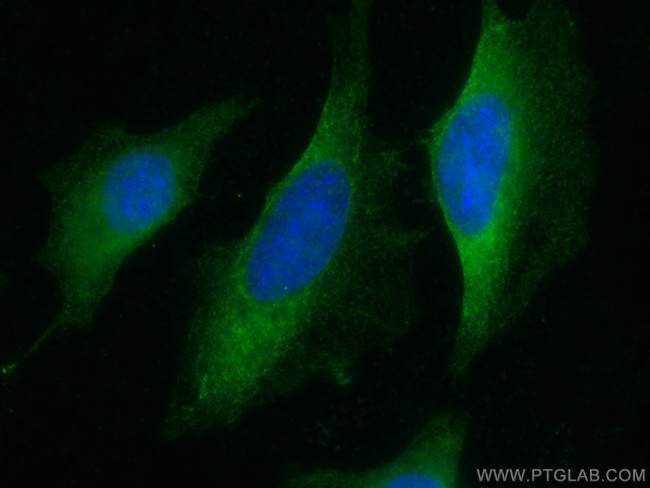
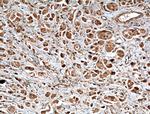
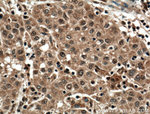
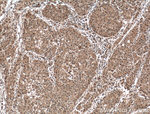
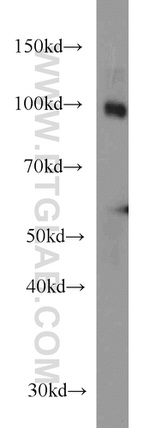
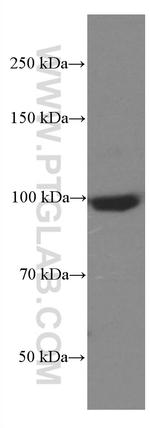
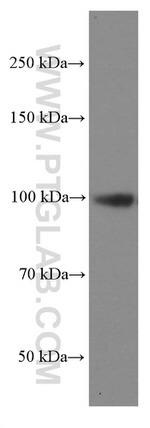
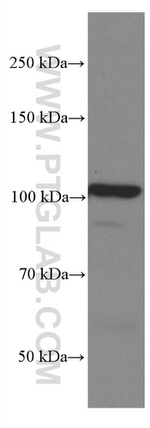
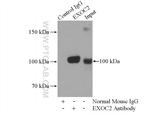
Please note: We are reviewing Western blot images included in the antibody testing data in our catalog, including those provided by third parties. Unless expressly labeled or annotated as “raw-unedited”, Western blot images included in the antibody testing data in our catalog may have been edited, optimized or otherwise adjusted for presentation.


产品信息
66011-1-IG
应用
建议稀释比
已发表文章
产品规格
种属反应
Human,
Mouse,
Pig,
Rat
已发表种属
Human
宿主/亚型
Mouse
/ IgG2b
分类
Monoclonal
类型
Antibody
克隆号
1C11G2
抗原
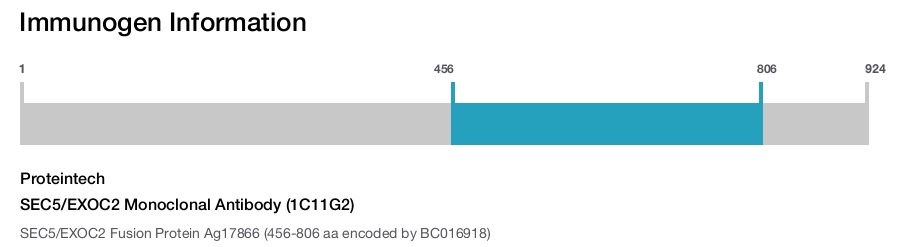
SEC5/EXOC2 Fusion Protein Ag17866 (456-806 aa encoded by BC016918)
偶联物
Unconjugated
Unconjugated
Unconjugated
形式
Liquid
浓度
1.22 mg/mL
规格
183 µg
纯化类型
Protein A
保存液
PBS, pH 7.3, with 50% glycerol
内含物
0.02% sodium azide
保存条件
-20°C
运输条件
Wet ice (domestic); Dry ice (international)
产品详细信息
Immunogen sequence: TIQDLILDL RVRCVMATLQ HTAEEIKRLA EKEDWIVDNE GLTSLPCQFE QCIVCSLQSL KGVLECKPGE ASVFQQPKTQ EEVCQLSINI MQVFIYCLEQ LSTKPDADID TTHLSVDVSS PDLFGSIHED FSLTSEQRLL IVLSNCCYLE RHTFLNIAEH FEKHNFQGIE KITQVSMASL KELDQRLFEN YIELKADPIV GSLEPGIYAG YFDWKDCLPP TGVRNYLKEA LVNIIAVHAE VFTISKELVP RVLSKVIEAV SEELSRLMQC VSSFSKNGAL QARLEICALR DTVAVYLTPE SKSSFKQALE ALPQLSSGAD KKLLEELLNK FKSSMHLQLT CFQAASSTMM KT (456-806 aa encoded by BC016918)
靶标信息
The protein encoded by this gene is a component of the exocyst complex, a multiple protein complex essential for targeting exocytic vesicles to specific docking sites on the plasma membrane. Though best characterized in yeast, the component proteins and the functions of the exocyst complex have been demonstrated to be highly conserved in higher eukaryotes. At least eight components of the exocyst complex, including this protein, are found to interact with the actin cytoskeletal remodeling and vesicle transport machinery. This interaction has been shown to mediate filopodia formation in fibroblasts.
仅用于科研。不用于诊断过程。未经明确授权不得转售。
生物信息学
蛋白别名: exocyst complex component Sec5; SEC5 homolog; SEC5-like 1; unnamed protein product
基因别名: 2410030I24Rik; Gm29675; NEDFACH; Rsec5; SEC5; SEC5L1; Sec5p
UniProt ID: (Human) Q96KP1, (Rat) O54921, (Mouse) Q9D4H1
Entrez Gene ID: (Pig) 100520314, (Human) 55770, (Rat) 171455, (Mouse) 66482
Disclaimer

Clicking the images or links will redirect you to a website hosted by BenchSci that provides third-party scientific content. Neither the content nor the BenchSci technology and processes for selection have been evaluated by us; we are providing them as-is and without warranty of any kind, including for use or application of the Thermo Fisher Scientific products presented.

