Search
Proteintech
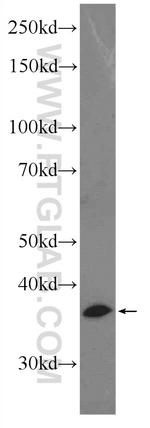
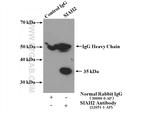
SIAH2 Polyclonal Antibody
{{$productOrderCtrl.translations['antibody.pdp.commerceCard.promotion.promotions']}}
{{$productOrderCtrl.translations['antibody.pdp.commerceCard.promotion.viewpromo']}}
{{$productOrderCtrl.translations['antibody.pdp.commerceCard.promotion.promocode']}}: {{promo.promoCode}} {{promo.promoTitle}} {{promo.promoDescription}}. {{$productOrderCtrl.translations['antibody.pdp.commerceCard.promotion.learnmore']}}
Additional Information:
{{banner.description}}
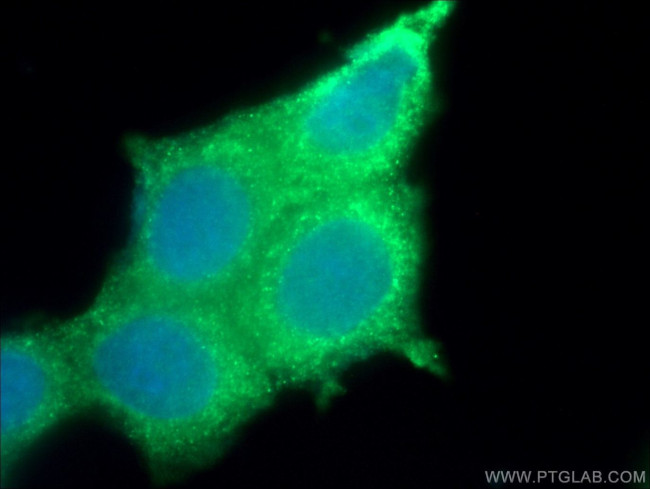


产品信息
12651-1-AP
应用
建议稀释比
已发表文章
产品规格
种属反应
Human,
Mouse,
Rat
宿主/亚型
Rabbit
/ IgG
分类
Polyclonal
类型
Antibody
抗原
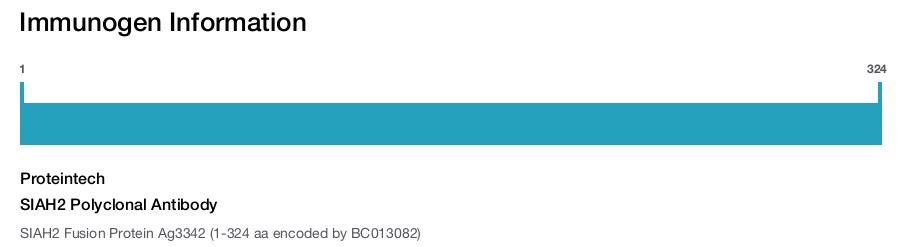
SIAH2 Fusion Protein Ag3342 (1-324 aa encoded by BC013082)
偶联物
形式
Liquid
浓度
0.27 mg/mL
规格
40.5 µg
纯化类型
Antigen affinity chromatography
保存液
PBS, pH 7.3, with 50% glycerol
内含物
0.02% sodium azide
保存条件
-20°C
运输条件
Wet ice (domestic); Dry ice (international)
产品详细信息
Immunogen sequence: MSRPSSTGP SANKPCSKQP PPQPQHTPSP AAPPAAATIS AAGPGSSAVP AAAAVISGPG GGGGAGPVSP QHHELTSLFE CPVCFDYVLP PILQCQAGHL VCNQCRQKLS CCPTCRGALT PSIRNLAMEK VASAVLFPCK YATTGCSLTL HHTEKPEHED ICEYRPYSCP CPGASCKWQG SLEAVMSHLM HAHKSITTLQ GEDIVFLATD INLPGAVDWV MMQSCFGHHF MLVLEKQEKY EGHQQFFAIV LLIGTRKQAE NFAYRLELNG NRRRLTWEAT PRSIHDGVAA AIMNSDCLVF DTAIAHLFAD NGNLGINVTI STCCP (1-324 aa encoded by BC013082)
靶标信息
SIAH-2 (seven in absentia homolog 2) is an E3 ligase that catalyzes ubiquitination and proteasome-mediated degradation of protein substrates. SIAH-2 encodes a 324 amino acid protein that shares 77% identity with human SIAH-1 and 68% identity with the Drosophila sina (seven in absentia) gene, on which development of the Drosophila R7 photoreceptor is dependent. SIAH-2 targets TRAF2 (which regulates cell responses to stress and cytokines through the regulation of key stress-signaling cascades) for degradation under stress conditions such as hypoxia. It targets HIF-1 alpha prolyl hydroxylase 3 (PHD3) for degradation upon exposure to hypoxic conditions, which coincides with an increase in SIAH-2 transcription. SIAH-2 can decrease TNF-alpha-dependent induction of JNK activity and transcriptional activation of NFkB. SIAH-2 null mice subjected to hypoxia display an impaired respiratory response and reduced levels of hemoglobin.
仅用于科研。不用于诊断过程。未经明确授权不得转售。
生物信息学
蛋白别名: E3 ubiquitin-protein ligase SIAH2; EC 6.3.2; mSiah2; RING-type E3 ubiquitin transferase SIAH2; seven in absentia 2; Seven in absentia homolog 2; Siah-2
基因别名: AA415433; hSiah2; SIAH2; Sinh2
UniProt ID: (Human) O43255, (Mouse) Q06986, (Rat) Q8R4T2
Entrez Gene ID: (Human) 6478, (Mouse) 20439, (Rat) 140593
transcription corepressor activity
ubiquitin-protein transferase activity
protein binding
zinc ion binding
transferase activity
ubiquitin conjugating enzyme binding
metal ion binding
ubiquitin protein ligase activity
UDP-N-acetylmuramoylalanyl-D-glutamyl-2,6-diaminopimelate-D-alanyl-D-alanine ligase activity
ligase activity
ribosomal S6-glutamic acid ligase activity
coenzyme F420-0 gamma-glutamyl ligase activity
coenzyme F420-2 alpha-glutamyl ligase activity
protein-glycine ligase activity
protein-glycine ligase activity, initiating
protein-glycine ligase activity, elongating
tubulin-glycine ligase activity
protein-glutamic acid ligase activity
tubulin-glutamic acid ligase activity
ubiquitin-protein ligase
protein modifying enzyme
ubiquitin-dependent protein catabolic process
apoptotic process
small GTPase mediated signal transduction
protein ubiquitination
regulation of protein ubiquitination
regulation of circadian rhythm
negative regulation of apoptotic process
proteasome-mediated ubiquitin-dependent protein catabolic process
negative regulation of transcription, DNA-templated
rhythmic process
canonical Wnt signaling pathway
negative regulation of canonical Wnt signaling pathway
amyloid fibril formation
regulation of apoptotic signaling pathway
negative regulation of extrinsic apoptotic signaling pathway
cell cycle
multicellular organism development
negative regulation of cysteine-type endopeptidase activity involved in apoptotic process
cellular protein catabolic process
Disclaimer

Clicking the images or links will redirect you to a website hosted by BenchSci that provides third-party scientific content. Neither the content nor the BenchSci technology and processes for selection have been evaluated by us; we are providing them as-is and without warranty of any kind, including for use or application of the Thermo Fisher Scientific products presented.

