Search
Proteintech
TAF6L Polyclonal Antibody
{{$productOrderCtrl.translations['antibody.pdp.commerceCard.promotion.promotions']}}
{{$productOrderCtrl.translations['antibody.pdp.commerceCard.promotion.viewpromo']}}
{{$productOrderCtrl.translations['antibody.pdp.commerceCard.promotion.promocode']}}: {{promo.promoCode}} {{promo.promoTitle}} {{promo.promoDescription}}. {{$productOrderCtrl.translations['antibody.pdp.commerceCard.promotion.learnmore']}}
Additional Information:
{{banner.description}}
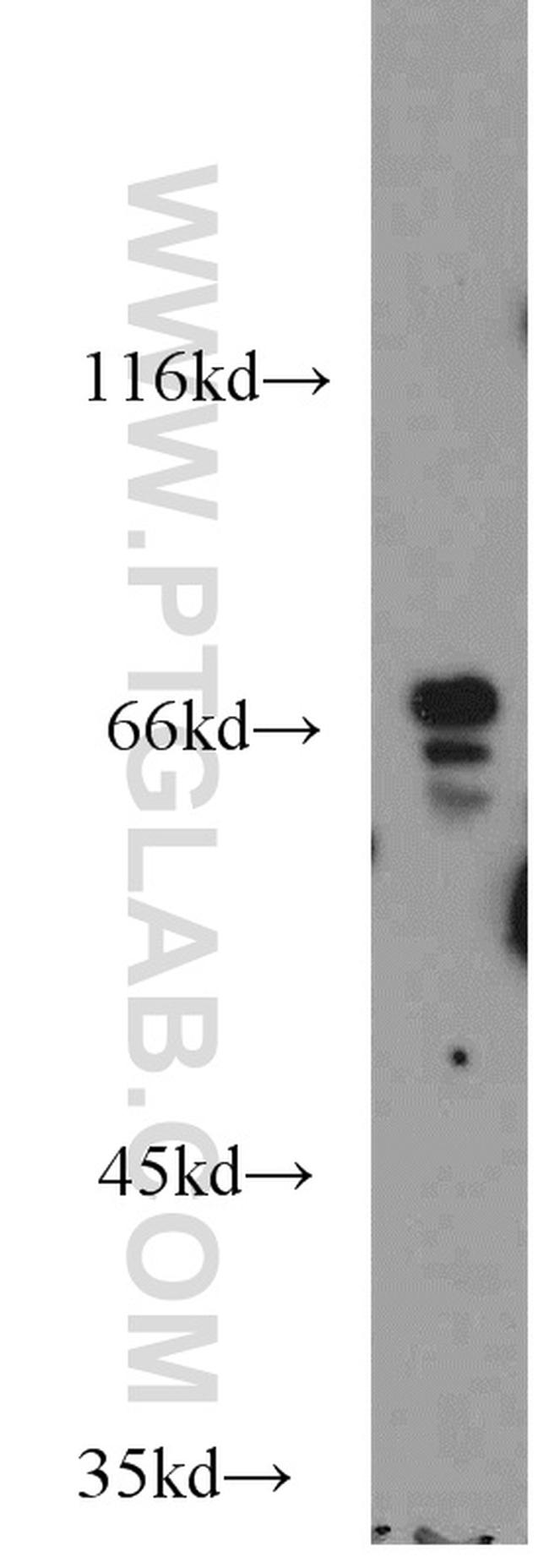


产品信息
15745-1-AP
产品规格
种属反应
Human,
Mouse,
Rat
宿主/亚型
Rabbit
/ IgG
分类
Polyclonal
类型
Antibody
抗原
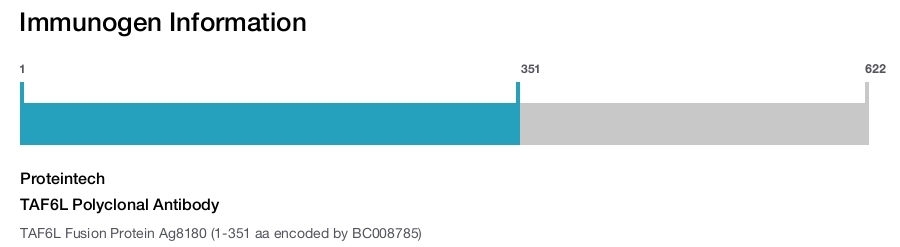
TAF6L Fusion Protein Ag8180 (1-351 aa encoded by BC008785)
偶联物
形式
Liquid
浓度
0.21 mg/mL
规格
31.5 µg
纯化类型
Antigen affinity chromatography
保存液
PBS, pH 7.3, with 50% glycerol
内含物
0.02% sodium azide
保存条件
-20°C
运输条件
Wet ice (domestic); Dry ice (international)
产品详细信息
Immunogen sequence: MSEREERRF VEIPRESVRL MAESTGLELS DEVAALLAED VCYRLREATQ NSSQFMKHTK RRKLTVEDFN RALRWSSVEA VCGYGSQEAL PMRPAREGEL YFPEDREVNL VELALATNIP KGCAETAVRV HVSYLDGKGN LAPQGSVPSA VSSLTDDLLK YYHQVTRAVL GDDPQLMKVA LQDLQTNSKI GALLPYFVYV VSGVKSVSHD LEQLHRLLQV ARSLFRNPHL CLGPYVRCLV GSVLYCVLEP LAASINPLND HWTLRDGAAL LLSHIFWTHG DLVSGLYQHI LLSLQKILAD PVRPLCCHYG AVVGLHALGW KAVERVLYPH LSTYWTNLQA VLDDYSVSNA QV (1-351 aa encoded by BC008785)
靶标信息
In eukaryotic systems, the process of initiating transcription from protein-coding genes requires the presence of RNA polymerase II and a broad family of auxiliary transcription factors. TFIID is a general transcription factor that initiates preinitiation complex assembly through direct interaction with the TATA promoter element. Functioning as a multisubunit complex consisting of a small TATA-binding polypeptide and other TBP-associated factors (TAFs), TFIID mediates promoter responses to various transcriptional activators and repressors. TAF6L, also known as PAF65A, is a 622 amino acid nuclear protein that functions as part of the PCAF (p300/CBP-associated factor) histone acetylase complex.
仅用于科研。不用于诊断过程。未经明确授权不得转售。
篇参考文献 (0)
您是否在文献中引用过该产品?请点击下方按钮邮件告知我们。
生物信息学
蛋白别名: p300/CBP-associated factor (PCAF)-associated factor 65; PAF65-alpha; PCAF-associated factor 65 alpha; PCAF-associated factor 65-alpha; TAF6-like RNA polymerase II p300/CBP-associated factor-associated factor 65 kDa subunit 6L; TAF6-like RNA polymerase II, p300/CBP-associated factor (PCAF)-associated factor, 65kDa; TAF6L; unnamed protein product
基因别名: 2810417N14Rik; BB223262; C530024J06Rik; PAF65A; TAF6L
UniProt ID: (Human) Q9Y6J9, (Mouse) Q8R2K4
Entrez Gene ID: (Human) 10629, (Mouse) 225895, (Rat) 309194
regulation of DNA repair
chromatin remodeling
regulation of transcription, DNA-templated
regulation of transcription from RNA polymerase II promoter
transcription initiation from RNA polymerase II promoter
regulation of RNA splicing
positive regulation of transcription, DNA-templated
RNA polymerase II transcriptional preinitiation complex assembly
regulation of somatic stem cell population maintenance
histone H3 acetylation
regulation of nucleic acid-templated transcription
DNA-templated transcription, initiation
biological_process
regulation of sequence-specific DNA binding transcription factor activity
Disclaimer

Clicking the images or links will redirect you to a website hosted by BenchSci that provides third-party scientific content. Neither the content nor the BenchSci technology and processes for selection have been evaluated by us; we are providing them as-is and without warranty of any kind, including for use or application of the Thermo Fisher Scientific products presented.

