Search
Proteintech
TBCE Polyclonal Antibody
{{$productOrderCtrl.translations['antibody.pdp.commerceCard.promotion.promotions']}}
{{$productOrderCtrl.translations['antibody.pdp.commerceCard.promotion.viewpromo']}}
{{$productOrderCtrl.translations['antibody.pdp.commerceCard.promotion.promocode']}}: {{promo.promoCode}} {{promo.promoTitle}} {{promo.promoDescription}}. {{$productOrderCtrl.translations['antibody.pdp.commerceCard.promotion.learnmore']}}
Additional Information:
{{banner.description}}
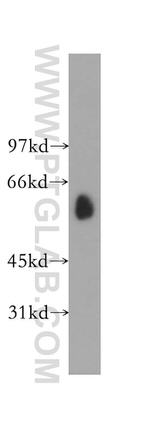
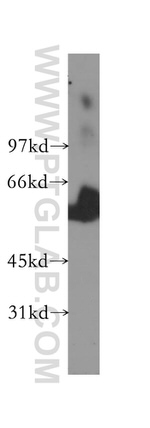
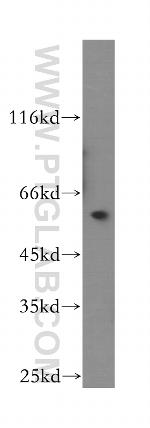
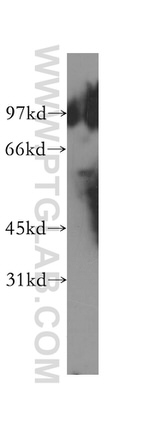
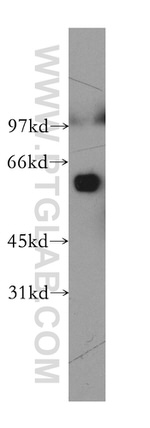
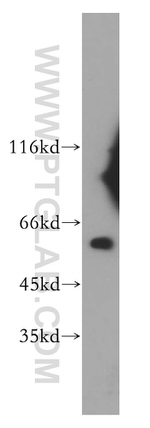
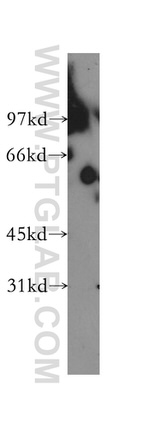
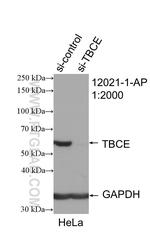


产品信息
12021-1-AP
应用
建议稀释比
已发表文章
产品规格
种属反应
Human,
Mouse,
Rat
已发表种属
Human,
Mouse
宿主/亚型
Rabbit
/ IgG
分类
Polyclonal
类型
Antibody
抗原
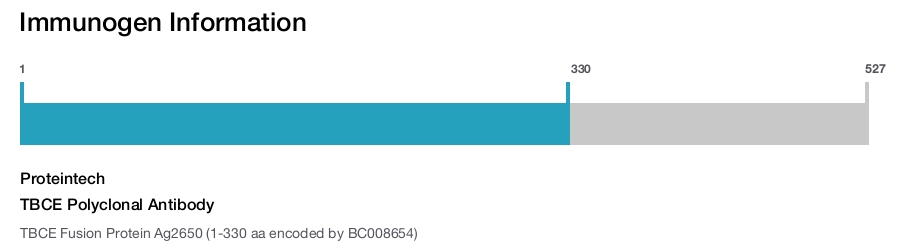
TBCE Fusion Protein Ag2650 (1-330 aa encoded by BC008654)
偶联物
形式
Liquid
浓度
0.13 mg/mL
规格
19.5 µg
纯化类型
Antigen affinity chromatography
保存液
PBS, pH 7.3, with 50% glycerol
内含物
0.02% sodium azide
保存条件
-20°C
运输条件
Wet ice (domestic); Dry ice (international)
产品详细信息
Immunogen sequence: MSDTLTADV IGRRVEVNGE HATVRFAGVV PPVAGPWLGV EWDNPERGKH DGSHEGTVYF KCRHPTGGSF IRPNKVNFGT DFLTAIKNRY VLEDGPEEDR KEQIVTIGNK PVETIGFDSI MKQQSQLSKL QEVSLRNCAV SCAGEKGGVA EACPNIRKVD LSKNLLSSWD EVIHIADQLR HLEVLNVSEN KLKFPSGSVL TGTLSVLKVL VLNQTGITWA EVLRCVAGCP GLEELYLESN NIFISERPTD VLQTVKLLDL SSNQLIDENQ LYLIAHLPRL EQLILSDTGI SSLHFPDAGI GCKTSMFPSL KYLVVNDNQI SQWSFFNELE K (1-330 aa encoded by BC008654)
靶标信息
Cofactor E is one of four proteins (cofactors A, D, E, and C) involved in the pathway leading to correctly folded beta-tubulin from folding intermediates. Cofactors A and D are believed to play a role in capturing and stabilizing beta-tubulin intermediates in a quasi-native confirmation. Cofactor E binds to the cofactor D/beta-tubulin complex; interaction with cofactor C then causes the release of beta-tubulin polypeptides that are committed to the native state.
仅用于科研。不用于诊断过程。未经明确授权不得转售。
生物信息学
蛋白别名: Tubulin-folding cofactor E; Tubulin-specific chaperone E; unnamed protein product
基因别名: 2610206D02Rik; C530005D02Rik; HRD; KCS; KCS1; pac2; PEAMO; pmn; TBCE
UniProt ID: (Human) Q15813, (Rat) Q5FVQ9, (Mouse) Q8CIV8
Entrez Gene ID: (Human) 6905, (Rat) 361255, (Mouse) 70430
microtubule cytoskeleton organization
protein folding
tubulin complex assembly
post-chaperonin tubulin folding pathway
mitotic spindle organization
axonogenesis
adult locomotory behavior
post-embryonic development
muscle atrophy
developmental growth
peripheral nervous system neuron axonogenesis
biological_process
Disclaimer

Clicking the images or links will redirect you to a website hosted by BenchSci that provides third-party scientific content. Neither the content nor the BenchSci technology and processes for selection have been evaluated by us; we are providing them as-is and without warranty of any kind, including for use or application of the Thermo Fisher Scientific products presented.

