Search
Proteintech
TFAP2A/AP-2 Polyclonal Antibody
{{$productOrderCtrl.translations['antibody.pdp.commerceCard.promotion.promotions']}}
{{$productOrderCtrl.translations['antibody.pdp.commerceCard.promotion.promocode']}}: {{promo.promoCode}} {{promo.promoTitle}} {{promo.promoDescription}}. {{$productOrderCtrl.translations['antibody.pdp.commerceCard.promotion.learnmore']}}
{{$ctrl.translations['antibody.pdp.skuNotes.additionalInformation']}}:
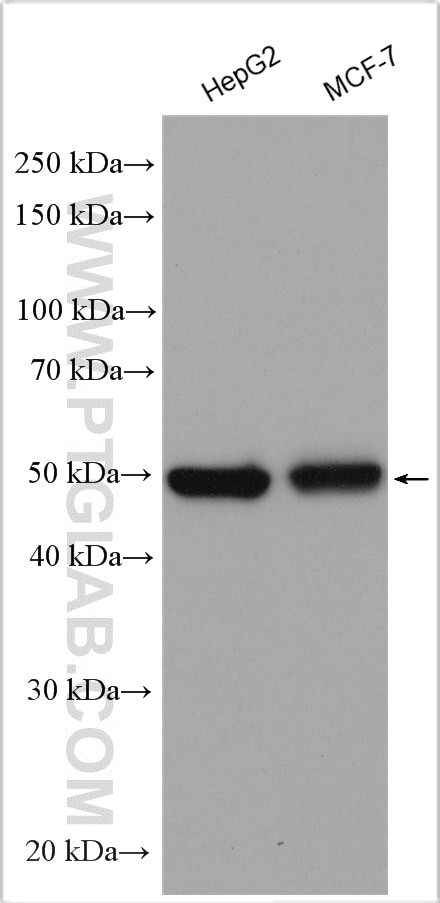
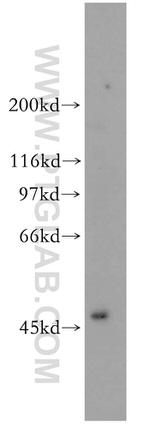
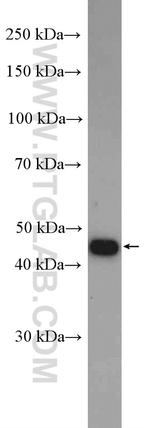
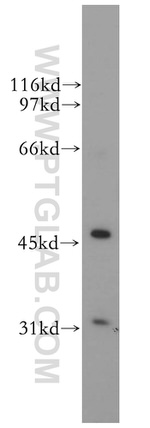
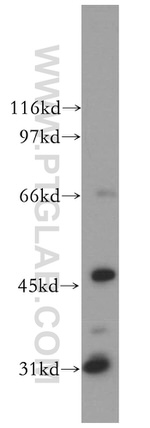
Please note: We are reviewing Western blot images included in the antibody testing data in our catalog, including those provided by third parties. Unless expressly labeled or annotated as “raw-unedited”, Western blot images included in the antibody testing data in our catalog may have been edited, optimized or otherwise adjusted for presentation.


产品信息
13019-3-AP
应用
建议稀释比
已发表文章
产品规格
种属反应
Human
已发表种属
Human,
Mouse
宿主/亚型
Rabbit
/ IgG
分类
Polyclonal
类型
Antibody
抗原
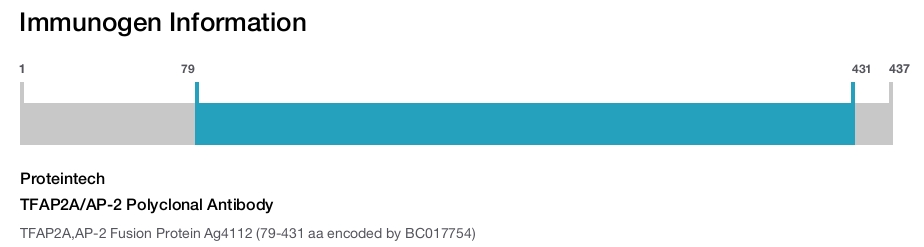
TFAP2A,AP-2 Fusion Protein Ag4112 (79-431 aa encoded by BC017754)
偶联物
Unconjugated
Unconjugated
Unconjugated
形式
Liquid
浓度
0.23 mg/mL
规格
34.5 µg
纯化类型
Antigen affinity chromatography
保存液
PBS, pH 7.3, with 50% glycerol
内含物
0.02% sodium azide
保存条件
-20°C
运输条件
Wet ice (domestic); Dry ice (international)
产品详细信息
Immunogen sequence: LHAQPQPQH PGWPGQRQSQ ESGLLHTHRG LPHQLSGLDP RRDYRRHEDL LHGPHALSSG LGDLSIHSLP HAIEEVPHVE DPGINIPDQT VIKKGPVSLS KSNSNAVSAI PINKDNLFGG VVNPNEVFCS VPGRLSLLSS TSKYKVTVAE VQRRLSPPEC LNASLLGGVL RRAKSKNGGR SLREKLDKIG LNLPAGRRKA ANVTLLTSLV EGEAVHLARD FGYVCETEFP AKAVAEFLNR QHSDPNEQVT RKNMLLATKQ ICKEFTDLLA QDRSPLGNSR PNPILEPGIQ SCLTHFNLIS HGFGSPAVCA AVTALQNYLT EALKAMDKMY LSNNPNSHTD NNAKSSDKEE KHRK (79-431 aa encoded by BC017754)
靶标信息
TFAP2A is a sequence-specific DNA-binding protein that interacts with inducible viral and cellular enhancer elements to regulate transcription of selected genes. AP-2 factors bind to the consensus sequence 5'-GCCNNNGGC-3' and activate genes involved in a large spectrum of important biological functions including proper eye, face, body wall, limbs and neural tube development. They also suppress a number of genes including MCAM/MUC18, C/EBP alpha and MYC. TFAP2A is the only AP-2 protein required for early morphogenesis of the lens vesicle.
仅用于科研。不用于诊断过程。未经明确授权不得转售。
生物信息学
蛋白别名: activating enhancer-binding protein 2-alpha; activator protein 2; AP-2 transcription factor; DNA-binding protein (AP-2); ERF-1; FLJ51761; OTTHUMP00000214240; OTTHUMP00000214243; transcription factor AP-2 alpha (activating enhancer binding protein 2 alpha); unnamed protein product
基因别名: AP-2; AP-2alpha; AP2TF; BOFS; TFAP2
UniProt ID: (Human) P05549
Entrez Gene ID: (Human) 7020
transcription regulatory region sequence-specific DNA binding
RNA polymerase II regulatory region sequence-specific DNA binding
RNA polymerase II core promoter proximal region sequence-specific DNA binding
RNA polymerase II transcription factor activity, sequence-specific DNA binding
transcriptional repressor activity, RNA polymerase II transcription regulatory region sequence-specific binding
transcriptional activator activity, RNA polymerase II transcription regulatory region sequence-specific binding
DNA binding
chromatin binding
transcription factor activity, sequence-specific DNA binding
protein binding
identical protein binding
sequence-specific DNA binding
transcription regulator inhibitor activity
sequence-specific double-stranded DNA binding
negative regulation of transcription from RNA polymerase II promoter
skeletal system development
kidney development
optic vesicle morphogenesis
optic cup structural organization
regulation of transcription, DNA-templated
nervous system development
sensory perception of sound
negative regulation of cell proliferation
positive regulation of gene expression
retina layer formation
trigeminal nerve development
oculomotor nerve formation
positive regulation of bone mineralization
embryonic forelimb morphogenesis
regulation of cell proliferation
inner ear morphogenesis
negative regulation of apoptotic process
positive regulation of neuron apoptotic process
regulation of cell differentiation
negative regulation of transcription, DNA-templated
positive regulation of transcription, DNA-templated
positive regulation of transcription from RNA polymerase II promoter
embryonic cranial skeleton morphogenesis
palate development
bone morphogenesis
eyelid development in camera-type eye
positive regulation of tooth mineralization
cellular response to iron ion
negative regulation of reactive oxygen species metabolic process
Disclaimer

Clicking the images or links will redirect you to a website hosted by BenchSci that provides third-party scientific content. Neither the content nor the BenchSci technology and processes for selection have been evaluated by us; we are providing them as-is and without warranty of any kind, including for use or application of the Thermo Fisher Scientific products presented.

