Search
Invitrogen
VIPR1 Polyclonal Antibody
{{$productOrderCtrl.translations['antibody.pdp.commerceCard.promotion.promotions']}}
{{$productOrderCtrl.translations['antibody.pdp.commerceCard.promotion.promocode']}}: {{promo.promoCode}} {{promo.promoTitle}} {{promo.promoDescription}}. {{$productOrderCtrl.translations['antibody.pdp.commerceCard.promotion.learnmore']}}
{{$ctrl.translations['antibody.pdp.skuNotes.additionalInformation']}}:
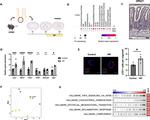
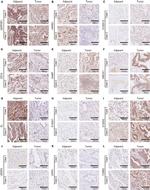
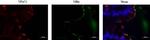
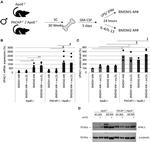
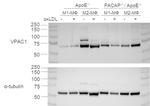
Please note: We are reviewing Western blot images included in the antibody testing data in our catalog, including those provided by third parties. Unless expressly labeled or annotated as “raw-unedited”, Western blot images included in the antibody testing data in our catalog may have been edited, optimized or otherwise adjusted for presentation.


产品信息
PA3-113
应用
建议稀释比
已发表文章
产品规格
种属反应
Human,
Mouse
已发表种属
Guinea pig,
Human,
Mouse
宿主/亚型
Rabbit
/ IgG
分类
Polyclonal
类型
Antibody
抗原
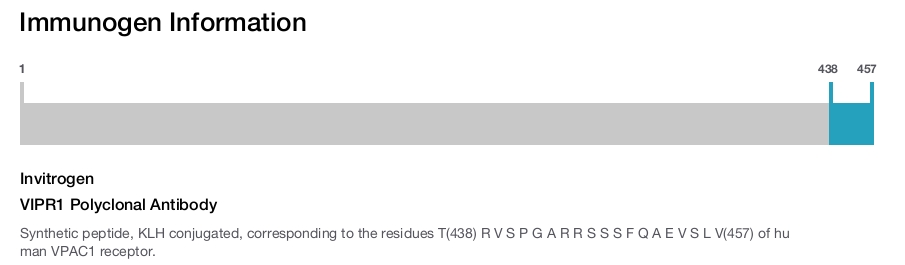
Synthetic peptide, KLH conjugated, corresponding to the residues T(438) R V S P G A R R S S S F Q A E V S L V(457) of human VPAC1 receptor.
偶联物
Unconjugated
Unconjugated
Unconjugated
形式
Liquid
浓度
Conc. Not Determined
保存液
whole serum
内含物
0.05% sodium azide
保存条件
-20°C, Avoid Freeze/Thaw Cycles
运输条件
Ambient (domestic); Wet ice (international)
RRID
产品详细信息
PA3-113 detects VPAC1 Receptor in human samples.
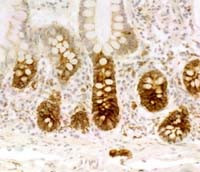
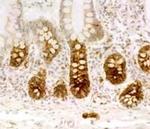
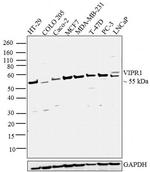
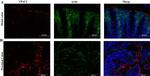
PA3-113 has been successfully used in Western blot, immunocytochemistry and immunohistochemistry (paraffin) procedures. By Western blot, this antibody detects an ~55-70 kDa protein representing VPAC1 Receptor in human samples. In immunohistochemistry, VPAC1 Receptor immunoreactivity is predominantly localized at the level of the plasma membrane.
PA3-113 immunizing peptide corresponds to amino acid residues 438-457 from human VPAC1 Receptor.
靶标信息
The Vasoactive Intestinal Polypeptide Receptor 1 (VPAC1) is a member of a family of three G-protein coupled receptors which mediate VIP (vasoactive intestinal peptide) and PACAP (pituitary adenlyate cyclase activating peptide) function in a variety of tissues. Together, the VPAC1 and VPAC2 receptors compose a subtype of the VIP receptor. Expression of the VIP and PACAP receptors has been linked to the presence of human tumors.
仅用于科研。不用于诊断过程。未经明确授权不得转售。
生物信息学
蛋白别名: Pacap receptor; PACAP type II receptor; PACAP-R-2; PACAP-R2; pituitary adenylate cyclase activating polypeptide receptor, type II; pituitary adenylate cyclase-activating polypeptide type II receptor; Pvr2; type 1 vasoactive intestinal peptide receptor; unnamed protein product; VIP and PACAP receptor 1; VIP receptor 1; VIP receptor subtype 1; VIP receptor, type I; VIP-R-1; VIP1 receptor; VIPR1; VPAC1 receptor
基因别名: HVR1; II; PACAP-R-2; PACAP-R2; RDC1; V1RG; VAPC1; VIP-R-1; VIP-R1; VIPR; VIRG; VPAC1; VPAC1R; VPCAP1R
UniProt ID: (Human) P32241, (Mouse) P97751
Entrez Gene ID: (Human) 7433, (Mouse) 22354
cell surface receptor signaling pathway
G-protein coupled receptor signaling pathway
G-protein coupled receptor signaling pathway, coupled to cyclic nucleotide second messenger
adenylate cyclase-modulating G-protein coupled receptor signaling pathway
adenylate cyclase-activating G-protein coupled receptor signaling pathway
positive regulation of cell proliferation
Disclaimer

Clicking the images or links will redirect you to a website hosted by BenchSci that provides third-party scientific content. Neither the content nor the BenchSci technology and processes for selection have been evaluated by us; we are providing them as-is and without warranty of any kind, including for use or application of the Thermo Fisher Scientific products presented.

