Search
Proteintech
ZO-1 Monoclonal Antibody (1G4A1)
{{$productOrderCtrl.translations['antibody.pdp.commerceCard.promotion.promotions']}}
{{$productOrderCtrl.translations['antibody.pdp.commerceCard.promotion.promocode']}}: {{promo.promoCode}} {{promo.promoTitle}} {{promo.promoDescription}}. {{$productOrderCtrl.translations['antibody.pdp.commerceCard.promotion.learnmore']}}
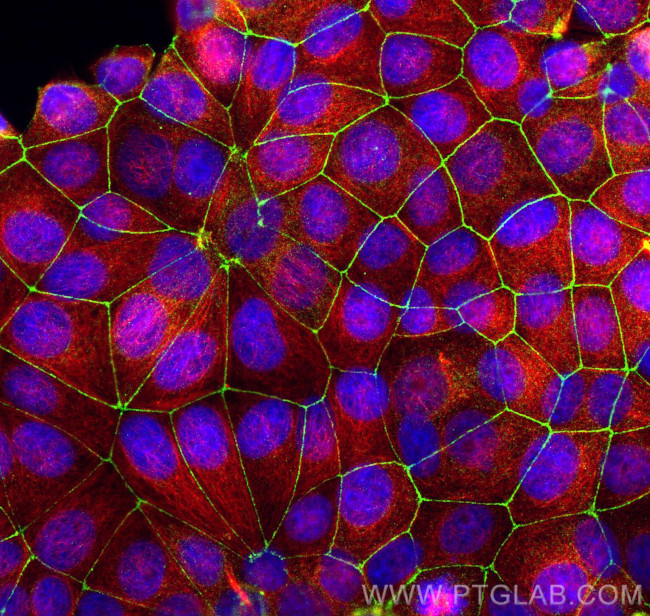
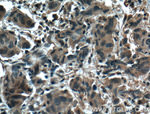
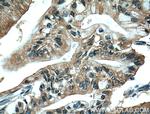
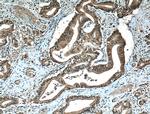
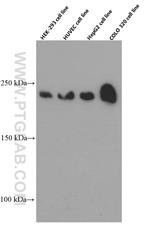
Please note: We are reviewing Western blot images included in the antibody testing data in our catalog, including those provided by third parties. Unless expressly labeled or annotated as “raw-unedited”, Western blot images included in the antibody testing data in our catalog may have been edited, optimized or otherwise adjusted for presentation.


产品信息
66452-1-IG
应用
建议稀释比
已发表文章
产品规格
种属反应
Dog,
Human
已发表种属
Human,
Mouse
宿主/亚型
Mouse
/ IgG1
分类
Monoclonal
类型
Antibody
克隆号
1G4A1
抗原
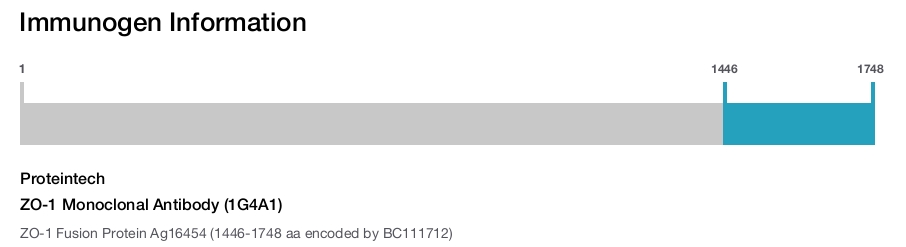
ZO-1 Fusion Protein Ag16454 (1446-1748 aa encoded by BC111712)
偶联物
Unconjugated
Unconjugated
Unconjugated
形式
Liquid
浓度
1 mg/mL
规格
150 µg
纯化类型
Protein A
保存液
PBS, pH 7.3, with 50% glycerol
内含物
0.02% sodium azide
保存条件
-20°C
运输条件
Wet ice (domestic); Dry ice (international)
产品详细信息
Immunogen sequence: SLHIHSKGA HGEGNSVSLD FQNSLVSKPD PPPSQNKPAT FRPPNREDTA QAAFYPQKSF PDKAPVNGTE QTQKTVTPAY NRFTPKPYTS SARPFERKFE SPKFNHNLLP SETAHKPDLS SKTPTSPKTL VKSHSLAQPP EFDSGVETFS IHAEKPKYQI NNISTVPKAI PVSPSAVEED EDEDGHTVVA TARGIFNSNG GVLSSIETGV SIIIPQGAIP EGVEQEIYFK VCRDNSILPP LDKEKGETLL SPLVMCGPHG LKFLKPVELR LPHCDPKTWQ NKCLPGDPNY LVGANCVSVL IDHF (1446-1748 aa encoded by BC111712)
靶标信息
ZO-1 forms complexes with either ZO-2 or ZO-3. In addition, these proteins can also associate with claudin, occludin and F-actin, at tight junction stands, where they provide a linkage between the actin cytoskeleton and the tight junction. ZO-1 expression is significantly reduced in many breast cancer lines. ZO-2 and ZO-3 are ubiquitously expressed within epithelial tight junctions, and unlike ZO-1, which is also expressed at cell junctions of cardiac myocytes, ZO-2 is not expressed in nonepithelial tissue. ZO-1 is a protein located on a cytoplasmic membrane surface of intercellular tight junctions. ZO-1 may be involved in signal transduction at cell-cell junctions. Two transcript variants encoding distinct isoforms have been identified for the ZO-1 gene. Diseases associated with ZO-1 dysfunction include Celiac Disease and Congenital Nephrotic Syndrome.
仅用于科研。不用于诊断过程。未经明确授权不得转售。
生物信息学
蛋白别名: DKFZp686M05161; MGC133289; OTTHUMP00000174520; tight junction protein 1 (zona occludens 1); tight junction protein ZO-1; unnamed protein product; zona occludens 1; zonula occludens 1 protein; zonula occludens protein 1
基因别名: ZO-1; ZO1
UniProt ID: (Human) Q07157, (Dog) O97758
Entrez Gene ID: (Human) 7082, (Dog) 403752
cell-cell junction assembly
positive regulation of cell proliferation
actin cytoskeleton organization
positive regulation of cell migration
actomyosin structure organization
adherens junction maintenance
maintenance of blood-brain barrier
ameloblast differentiation
negative regulation of apoptotic process
cell-cell junction organization
regulation of cytoskeleton organization
negative regulation of stress fiber assembly
protein localization to adherens junction
establishment of endothelial intestinal barrier
cell-cell adhesion
protein localization to cell-cell junction
regulation of cell junction assembly
protein localization to bicellular tight junction
positive regulation of sprouting angiogenesis
positive regulation of maintenance of permeability of blood-brain barrier
positive regulation of cell-cell adhesion mediated by cadherin
regulation of bicellular tight junction assembly
bicellular tight junction assembly
cellular response to calcium ion
Disclaimer

Clicking the images or links will redirect you to a website hosted by BenchSci that provides third-party scientific content. Neither the content nor the BenchSci technology and processes for selection have been evaluated by us; we are providing them as-is and without warranty of any kind, including for use or application of the Thermo Fisher Scientific products presented.

