Search
Proteintech
mDia1 Polyclonal Antibody
{{$productOrderCtrl.translations['antibody.pdp.commerceCard.promotion.promotions']}}
{{$productOrderCtrl.translations['antibody.pdp.commerceCard.promotion.viewpromo']}}
{{$productOrderCtrl.translations['antibody.pdp.commerceCard.promotion.promocode']}}: {{promo.promoCode}} {{promo.promoTitle}} {{promo.promoDescription}}. {{$productOrderCtrl.translations['antibody.pdp.commerceCard.promotion.learnmore']}}
Additional Information:
{{banner.description}}
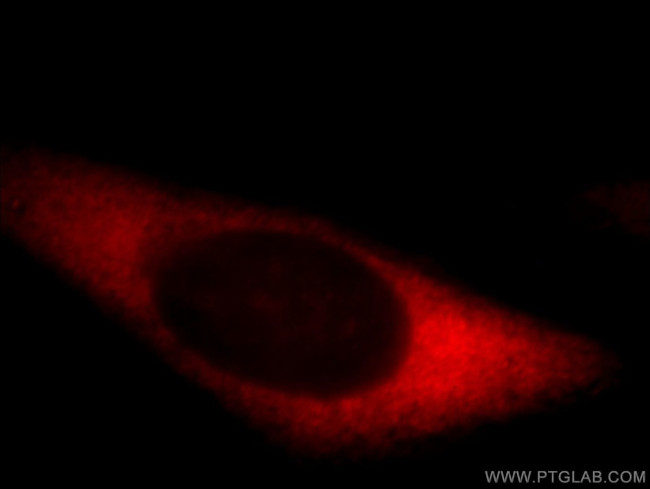
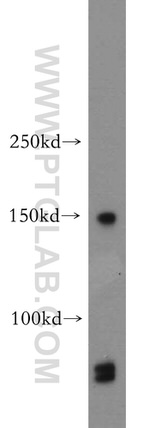
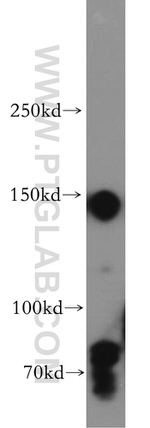
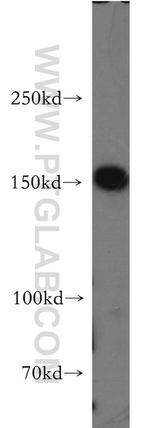
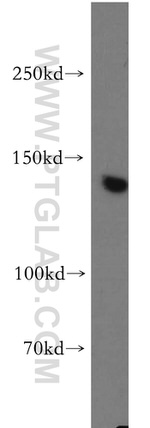
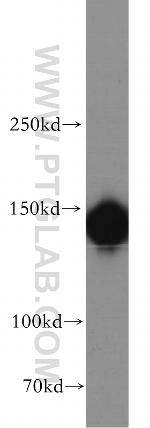
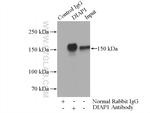
Please note: We are reviewing Western blot images included in the antibody testing data in our catalog, including those provided by third parties. Unless expressly labeled or annotated as “raw-unedited”, Western blot images included in the antibody testing data in our catalog may have been edited, optimized or otherwise adjusted for presentation.


产品信息
20624-1-AP
应用
建议稀释比
已发表文章
产品规格
种属反应
Human,
Mouse,
Non-human primate,
Rat
已发表种属
Human,
Mouse
宿主/亚型
Rabbit
/ IgG
分类
Polyclonal
类型
Antibody
抗原
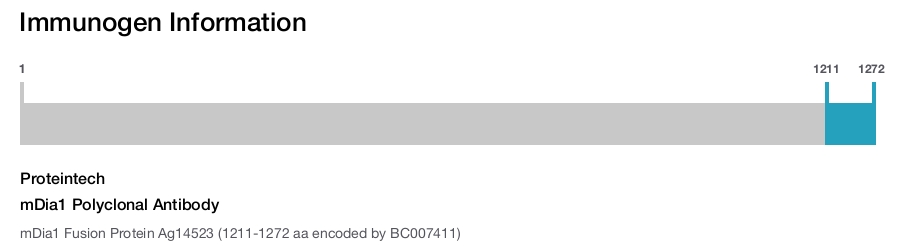
mDia1 Fusion Protein Ag14523 (1211-1272 aa encoded by BC007411)
偶联物
Unconjugated
Unconjugated
Unconjugated
形式
Liquid
浓度
0.21 mg/mL
规格
31.5 µg
纯化类型
Antigen affinity chromatography
保存液
PBS, pH 7.3, with 50% glycerol
内含物
0.02% sodium azide
保存条件
-20°C
运输条件
Wet ice (domestic); Dry ice (international)
产品详细信息
This antibody recognizes the endogenous mDia1 mainly around 140-150 kDa, while sometimes an additional 70 kDa can also be observed which is proposed to be a fragment of 140-150 kDa molecules.
Immunogen sequence: AFRRKRGPR QANRKAGCAV TSLLASELTK DDAMAAVPAK VSKNSETFPT ILEEAKELVG RAS (1211-1272 aa encoded by BC007411)
靶标信息
This gene is a homolog of the Drosophila diaphanous gene, and has been linked to autosomal dominant, fully penetrant, nonsyndromic sensorineural progressive low-frequency hearing loss. Actin polymerization involves proteins known to interact with diaphanous protein in Drosophila and mouse. It has therefore been speculated that this gene may have a role in the regulation of actin polymerization in hair cells of the inner ear. Alternatively spliced transcript variants encoding distinct isoforms have been found for this gene.
仅用于科研。不用于诊断过程。未经明确授权不得转售。
生物信息学
蛋白别名: diaphanous 1; diaphanous homolog 1; diaphanous-1; Diaphanous-related formin-1; DRF1; FLJ25265; mDIA1; p140DIA; p140mDIA; Protein diaphanous homolog 1
基因别名: D18Wsu154e; Dia1; DIAP1; DIAPH1; Drf1; p140mDia
UniProt ID: (Mouse) O08808
Entrez Gene ID: (Mouse) 13367, (Rat) 307483
cytoskeleton organization
regulation of cell shape
actin cytoskeleton organization
actin filament polymerization
positive regulation of cell migration
neuron projection development
regulation of microtubule-based process
protein localization to microtubule
regulation of release of sequestered calcium ion into cytosol
cellular response to histamine
Disclaimer

Clicking the images or links will redirect you to a website hosted by BenchSci that provides third-party scientific content. Neither the content nor the BenchSci technology and processes for selection have been evaluated by us; we are providing them as-is and without warranty of any kind, including for use or application of the Thermo Fisher Scientific products presented.

