Search
Invitrogen
pyroglutamate Amyloid beta (Remternetug Biosimilar) Recombinant Human Monoclonal Antibody
{{$productOrderCtrl.translations['antibody.pdp.commerceCard.promotion.promotions']}}
{{$productOrderCtrl.translations['antibody.pdp.commerceCard.promotion.viewpromo']}}
{{$productOrderCtrl.translations['antibody.pdp.commerceCard.promotion.promocode']}}: {{promo.promoCode}} {{promo.promoTitle}} {{promo.promoDescription}}. {{$productOrderCtrl.translations['antibody.pdp.commerceCard.promotion.learnmore']}}
Additional Information:
{{banner.description}}
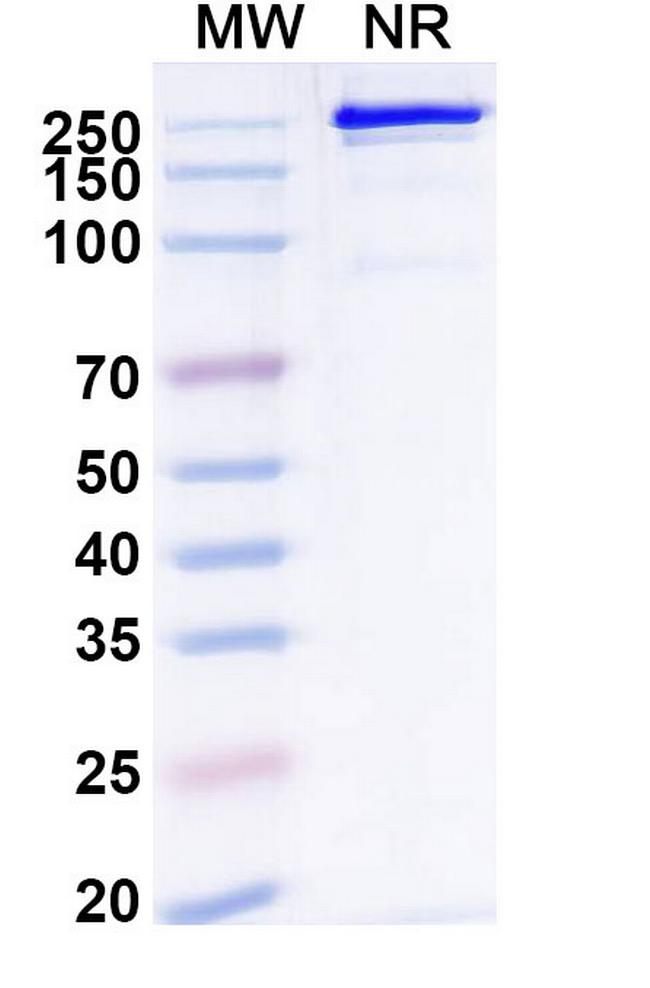
Please note: We are reviewing Western blot images included in the antibody testing data in our catalog, including those provided by third parties. Unless expressly labeled or annotated as “raw-unedited”, Western blot images included in the antibody testing data in our catalog may have been edited, optimized or otherwise adjusted for presentation.

产品信息
MA562587
应用
建议稀释比
已发表文章
产品规格
种属反应
Human
宿主/亚型
Human
/ IgG1, kappa
Expression System
CHO cells
分类
Recombinant Monoclonal
类型
Antibody
偶联物
Unconjugated
Unconjugated
Unconjugated
形式
Liquid
浓度
1 mg/mL
规格
100 µg
纯化类型
Protein A/G
保存液
PBS, pH 7.4
内含物
no preservative
保存条件
Store at 4°C short term. For long term storage, store at -20°C, avoiding freeze/thaw cycles.
运输条件
Ambient (domestic); Wet ice (international)
RRID
靶标信息
The pyroglutamate (pGlu) amyloid-beta (AB) is a modified form of the amyloid-beta peptide that has an N-terminal modification where the glutamate residue at the third position is cyclized to form pyroglutamate. This post-translational modification enhances the aggregation and stability of AB, making pGlu-AB a particularly toxic species implicated in the pathogenesis of Alzheimer's disease. Structurally, the formation of pyroglutamate increases the hydrophobicity of the AB peptide, promoting its aggregation into oligomers and fibrils. Functionally, pGlu-AB has been shown to be more resistant to degradation by proteolytic enzymes compared to unmodified AB peptides. The accumulation of pGlu-AB in the brain contributes to the formation of amyloid plaques, synaptic dysfunction, and neuroinflammation, which are hallmark features of Alzheimer's disease.
仅用于科研。不用于诊断过程。未经明确授权不得转售。
篇参考文献 (0)
您是否在文献中引用过该产品?请点击下方按钮邮件告知我们。
Disclaimer

Clicking the images or links will redirect you to a website hosted by BenchSci that provides third-party scientific content. Neither the content nor the BenchSci technology and processes for selection have been evaluated by us; we are providing them as-is and without warranty of any kind, including for use or application of the Thermo Fisher Scientific products presented.

