Search

User Meeting
Jul 06, 2023
INSTAAR (Institute of Arctic and Alpine Research), University of Colorado Boulder | 4001 Discovery Drive, CO 80303 | Sievers Room, S228
Overview
During this day of discovery, sharing, and fun, attendees learned more about innovative Orbitrap for isotope solutions, capabilities, and applications from our experts and guest speakers from the University of Colorado Boulder, California Institute of Technology, the University of Vermont, and NASA. It was the first ever Orbitrap for isotopes users group meeting.
Attendees also connected with colleagues, shared their current and future projects, and participated in a technology and troubleshooting roundtable discussion. Then, we celebrated the launch of our first demo laboratories with a slice of cake and a tour of the Isotope Orbitrap and Stable Isotope laboratories. The day ended with a Social Hour at the Sanitas Brewing Company for refreshments, more networking, and fun!
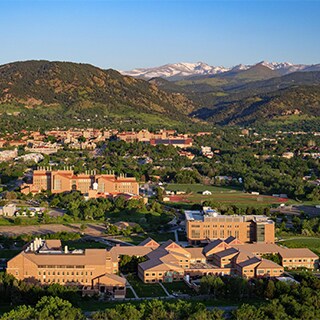
Photo courtesy of the University of Colorado Boulder.
Interested in finding out more? We can put you in touch with one of our experts. Fill out the form below.
Agenda
8 - 9 a.m. | Registration, breakfast, meet and greet |
9 - 9:30 a.m. | Isotopocules – Everything, everywhere, all at once? |
9:30 - 9:45 a.m. | Overview of Thermo Scientific Orbitrap Exploris Isotope Solutions |
9:45 - 10 a.m. | Question and answer session |
10 - 10:30 a.m. | Expanding the Orbitrap-IRMS Frontier: Coalescence, Duration, and Interpretation of Large Datasets |
10:30 - 11:30 a.m. | Coffee Roundtables: Technology and troubleshooting |
11:30 a.m. - 12:30 p.m. | Can one Orbitrap do it all? In vivo measurement of protein synthesis from fast to slow |
12:30 - 1:30 p.m. | Lunch buffet |
1:30 - 2 p.m. | Orbitrap mass spectrometry for Astrobiology |
2 - 2:45 p.m. | Share current and future projects |
2:45 - 3:45 p.m. | Demo laboratory launch celebration and tours |
3:45 - 4:15 p.m. | Panel discussion: Shared resources |
4:15 p.m. | User meeting wrap up |
4:30 - 6 p.m. | Social Hour at the Sanitas Brewing Company |
Speakers
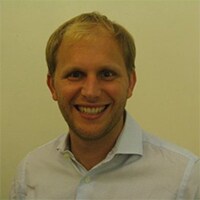
Brett Davidheiser, PhD
Brett is interested in solving problems with isotopes and understand improving the equipment we use to make these measurements. He has a wide experience in isotope ratio mass spectrometry from his PhD at the University of Glasgow, running a stable isotope lab at CU Boulder, to his work at Thermo Fisher Scientific as applications scientist. He is currently involved in helping new users come up to speed with Thermo Scientific Orbitrap Exploris Isotope Solutions for natural abundance isotope ratio analysis.
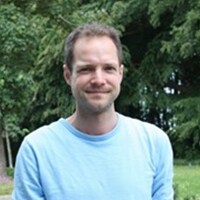
Cajetan Neubauer
Caj is a biochemist at the Institute of Arctic and Alpine Research (INSTAAR) located at the University of Colorado in Boulder. He specializes in studying stable isotopic fingerprints found in biomolecules.
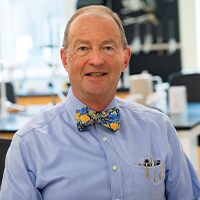
Dwight E. Matthews
Professor Dwight E. Matthews received his PhD degree in 1977 in Analytical Chemistry from Indiana University with John Hayes with a focus in mass spectrometry. For his Ph.D. thesis he developed the first GC-C-IRMS. He then began his career at Washington University School of Medicine in St. Louis in the Department of Medicine where he developed stable isotope tracer methods to study in vivo amino acid metabolism in humans centered around GC-MS. In 1986 he moved to Cornell University Medical College in New York City to continue studies of metabolism. Here his focus broadened to include studies of metabolism in conditions found commonly in surgical metabolism and energy metabolism using doubly labeled water measured by IRMS. In 1996 he moved to the University of Vermont, he directed core laboratories related to mass spectrometry. During this period, he developed new proteomics methods using LC-MS with a focus on precise measurement of stable isotopic enrichments in proteins and peptides. Professor Matthews is a world-renown expert in the development of stable isotope tracer techniques to study metabolism in humans. He has published over 170 papers in a range of peer-reviewed journals and over 70 contributions to symposia and chapters in books, and has an H-index of 80.
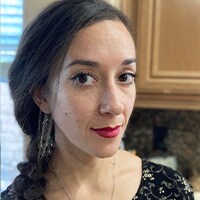
Gabriella Montaño Weiss
Gabriella measures the carbon and hydrogen isotope signatures of organic compounds to understand past hydrological change and distinguish between living and abiotic, chemical processes. She started her studies in Anthropology at the University of California, Riverside and earned her Masters degree in environmental dating and chronology techniques at Queen’s University, Belfast, Northern Ireland. Following her Masters, Gabriella completed a PhD in Marine Organic Geochemistry at the Royal Netherlands Institute of Sea Research and Utrecht University in The Netherlands. Gabriella began her work with amino acids and Orbitrap mass spectrometry during a joint postdoc position between the Pennsylvania State University and California Institute of Technology as part of the NASA Astrobiology Center for Isotopologue Research. She now works as a postdoctoral research associate with Dr. Heather Graham at NASA Goddard Space Flight Center to understand how isotope ratios and molecular fragmentation can serve as an agnostic life-detection tool.
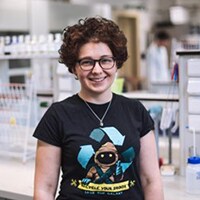
Kristýna Kantnerová
Kristýna is a postdoctoral fellow at University of Colorado Boulder with Sebastian Kopf (Geological Sciences) and Cajetan Neubauer (INSTAAR). Her project focuses on a method development of isotope analysis of the oxyanions nitrate, phosphate, and sulfate by electrospray ionization-Orbitrap mass spectrometry (funded by the Swiss National Science Foundation). Her research interests include the development of new methods for stable isotope analysis and applied studies on greenhouse gases and their biogeochemical cycles, mainly nitrous oxide and the related nitrogen cycle.
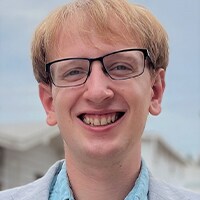
Tim Csernica
Tim is a Ph.D. student at Caltech who has spent the last 4 years developing methods for Orbitrap-IRMS. His research interests include chemical forensics and the interpretation of unconventional observations of isotopic variation. Prior to Caltech, he received a B.S. in Chemistry from the University of Chicago.
CMD Wide-format style fixes
Style Sheet for Komodo Tabs
Style Sheet for Global Design System