Search
What is dry amorphization?
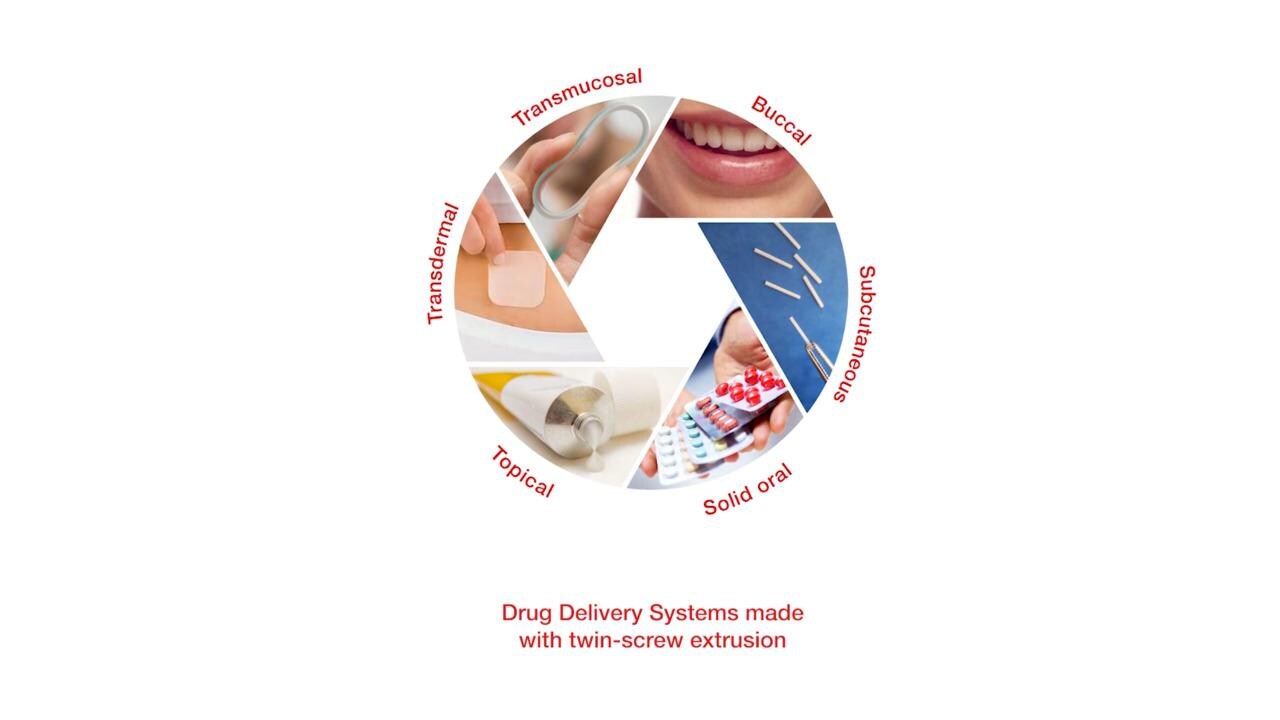
Dry amorphization is an advanced pharmaceutical process that converts crystalline active pharmaceutical ingredients (APIs) into amorphous forms using mechanical energy—without the use of solvents. This enhances drug solubility, stability, and bioavailability. Twin-screw extrusion (TSE) is a leading continuous processing method that enables this transformation with precise control and scalability.
Why go solvent-free?
Spray drying has traditionally been used to make amorphous drugs by dissolving ingredients in a solvent and evaporating them into a solid. It’s effective, but comes with drawbacks—especially around solvents.
Key concerns with spray drying:
- Handling and safety risks
- Potential for residual solvents
- Increased regulatory hurdles
Hot melt extrusion (HME) avoids these issues by eliminating solvents altogether. It’s reproducible, scalable, and supports greener manufacturing—so long as your formulation remains stable at processing temperatures.
Thermo Fisher supports both traditional and solvent-free methods. But if you’re looking to simplify and modernize, dry amorphization may offer a better path forward.

Twin-screw extrusion technology drives innovation


The role of powder rheology
Understanding powder behavior is key to successful dry amorphization. Thermo Scientific HAAKE MARS Rheometers with powder rheology accessories provide insights into powder flowability, compressibility, and shear properties—critical for achieving uniformity, consistency, and quality in formulations. These capabilities are especially valuable in method development and scale-up, where flow behavior can influence mixing efficiency, extrusion parameters, and final product performance. For more, see our application note on powder rheology.
- RheoWin Software for reproducible test protocols
- Flexible Powder Flow Cell for ease of use
- Applications from mixing to tablet pressing Quote Placeholder “Powder rheology allows investigators to measure the flow and shear properties of powders... ensuring uniformity, consistency, and quality.” — Powder Rheology in Pharmaceutical Formulation Development, Thermo Fisher Scientific
Proven in the field
Researchers and industry innovators are already using Thermo Fisher Scientific solutions to transform pharmaceutical manufacturing.
Supporting your success
From lab to line, Thermo Fisher Scientific offers scalable technology, expert guidance, and comprehensive resources to support dry amorphization.
For Research Use Only. Not for use in diagnostic procedures.