Search
Food safety analysis is becoming more complex as contaminant profiles expand and regulatory expectations evolve. From multi-residue pesticide analysis to emerging contaminants, laboratories must balance sensitivity, scalability, and efficiency.
Advanced, integrated workflows—combining streamlined sample preparation with high-performance detection—enable confident identification and quantitation, helping labs stay ahead of today’s challenges and tomorrow’s unknowns.
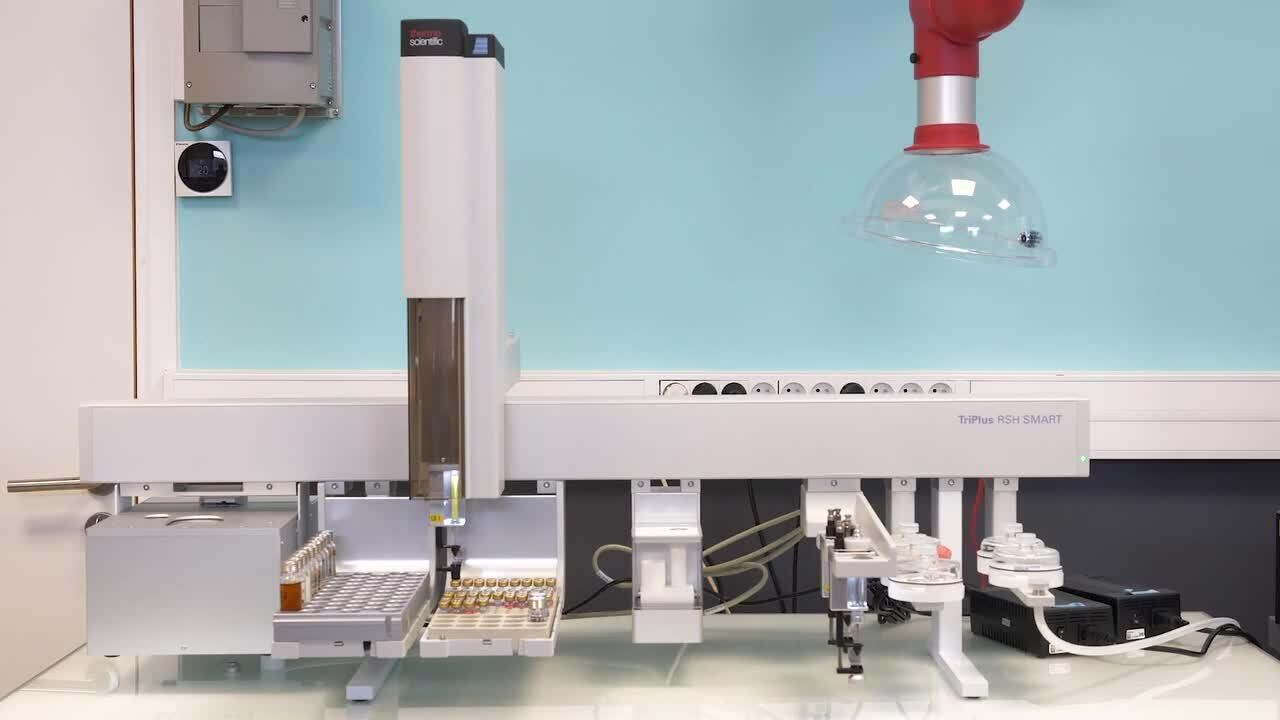
Confident multi-residue pesticide analysis at scale
Pesticide residue analysis remains one of the most demanding areas in food safety testing. Laboratories must quantify hundreds of compounds across diverse matrices while maintaining compliance with maximum residue limits (MRLs).
As analytical scope expands, workflows must deliver consistent performance, robust confirmation, and efficient throughput without increasing operational burden.

High-throughput, high-confidence quantitation
Pesticide workflows require:
- Reliable detection across large compound panels
- Consistent quantitation at low ppb levels
- Robust performance across challenging matrices
- Efficient calibration and method management
Optimized workflows combining clean sample preparation and selective detection help enable laboratories to achieve reproducible results while maintaining throughput.
From extraction to report
Pesticide analysis workflows integrate:
- Sample preparation (DLLME / QuEChERS)
- GC-MS/MS and LC-MS/MS detection
- LC-HRMS detection
- Data processing and reporting
- Method standardization
This integrated approach helps reduce variability and supports routine, high-throughput testing.
Designed for expanding residue panels
As pesticide lists evolve, laboratories must:
- Add new compounds efficiently
- Maintain method performance
- Avoid workflow complexity
Scalable workflows support expansion without compromising sensitivity or throughput.
Prepared for what’s known — and what’s next
Food safety programs are increasingly required to monitor contaminants beyond traditional pesticide lists, including transformation products, process contaminants, and newly identified compounds.
Workflows must support both targeted quantitation and broader screening capabilities.

Confident screening and identification
Workflows support:
- Broad compound detection
- Accurate identification
- Retrospective analysis
- Quantitation of confirmed targets
From discovery to quantitation
Integrated workflows enable:
- Transition from screening to targeted analysis
- Data continuity
- Efficient method development
Built for expanding food safety requirements
- Adaptable to new contaminant classes
- Flexible workflows
- Scalable analytical capability
Smarter extraction. Faster throughput. Stronger confidence.
Sample preparation is a critical determinant of performance in food testing workflows. Complex matrices such as fats, proteins, and pigments can introduce significant analytical challenges.
DLLME provides a simplified, efficient approach to sample preparation that helps improve extract cleanliness and supports consistent, high-quality analytical results.

Optimized for multi-residue performance
DLLME workflows help deliver:
- Reduced matrix interference
- Improved analyte recovery
- Lower solvent consumption
- Faster preparation time
- Improved reproducibility across matrices
These benefits translate into improved throughput and help reduce operational burden.
From extraction to efficiency
Cleaner extracts contribute to:
- Reduced instrument contamination
- Fewer repeat injections
- More stable calibration
- Improved system uptime
How it works
DLLME disperses a small volume of extraction solvent into the sample, forming a fine emulsion that enhances analyte transfer into the extraction phase.
The result is rapid, efficient pre-concentration and clean-up within a simplified workflow.
Designed to support advanced detection
When combined with advanced detection platforms such as EFOX LC-MS/MS systems, DLLME enhances:
- Detection sensitivity
- Confirmation confidence
- Analytical stability
Our general purpose product lines are not intended for in vitro diagnostic purposes in accordance with our product documentation, manuals, and labels. They are designated for General Laboratory Use Only.
Our general purpose product lines have not been tested or validated for such applications and their use for in vitro diagnostic purposes may result in health and safety risks.
The product is For General Lab Use Only - Not For Diagnostic Procedures. The application is For Research Use Only - Not For Use In Diagnostic Procedures.