Search
Invitrogen
Creatinine Competitive ELISA Kit
{{$productOrderCtrl.translations['antibody.pdp.commerceCard.promotion.promotions']}}
{{$productOrderCtrl.translations['antibody.pdp.commerceCard.promotion.promocode']}}: {{promo.promoCode}} {{promo.promoTitle}} {{promo.promoDescription}}. {{$productOrderCtrl.translations['antibody.pdp.commerceCard.promotion.learnmore']}}
{{$ctrl.translations['antibody.pdp.skuNotes.additionalInformation']}}:
产品规格
检测灵敏度
0.75 µg/mL
测定范围
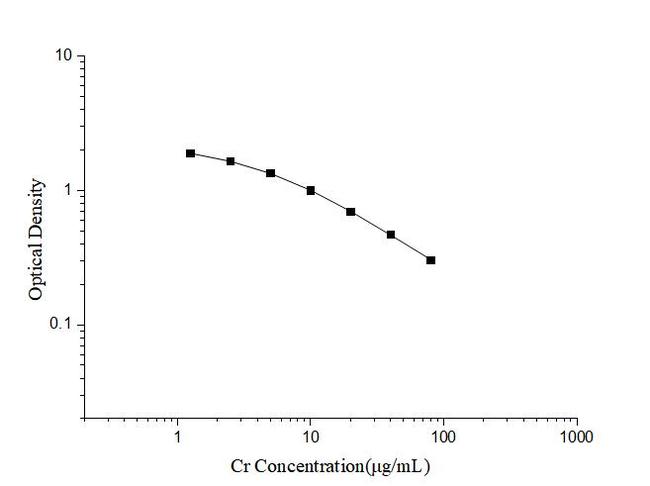
1.25-80 µg/mL
检测样本类型/体积
{Serum=50 µL, Plasma=50 µL, Tissue homogenate=50 µL, Cell lysate=50 µL}
手工操作时间
1 hr 20 min
总时间
2 hr 30 min
均相(无需洗涤)
No
批间差异
<10%
批内差异
<10%
检测仪器
Absorbance Microplate Reader
产品规格
96 Tests
产品成分
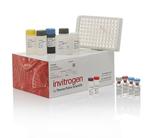
Pre-coated 96 well plate, Standard, Biotinylated Detection Antibody, HRP Conjugate, Standard & Sample Diluent, Biotinylated Detection Antibody Diluent, HRP Conjugate Diluent, Wash Buffer, TMB Substrate, Stop Solution, Plate Sealer
运输条件
Wet ice
储存
Refer to product documentation for component specific storage temperature.
蛋白名称
Creatinine
均相(无需洗涤)
All
Species (reported)
All
检测试剂盒格式
Competitive ELISA
检测抗体结合物
Biotin
标签或染料
HRP
关于本试剂盒
The Creatinine (Cr) ELISA quantitates Cr in serum, plasma and other biological fluids.
原理方法
The Competitive multispecies ELISA research use only kit is designed to quantitatively measure Creatinine (Cr) independent of species. A Cr standard is provided to generate a standard curve for the assay and all samples are read off a user generated standard curve.Standards or diluted samples are pipetted into a coated microtiter plate and Biotinylated Detection Ab specific to Cr is added. Excess conjugate and unbound sample or standard are washed from the plate, and Avidin conjugated to Horseradish Peroxidase (HRP) is added to each well and incubated. Then a TMB substrate solution is added to each well. The enzyme substrate reaction is terminated by the addition of stop solution and the color change is measured on a microplate reader. The concentration of Cr in the samples is then determined by comparing the OD of the samples to the standard curve.
Rigorous validation:
Each manufactured lot of this ELISA kit is quality tested for criteria such as sensitivity, specificity, precision, and lot-to-lot consistency. See manual for more information on validation.
For Research Use Only. Not for use in diagnostic procedures. Not for resale without express authorization.
靶标信息
Creatinine is a nitrogenous waste molecule generated from muscle metabolism and is predominantly filtered through the kidneys to be excreted in urine. Although not directly encoded by a gene itself, its levels are significant for assessing kidney function, with serum creatinine being a key biomarker in nephrology. Creatinine evaluation serves as a primary tool for estimating the glomerular filtration rate (eGFR), offering an indirect measure of renal performance. Despite its prevalence in medical diagnostics, creatinine measurement has notable limitations due to its susceptibility to variations influenced by factors such as muscle mass, diet, age, and ethnicity, making it less reliable under certain conditions. Advanced methods now incorporate cystatin C alongside creatinine to enhance equation accuracy for eGFR estimations and mitigate racial biases in clinical settings. The metabolism of creatinine and its physiological significance underscores its utility as a cost-effective, accessible measure for kidney function, despite its shortcomings.
For Research Use Only. Not for use in diagnostic procedures. Not for resale without express authorization.
篇参考文献 (0)
您是否在文献中引用过该产品?请点击下方按钮邮件告知我们。

