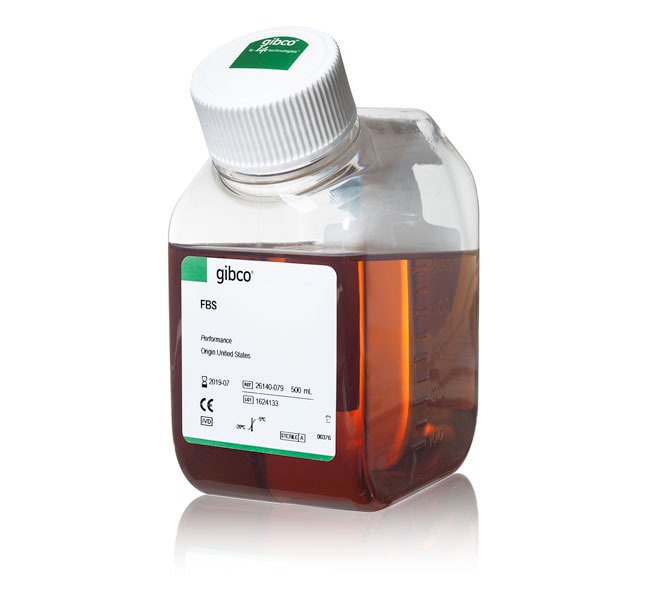
Fetal Bovine Serum, qualified, Brazil
Gibco™

Fetal Bovine Serum, qualified, Brazil

Green features
Gibco fetal bovine sera offer excellent value for basic cell culture, specialty research, and specific assays, earning the trust of了解更多信息
Have Questions?
货号数量产品规格
10270106500 mLBottle
我们升级后的 Value 胎牛血清 (FBS),在维持一贯稳定性、生产、储存与运输工艺的基础上,进一步优化了产品规格,为科研工作提供更可靠的支持。
货号 10270106
选择当前产品

Gibco fetal bovine sera offer excellent value for basic cell culture, specialty research, and specific assays, earning the trust of researchers with consistent quality and award-winning support that helps meet your research needs and budget requirements.

  • Replacing with Fetal Bovine Serum, value
  • Sera application: for cell culture with robust cell lines, good value for basic research
  • Endotoxin level: ≤50 EU/mL (levels routinely ≤10 EU/mL)
  • Hemoglobin level: ≤25 mg/dL
  • Origin: Brazil

Virus and Mycoplasma Tested. Supplied with a Certificate of Analysis detailing QC results.

For research use or further manufacturing use only. Serum and blood proteins are not for direct administration into humans or animals.
规格
纯度或质量等级仅限合格
运输条件冰冻
种属牛/牛
年龄胎儿
原产国Brazil
形式Liquid
产品规格Bottle
产品类型Fetal Bovine Serum
数量500 mL
血清处理标准品(无菌过滤)
无菌Sterile
Unit SizeEach
内容与储存
储存条件:≤-10°C
运输条件:冰冻

常见问题解答 (FAQ)

如果收到的FBS已经部分化冻,我还能继续使用么?

我们的研究结果显示在4°C条件下短时保存化冻的FBS,28天(之内)不会降低其生长或活性方面的效能。如需在4°C条件下将FBS保存更长时间,就需要逐案评估这一储存条件是否为必须。

我有时在血清中见到絮状沉淀。那可能是些什么物质?

多种原因可能导致FBS中出现絮状沉淀。最为常见的原因是血清中脂蛋白的变性。你可能会在血清化冻后观察到血纤蛋白——一种血清中存在的促凝蛋白。这并不会影响本品的使用性能。

如需去除絮状沉淀,请将血清移至无菌管中,以400 x g进行简短离心。之后把所得的上清液和培养基一并过滤。不要试图过滤含有絮状沉淀的血清,可能会堵塞滤器。

存放于冰箱中的FBS中为何会出现沉淀?

Gibco FBS未经预老化处理。当储存于2至8°C的条件下,血清中可能存在的各类蛋白与脂蛋白(如冷凝集素,纤维蛋白原,玻连蛋白等)会发生聚集,并且形成肉眼可见的沉淀或混浊。这并不会影响血清的使用性能。我们推荐您将FBS储存于–20°C,同时避免反复冻融。

What are the benefits and disadvantages of using heat-inactivated FBS in cell culture?

  1. Heating inactivates complement. Active complement can participate in cytolytic events, contract smooth muscle, release histamine from mast cells and platelets, and activate lymphocytic and macrophage cells. Applications where heat-inactivated serum is recommended include immunological studies and culturing of embryonic stem cells (ESCs), insect cells, and smooth muscle cells.
  2. Heat inactivation helps to achieve bottle-to-bottle and lot-to-lot stability by neutralizing many factors that can vary largely from lot to lot.
  3. There aren't necessarily disadvantages to heat inactivation of FBS, but there is some evidence that suggests there may be no added benefit to it unless you are carrying out immune studies.

Note: Heat inactivation is performed in a 56 degrees C water bath for 30 min with swirling every 10 min or so for heat distribution and to lower the degree of protein aggregation/flocculant precipitation. Note: If the time or temperature is exceeded, the serum may thicken to a gel. If this occurs, the serum is no longer usable. Unnecessary heat inactivation can take up time and potentially lead to wasted reagents if a mistake is made during the protocol1.

1. Pellerin, et al., Bioengineering, published in 2021.

Find additional tips, troubleshooting help, and resources within our Mammalian Cell Culture Basics Support Center.

What is the difference between "qualified" versus "certified" purity grade FBS?

The main difference is in the Quality Control (QC) test specifications. “Qualified” and “Certified” FBS go through the same QC tests but “Certified” FBS has additional QC tests as well as more stringent QC test specifications for endotoxin and hemoglobin levels. The additional QC tests in “Certified” FBS include biochemical and hormonal profiling.

Find additional tips, troubleshooting help, and resources within our Cell Culture Support Center.