Search

Invitrogen™
ezDNase™酶
Invitrogen™ ezDNase™ Enzyme is a recombinant double-strand-specific DNase for the fast removal of contaminating genomic DNA from RNA preparations. It了解更多信息
| 货号 | 数量 |
|---|---|
| 11766051 | 50 μL |
货号 11766051
价格(CNY)
2,167.00
飞享价
Ends: 31-Dec-2026
3,095.00共减 928.00 (30%)
Each
数量:
50 μL
价格(CNY)
2,167.00
飞享价
Ends: 31-Dec-2026
3,095.00共减 928.00 (30%)
Each
Invitrogen™ ezDNase™ Enzyme is a recombinant double-strand-specific DNase for the fast removal of contaminating genomic DNA from RNA preparations. It cleaves phosphodiester bonds in double-stranded DNA to yield 2–8 bp oligonucleotides with 5’-phosphate and 3’-hydroxyl termini.
Features of ezDNase Enzyme include:
• Efficient and fast genomic DNA removal
• Highly specific—no impact on RNA, cDNA, or primers in RT reactions
ezDNase Enzyme's high specificity for double-stranded DNA enables efficient and fast genomic DNA removal without reduction in the quality or quantity of RNA or single-stranded DNA present in the reaction such as cDNA and primers. ezDNase Enzyme is heat-labile and so can be easily deactivated by heat treatment at moderate temperature (55°C). These features make ezDNase a superior choice for genomic DNA removal prior to reverse transcription reactions.
When used in combination with the SuperScript™ IV VILO™ Master Mix or other Invitrogen reverse transcription reagents, ezDNase Enzyme helps significantly reduce the possibility of cDNA synthesis being compromised by genomic DNA and reduce variation in RT-qPCR quantitation caused by RNA loss or damage during conventional DNase treatment.
Features of ezDNase Enzyme include:
• Efficient and fast genomic DNA removal
• Highly specific—no impact on RNA, cDNA, or primers in RT reactions
ezDNase Enzyme's high specificity for double-stranded DNA enables efficient and fast genomic DNA removal without reduction in the quality or quantity of RNA or single-stranded DNA present in the reaction such as cDNA and primers. ezDNase Enzyme is heat-labile and so can be easily deactivated by heat treatment at moderate temperature (55°C). These features make ezDNase a superior choice for genomic DNA removal prior to reverse transcription reactions.
When used in combination with the SuperScript™ IV VILO™ Master Mix or other Invitrogen reverse transcription reagents, ezDNase Enzyme helps significantly reduce the possibility of cDNA synthesis being compromised by genomic DNA and reduce variation in RT-qPCR quantitation caused by RNA loss or damage during conventional DNase treatment.
仅供科研使用。不可用于诊断程序。
规格
兼容缓冲液逆转录试剂
适用于(应用)RT-qPCR
产品类型酶
数量50 μL
样品类型RNA
运输条件在干冰上
最大浓度10X
酶DNase
形式单酶
产品线ezDNase
Unit SizeEach
内容与储存
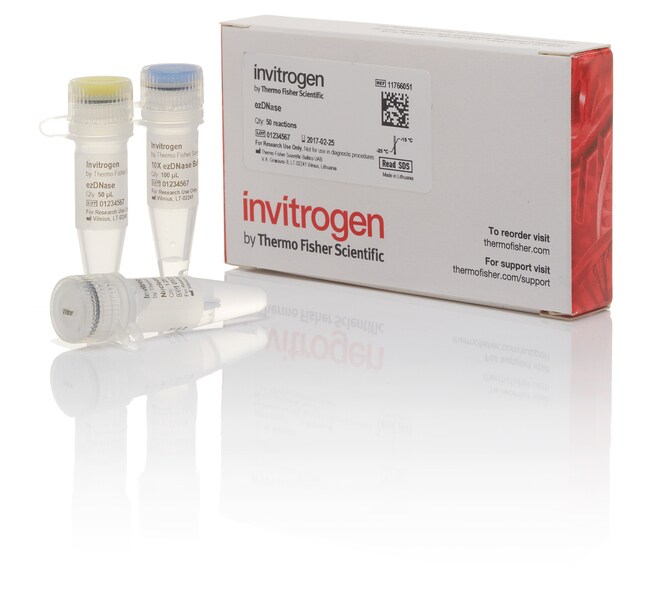
• ezDNase 酶,50 μL
• ezDNase 缓冲液 (10X),100 μL
• 无核酸酶水,1.25 mL
储存在 -5 至 -30°C 下。
• ezDNase 缓冲液 (10X),100 μL
• 无核酸酶水,1.25 mL
储存在 -5 至 -30°C 下。