Search

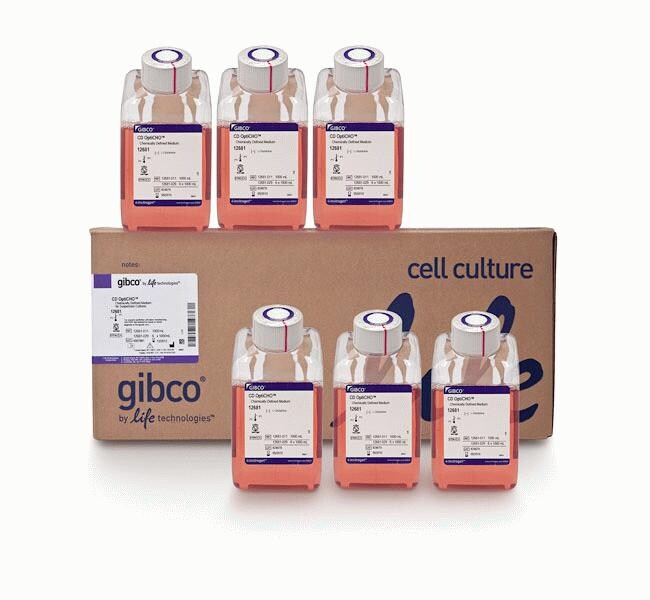
Gibco™
CD OptiCHO™ 培养基
CD OptiCHO™ 培养基经过特殊设计,能够在化学组分确定的流加培养环境中,提供重组 CHO 细胞高性能和产量。这种无蛋白质、无动物来源成分的配方可提供一致性,并有助于减少筛选外源性因子的需要。CD OptiCHO™ 培养基基于了解更多信息
Have Questions?
更改视图

| 货号 | 数量 |
|---|---|
| 12681029 | 6 x 1 L |
| 12681011 | 1 L |
货号 12681029
价格(CNY)
12,151.00
Each
数量:
6 x 1 L
价格(CNY)
12,151.00
Each
CD OptiCHO™ 培养基经过特殊设计,能够在化学组分确定的流加培养环境中,提供重组 CHO 细胞高性能和产量。这种无蛋白质、无动物来源成分的配方可提供一致性,并有助于减少筛选外源性因子的需要。CD OptiCHO™ 培养基基于 Gibco™ CD CHO’ 传统上一致的细胞生长和滴度,同时提供的滴度和细胞生长要比特定竞争产品改善高达40%。借助其低渗透压和先进的 CHO CD EfficientFeed™ 液体营养补充剂试剂盒补料选项,CD OptiCHO™ 培养基能够将流加培养的生产率比分批培养提升 2-5 倍。
何时使用 CD OptiCHO™ 培养基
• 您使用的是经过转染的 CHO 细胞系,而非 CHO K1、GS CHO 或 CHO-S™ 细胞系
• 在您尽量提高生产率时,补料策略的优化将成为基础培养基选择测试的一部分
• 您的 CHO 细胞系为“苛养型”,即很难生长或适应
何时考虑另一种 Gibco™ 培养基
在以下情况时考虑使用 CD FortiCHO™ 培养基:
• 您使用的细胞系是经过转染的 CHO K1、GS CHO 或 CHO-S™ 细胞系
• 需要达到尽可能高的分批培养细胞密度和蛋白滴度
• 您在尽量提高滴度时有时间让细胞适应新的培养基
• 收获时的细胞状态是下游加工的优先考虑事项
在以下情况时考虑使用 CD CHO 培养基:
• 建议 GS CHO 细胞在 CD CHO 培养基中生长
•您的细胞以前曾在 CD CHO 培养基中成功培养,而且您的流程即将进行监管备案(可提供 DMF)
在以下情况时考虑使用 CD DG44 培养基:
•您使用的是亲代 DG44 或 DXB11 CHO 细胞 (dhfr-)
干粉培养基配方
Gibco™ 液体培养基可提供 AGT™(高级颗粒技术)干粉培养基规格,该规格设计用于在从开发到商业生产的各个生产阶段提供更高的一致性和生产率。AGT™ 培养基无动物源性,采用与对应的液体培养基完全相同的无血清、无蛋白质且化学成分明确的配方制成,并且具有相同的性能。
设计适合您需求的特定培养基
无论是工作台级别的实验还是大规模生物制造过程,我们都能根据您的需求提供专门的规格、包装和质量水平。借助 Gibco™ cGMP 培养基定制服务,您可以利用我们 R&D 和生物生产应用专家的制造能力和多年的技术经验为您效力。
何时使用 CD OptiCHO™ 培养基
• 您使用的是经过转染的 CHO 细胞系,而非 CHO K1、GS CHO 或 CHO-S™ 细胞系
• 在您尽量提高生产率时,补料策略的优化将成为基础培养基选择测试的一部分
• 您的 CHO 细胞系为“苛养型”,即很难生长或适应
何时考虑另一种 Gibco™ 培养基
在以下情况时考虑使用 CD FortiCHO™ 培养基:
• 您使用的细胞系是经过转染的 CHO K1、GS CHO 或 CHO-S™ 细胞系
• 需要达到尽可能高的分批培养细胞密度和蛋白滴度
• 您在尽量提高滴度时有时间让细胞适应新的培养基
• 收获时的细胞状态是下游加工的优先考虑事项
在以下情况时考虑使用 CD CHO 培养基:
• 建议 GS CHO 细胞在 CD CHO 培养基中生长
•您的细胞以前曾在 CD CHO 培养基中成功培养,而且您的流程即将进行监管备案(可提供 DMF)
在以下情况时考虑使用 CD DG44 培养基:
•您使用的是亲代 DG44 或 DXB11 CHO 细胞 (dhfr-)
干粉培养基配方
Gibco™ 液体培养基可提供 AGT™(高级颗粒技术)干粉培养基规格,该规格设计用于在从开发到商业生产的各个生产阶段提供更高的一致性和生产率。AGT™ 培养基无动物源性,采用与对应的液体培养基完全相同的无血清、无蛋白质且化学成分明确的配方制成,并且具有相同的性能。
设计适合您需求的特定培养基
无论是工作台级别的实验还是大规模生物制造过程,我们都能根据您的需求提供专门的规格、包装和质量水平。借助 Gibco™ cGMP 培养基定制服务,您可以利用我们 R&D 和生物生产应用专家的制造能力和多年的技术经验为您效力。
仅供科研使用。不可用于诊断程序。
规格
细胞系CHO
最大浓度1 X
内毒素水平低
产品规格瓶装
所含抗生素不含抗生素
产品线Gibco
产品类型CD OptiCHO 培养基
数量6 x 1 L
种属仓鼠
分类非动物源性, 化学成分明确, 无蛋白, 无血清
培养类型悬浮液细胞培养
形式液体
血清水平无血清
加有添加剂Sodium Pyruvate, 碳酸氢钠
不加添加剂无谷氨酰胺, 无酚红
Unit SizeEach
内容与储存
避光储存在冷藏冰箱 (2–8°C) 中。