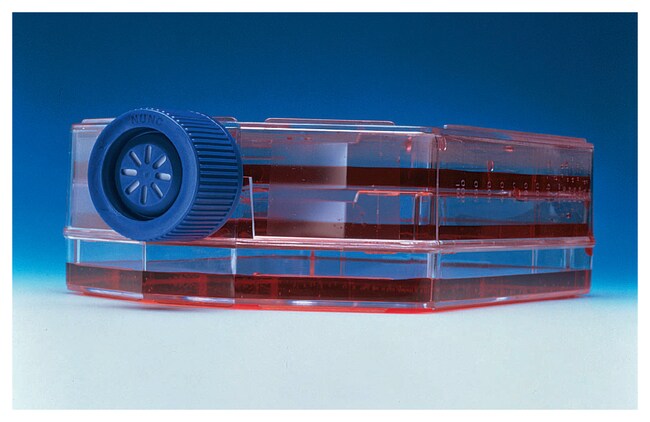
Nunc™ TripleFlask™ 经处理的细胞培养瓶
Thermo Scientific™

Nunc™ TripleFlask™ 经处理的细胞培养瓶

使用这些细胞培养处理的 TripleFlasks,执行大细胞质量应用,例如药物筛选和扩大规模。
Have Questions?
更改视图buttonViewtableView
货号表面处理盖子类型条形码
132867经细胞培养处理固体
132865经细胞培养处理通气/密闭
132913经细胞培养处理带滤芯
132920Nunclon Delta带滤芯
132925未经处理带滤芯
货号 132867
价格(CNY)
5,886.00
Case of 32
添加至购物车
表面处理:
经细胞培养处理
盖子类型:
固体
条形码:
价格(CNY)
5,886.00
Case of 32
添加至购物车

采用 Thermo Scientific™ Nunc™ TripleFlask™ 经处理的细胞培养瓶,可在1个标准培养瓶的占用空间内进行细胞培养扩增,并实现 500cm2 的总生长面积。总培养面积是通过三个平行层和一个直颈设计的方式实现的,可在自动化系统内高效工作。TripleFlask 培养瓶经过 Nunclon™ Delta 处理(专有的细胞培养表面处理),能极大程度地提高各类型细胞的附着力。

三层生长表面可提供 500 cm2 的总培养面积,与一个标准 Nunc 175 cm2 培养瓶的占用空间相同。

  • 建议工作容积为 200 mL。
  • 促进单层贴壁细胞培养。
  • 另可用大代码 128 标注条码。
  • 每盒均包含单层细胞形成、克隆效率、无细胞毒性、无热原和无菌方面的 Nunclon Delta 证书。
质保期:90 天

对内部研究使用限制的免责声明:关于买方仅可将产品用于内部研究的任何限制事项并不适用于与此声明相关的网页上的产品。
规格
条形码
盖子类型固体
描述细胞培养处理 TripleFlask
颈口样式直型
每箱数量32/Cs.
每架数量1 Ea.
产品类型Flask
形状与标准直颈 Nunc T175 外部尺寸相同
工作容积(公制)200 mL
底部形状
培养面积500 cm2
无菌窄口
表面处理经细胞培养处理
Unit SizeCase of 32

常见问题解答 (FAQ)

What is the difference between the Nunclon Delta surface and a tissue culture (TC) surface from a competitor?

Our Nunclon Delta surface for adherent cells is a standard tissue culture (TC) surface modification that makes the polystyrene surface more hydrophilic. This facilitates maximum adhesion for a broad range of cell types.

The Nunclon Delta surface is Thermo Scientific Nunclon Delta-certified, which is a Thermo Fisher proprietary certification that has a quality standard to help ensure consistency. Every lot of Thermo Scientific Nunclon Delta-certified cell cultureware is tested with Gibco media for:
- Less than 10% growth variation in L929, Hel299 and primary chick embryo cells
- Less than 15% variation colony formation of V79-4 cells

More information and all applicable products can be found in the "Product selection guide for every step of your cell culture workflow" brochure .

Can I use a Nunc Cell Scraper with a Nunc TripleFlask that has Nunclon Delta surface treatment?

The design of the Nunc TripleFlask does not allow for mechanical scraping. However, cells are easily harvested using protein digesting enzymes, such as trypsin, collagenase, and Pronase or by using non-enzymatic dissociation solutions.
The following is a document link regarding culturing techniques for Nunc TripleFlask:
https://assets.thermofisher.com/TFS-Assets/BID/Technical-Notes/culturing-technique-nunc-tripleflask-technical-note.pdf

What is the recommended working volume of Nunc adherent cell culture products?

This depends largely on the cell line and working conditions (considerations include headspace for gas exchange, supplements used, and optimal feeding schedule, among others) but we do offer guidelines for development purposes (0.3 to 0.5 mL per cm2) . Note that these volumes are approximate and may have to be modified for best performance. T25 Flask = 7 mL, T75 Flask = 25 mL, T175 Flask = 55 mL, T225 Flask = 70 mL, 300cm2 Flask = 100 mL, 500 cm2 TripleFlask = 200 mL, 35 mm round culture dish = 3 mL, 60 mm round culture dish = 5 mL, 100 mm round culture dish = 12 mL, 150 mm round culture dish = 35 mL, 4 (rectangular) well Multidish = 5 mL, 8 (rectangular) well Multidish = 3 mL, 4 (round) well Multidish = 1 mL, 6 well Multidish = 3 mL, 12 well Multidish = 2 mL, 24 well Multidish = 1 mL, 48 well Multidish = 0.5 mL.

What is Nunclon Delta?

Nunclon Delta refers to our performance-certified surface for culture of adherent cells, available in a variety of common formats (flasks, plates, multiwell dishes). It is tested with at least four cell lines (varies by product and manufacturing location) commonly used in research, and it should work well for most robust cell lines. It does not involve addition of coating reagent, but rather is manufactured by exposure of the molded products to a proprietary energy source, which renders the surface more hydrophilic by means of increasing the concentration of oxygen-containing (e.g. hydroxyl) molecular groups. It is by this hydrophilic property that anchorage-dependent cells are able to attach to the surface and become confluent.

Find additional tips, troubleshooting help, and resources within our Cell Culture Support Center.