Putting all my streams through one analyzer looks like the most cost-effective option. Is there a downside?
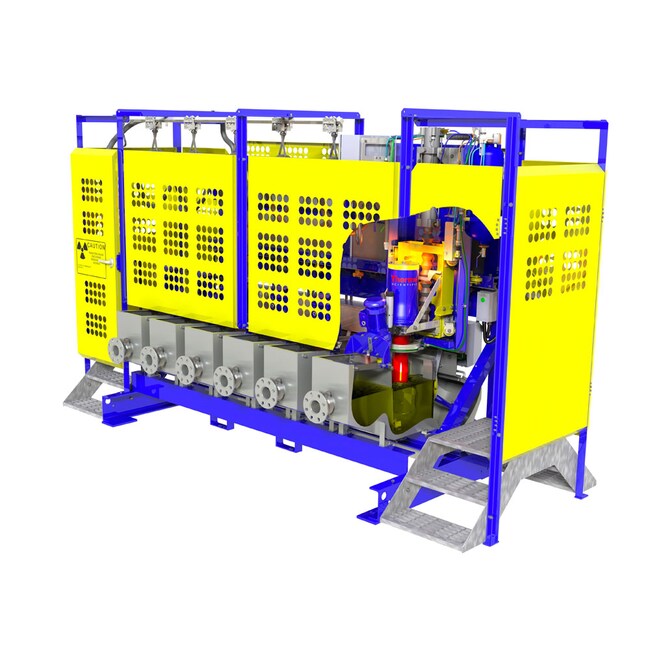
Yes, and it could be significant. First, let's assume that all streams are analyzed as intended. Cycling around each stream takes time and the frequency of measurement is therefore lower than with a dedicated analyzer. Each additional stream means a longer time between measurements. For some applications, this isn't a problem, a measurement every 15 mins may be sufficient. However, for greater process control and benefit from real-time continuous measurement, the Thermo Scientific AnStat-330 Sampling and Analysis Station combines representative sampling and elemental analysis into one product.
However, the second challenge comes from routing several streams to a single location. In a sizeable plant, this often involves large pumps, pumping slurry through long sections of pipes, creating risks such as pipe blockage or pump failure. Analyzers measuring 20 streams could be reduced to 4 or 5 streams only after a few months of operation because of the reduced availability of each lines from blockages. Slurry density and viscosity often makes it difficult to transport and sample representatively. Using dedicated analyzers on critical streams and then strategically placing multi-stream analyzers to measure between 3 and 12 streams typically provides a good balance between cost, analysis intervals, and uptime.
In an online slurry analysis system, how do I know if the recirculating load is being fully monitored?
To fully monitor the recirculating load, it is also necessary to monitor the rougher and scavenger concentrates and cleaner tailing streams. As recirculating loads tend to build up slowly with time, these analyses are not required on a minute-by-minute basis so these streams can be monitored with a lower cost-per-stream centralized analyzer.
In an online elemental analysis system, how critical is a given stream is in the overall process control strategy?
If the critical streams are monitored frequently as per the recommended criteria, the operators should be able to control the plant to give overall stability and best metallurgical results at minimum cost. The less critical intermediate streams can then be monitored at a lower frequency for the fine tuning of the circuit.
The degree of confidence required in the assay-based control decisions must be known. Streams that are more critical for control of the plant need to be monitored more frequently. Trends in plant performance will then be shown in more detail, showing effect of control actions on grade in real-time and giving greater confidence in control decisions. For example, in a base metal concentrator, the main objective might be to minimize metal losses in primary floatation while producing a particular concentrate grade in the cleaners. In addition, test work may show that recirculating loads tend to build up in the cleaning stages which is a result of recovery of excessive gangue in the rougher concentrate. Continuous analysis of tailings grades provides a critical tool in the operation of rougher flotation. On-line analysis of concentrates provides a tool to manage grade-recovery in the cleaners and better control impurities to meet the smelter requirements.
In an online elemental analysis system, do the elements to be analyzed and the frequency of analysis need to be specified for each process stream?
The elements to be analyzed are determined by the objectives of the process control strategy and the particular metallurgical problems which are anticipated from prior metallurgical test work. The frequency of analysis required, often referred to as the assay update time, depends on the following criteria:
- The fluctuation in assays in a given process stream considering the residence times of the processes immediately upstream
- The stability of the circuit
- At a minimum, the assay update times of the analyzers for the critical streams should be less than half of the retention time of the preceding process stage
Therefore, in the tailings stream from a scavenger bank of cells with a retention time of 5 mins, the grade can be expected to vary considerably in 2 mins during upset conditions or reactions to process control actions so on-line analysis should be made at an interval less than this to provide the best visibility of real-time plant performance. To obtain these sorts of assay update times, one requires dedicated analyzers or a centralized analyzer with just a few streams located nearby the process sample points.
What technical questions should be asked before deciding upon on an online slurry analysis system?
Before selecting an online slurry analysis system, consider if light elements will need to be measured and if the measurement technique is amenable, given the expected variation in mineralogical and particle size for the process. In addition, look at the streams to be measured and ask these questions:
- What is critical for control of process (usually includes Feed, Final Tail, and Concentrate)?
- Is there a need for understanding trends within the process (usually includes Rougher Concentrate and Cleaner Tails)?
- What are the elements to be measured in each stream?
Based on this information, the various trade-offs taking into account all factors between centralized and dedicated analyzers, Prompt Gamma Neutron Activation Analysis (PGNAA) and X-ray fluorescence (XRF), capital and maintenance cost etc., can be worked out and a recommendation made for the optimum system configuration for the particular plant
For example, in a nickel concentrator, it is essential to control the concentration of talc (or MgO) in the concentrate stream. To be able to control the concentration of talc in the concentrate, one requires measurement of Ni and talc in each of the feeds, rougher concentrate, and final concentrate streams so that the appropriate concentration gradients between these can be optimized and the ratio of Ni/talc can be maximized at each stage for minimum reagent usage. It may also be useful to measure Fe and S in the feed stream because this may give an indication of the nickel mineralogy entering the plant. In all other streams, it is only necessary to measure Ni because the information from these streams is used only for monitoring the recovery of Ni. Thus, PGNAAA would be required with multiplexing for the three main streams, and possibly a multi-stream analyzer (using XRF technology) for the other streams).