Search

Thermo Scientific™
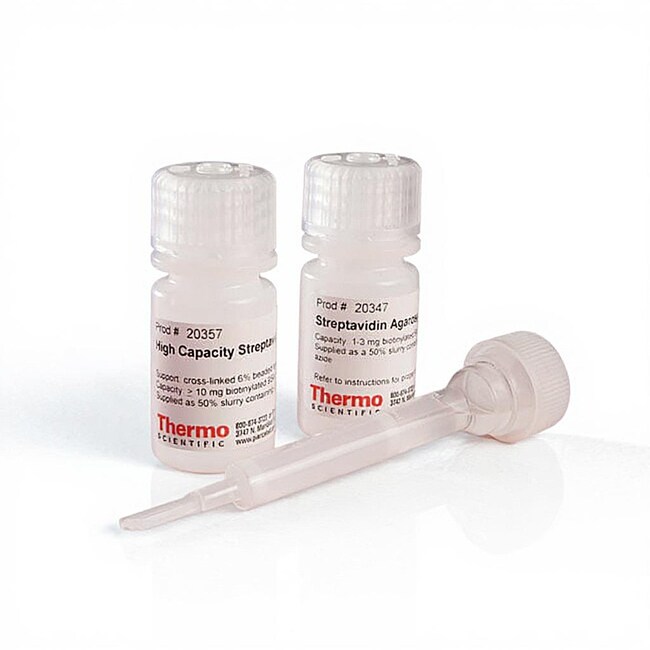
Pierce™ 链霉素亲和素琼脂糖
Thermo Scientific Pierce 链霉素亲和素琼脂糖是一种标准载量的固定化重组链霉素亲和素的微珠状琼脂糖树脂,用于多种生物素结合亲和纯化方法。链霉素亲和素琼脂糖的特点:•链霉素亲和素—纯化的重组链霉素亲和素蛋白(53kDa,近中性 pI);每个分子具有四个生物素结合位点• 琼脂糖树脂—支持物为交联的 6%了解更多信息
Have Questions?
更改视图

| 货号 | 数量 |
|---|---|
| 20347 | 2 mL |
| 20353 | 10 mL |
| 20349 | 5 mL |
货号 20347
价格(CNY)
4,209.00
Each
数量:
2 mL
价格(CNY)
4,209.00
Each
Thermo Scientific Pierce 链霉素亲和素琼脂糖是一种标准载量的固定化重组链霉素亲和素的微珠状琼脂糖树脂,用于多种生物素结合亲和纯化方法。
链霉素亲和素琼脂糖的特点:
•链霉素亲和素—纯化的重组链霉素亲和素蛋白(53kDa,近中性 pI);每个分子具有四个生物素结合位点
• 琼脂糖树脂—支持物为交联的 6% 琼脂糖珠 (CL-6B),是广受欢迎的用于蛋白质亲和纯化的树脂
• 具有较高惰性且稳定—链霉素亲和素通过不带电荷的共价键固定,因此非特异性结合较低且能够多次使用而不降低得率
• 标准容量—此树脂具有固定化链霉素亲和素正常载量,提供 1 至 3 mg 生物素化 BSA/mL 树脂的结合容量
6% 琼脂糖 (CL-6B) 的特性:
•支持 pH 值稳定性:2 至 14(短期);3 至 13(长期)
• 平均粒径:45 至 165 微米
• 排阻极限:10,000 至 4,000,000 道尔顿
• 上限体积流速:约 1 mL/分钟(对于 1 cm 直径柱)
• 上限线性速度:每小时 30 cm
• 上限压力:低于 25psi (1.5 bar)
应用:
• 纯化膜抗原
• -通过与生物素化抗体结合,使用可剪切的生物素化试剂标记细胞表面蛋白
• 生物素化刀豆蛋白 A 分离细胞表面糖蛋白
• 回收单链生物素化 DNA,用于双脱氧测序
• 链霉素亲和素包被板可用于直接固相测序
• 使用链霉素亲和素包被板进行体外突变
• 使用链霉素亲和素包被板进行 DNA 指纹识别
Pierce 链霉素亲和素琼脂糖包含纯化的重组链霉素亲和素,该链霉素亲和素已经共价固定在高质量的6% 微珠状琼脂糖上。 链霉素亲和素是一种四聚体生物素结合蛋白。琼脂糖微珠具有使其适用于多种批量式或柱式亲和程序的物理和化学特性。可使用此链霉素亲和素树脂对样品中的生物素化抗体、蛋白、肽、核酸和其他分子或相互作用复合物进行捕获、免疫沉淀、去除或纯化。
链霉素亲和素是一种含有四个生物素结合位点的四聚体蛋白,与亲和素相似。阿维丁链霉菌中的天然蛋白不含碳水化合物,酸性 pI 为 5.5,质量为 75 kDa。用于生产 Thermo Scientific Pierce 链霉素亲和素树脂的重组蛋白具有近中性等电点,质量为 53kDa。由于无碳水化合物,因此链霉素亲和素通常比亲和素(来自鸡蛋清)具有更少的非特异性结合。
相关产品
Pierce™ 链霉素亲和素琼脂糖预装柱,1 mL
Pierce™ 高容量链霉素亲和素琼脂糖
Pierce™ 链霉素亲和素 Plus UltraLink™ 树脂
链霉素亲和素琼脂糖的特点:
•链霉素亲和素—纯化的重组链霉素亲和素蛋白(53kDa,近中性 pI);每个分子具有四个生物素结合位点
• 琼脂糖树脂—支持物为交联的 6% 琼脂糖珠 (CL-6B),是广受欢迎的用于蛋白质亲和纯化的树脂
• 具有较高惰性且稳定—链霉素亲和素通过不带电荷的共价键固定,因此非特异性结合较低且能够多次使用而不降低得率
• 标准容量—此树脂具有固定化链霉素亲和素正常载量,提供 1 至 3 mg 生物素化 BSA/mL 树脂的结合容量
6% 琼脂糖 (CL-6B) 的特性:
•支持 pH 值稳定性:2 至 14(短期);3 至 13(长期)
• 平均粒径:45 至 165 微米
• 排阻极限:10,000 至 4,000,000 道尔顿
• 上限体积流速:约 1 mL/分钟(对于 1 cm 直径柱)
• 上限线性速度:每小时 30 cm
• 上限压力:低于 25psi (1.5 bar)
应用:
• 纯化膜抗原
• -通过与生物素化抗体结合,使用可剪切的生物素化试剂标记细胞表面蛋白
• 生物素化刀豆蛋白 A 分离细胞表面糖蛋白
• 回收单链生物素化 DNA,用于双脱氧测序
• 链霉素亲和素包被板可用于直接固相测序
• 使用链霉素亲和素包被板进行体外突变
• 使用链霉素亲和素包被板进行 DNA 指纹识别
Pierce 链霉素亲和素琼脂糖包含纯化的重组链霉素亲和素,该链霉素亲和素已经共价固定在高质量的6% 微珠状琼脂糖上。 链霉素亲和素是一种四聚体生物素结合蛋白。琼脂糖微珠具有使其适用于多种批量式或柱式亲和程序的物理和化学特性。可使用此链霉素亲和素树脂对样品中的生物素化抗体、蛋白、肽、核酸和其他分子或相互作用复合物进行捕获、免疫沉淀、去除或纯化。
链霉素亲和素是一种含有四个生物素结合位点的四聚体蛋白,与亲和素相似。阿维丁链霉菌中的天然蛋白不含碳水化合物,酸性 pI 为 5.5,质量为 75 kDa。用于生产 Thermo Scientific Pierce 链霉素亲和素树脂的重组蛋白具有近中性等电点,质量为 53kDa。由于无碳水化合物,因此链霉素亲和素通常比亲和素(来自鸡蛋清)具有更少的非特异性结合。
相关产品
Pierce™ 链霉素亲和素琼脂糖预装柱,1 mL
Pierce™ 高容量链霉素亲和素琼脂糖
Pierce™ 链霉素亲和素 Plus UltraLink™ 树脂
仅供科研使用。不可用于诊断程序。
规格
色谱柱类型亲和,琼脂糖树脂
产品规格瓶装
蛋白质形式重组
数量2 mL
固定相链霉亲和素
足够用于结合 15-28 μg 生物素/mL 树脂(1-3 mg 生物素化 BSA/mL 树脂)
靶标生物素标记分子
容量(公制)结合 1-3 mg 生物素化 BSA/mL 树脂
粒径45 至 165 μm
产品线Pierce
类型琼脂糖
Unit SizeEach
内容与储存
接收后,储存在 4°C 下。切勿冷冻树脂。产品在环境温度下运输。