Dionex™ Aquion™ 离子色谱 (IC) 系统
Actual product may vary
Dionex™ Aquion™ 离子色谱 (IC) 系统
Thermo Scientific™

Dionex™ Aquion™ 离子色谱 (IC) 系统

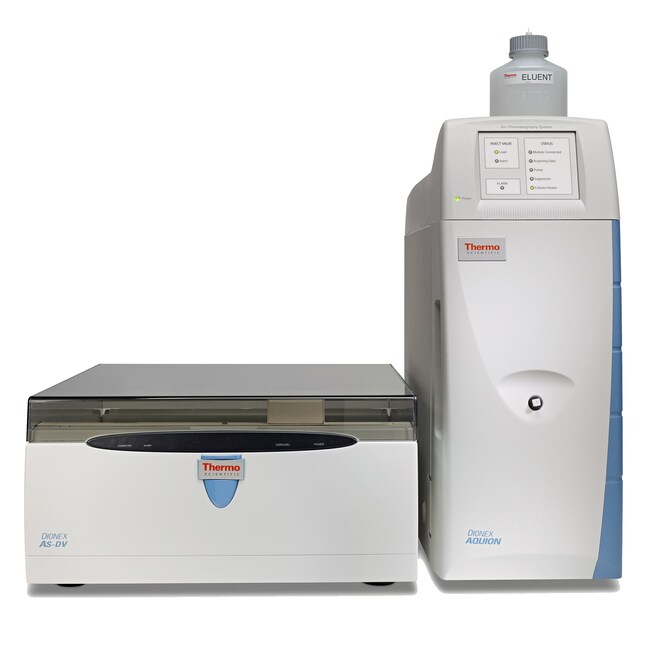
使用 Dionex™ Aquion™ IC 系统套件能够可靠地进行基本阴离子或阳离子分析,该套件包括硬件、软件和耗材,易于订购。

Have Questions?
更改视图buttonViewtableView
货号类型Includes
22176-60002不带脱气机的 IC 系统
22176-60004带脱气机的 IC 系统
货号 22176-60002
价格(CNY)
-
申请报价
类型:
不带脱气机的 IC 系统

Thermo Scientific™ Dionex™ Aquion™ IC 系统是一个简单而紧凑的平台,可为预算有限的实验室提供简单直接的操作,使用该系统能够可靠地进行基本离子分析。Dionex Aquion 支持电解抑制,并包括一套用于洗脱液在线脱气的真空脱气机。启动快速且具备可靠的性能,适用于环境、食品安全和学术实验室内要求严苛的应用。用于阴离子或阳离子分析的 Dionex Aquion 套件包括开始使用所需的全部硬件、软件和耗材,并提供可消除用户顾虑的可选延长质保期。

Dionex Aquion IC 系统包括:

  • 化学惰性 PEEK 流路
  • 串联双活塞泵(支持 0.01-5.0 mL/min 的流速和高达 5000 psi 的压力)
  • 高压脉冲阻尼器
  • 电动、PEEK、6 通 Rheodyne 进样阀
  • 支持电解或化学抑制器
  • 具有数字信号处理(范围 0-15,000 µS)和温度控制电导池的电导率检测器

还有选配的色谱柱加热器可选

阴离子或阳离子仪器套件包括:

  • 带电缆的 Dionex Aquion IC 系统
  • Dionex Aquion 分析试剂盒(见下文内容)
  • Thermo Scientific Chromeleon SE 软件和许可证代码
  • 3 年仪器质保期(部件质保期仅为 2 年和 3 年)

另提供可选的延长质保期,承保 2 年和 3 年人工和差旅费用

Dionex Aquion 阴离子分析套件包括:

  • Dionex IonPac AG22 (4 x 50 mm) 保护柱 
  • Dionex IonPac AS22 (4 x 250 mm) 色谱柱
  • Dionex AERS 500 碳酸盐 (4 mm) 抑制器
  • Dionex 七种阴离子标样组合装 II

注:如需要,可单独订购阴离子浓缩洗脱液。

Dionex Aquion 阳离子分析套件包括:

  • Dionex IonPac CG12A (4 x 50 mm) 保护柱 
  • Dionex IonPac CS12A (4 x 250 mm) 色谱柱
  • Dionex CDRS 600 (4 mm) 抑制器

注:如果需要,可单独订购阳离子浓缩洗脱液和标准品。

规格
适用于(应用)Anion/Cation Analysis
最大压力35 MPa (5000 psi)
检测器类型微处理器控制的数字信号处理器的电导检测器
流速0.00 至 5.00 mL/min
压力范围0 至 35 MP(0 至 5000 psi)
类型不带脱气机的 IC 系统
Unit SizeEach

常见问题解答 (FAQ)

What systems are available for speciation analysis?

Any of the Thermo Scientific Dionex IC systems can be used in conjunction with the iCAP RQ ICP-MS system. Visit our site to see all system configurations (https://www.thermofisher.com/us/en/home/industrial/chromatography/ion-chromatography-ic/ic-icp-ms-speciation-analyzer.html)

What example analytes require speciation analysis?

The following are some of the most common analytes screened by speciation analysis:
• Arsenic
• Chromium
• Iodide
• Mercury

Visit our Speciation Analysis by IC-ICP-MS page to view our application note videos where our scientists walk through speciation analysis of example analytes:
• Speciation Analysis of Arsenic in Organic Brown Rice Syrup using the Thermo Scientific iCAP-Q ICP-MS
• Chromium Speciation Analysis in Drinking Water by IC-ICP-MS
• Analysis of Arsenic Species in Apple Juice by IC-ICP-MS

How is speciation analysis performed?

IC-ICP-MS provides a complete inorganic elemental analysis solution for speciation analysis.
• Metal-free ion chromatography (IC) separates the individual ionic species without contributing trace metal contamination
• Ion chromatography-inductively coupled plasma mass spectrometry (IC-ICP-MS) performs trace elemental detection and quantification

Metal-free IC (with high resolution ion exchange columns and simple online connectivity) together with high sensitivity ICP-MS and integrated software are a powerful combination for fast and efficient metal speciation. Visit our Speciation Analysis by IC-ICP-MS page to see our scientists discuss real-life examples and benefits of combining IC and ICP-MS workflows for speciation analysis.

Why is speciation analysis important?

Speciation analysis has become important for food, environmental, and pharmaceutical industries, where simply measuring the total amount of an element is insufficient. Identifying the different species and concentrations of those species provides a more informed understanding of the environmental or health related impact associated with a particular sample. The clinical or environmental approach would be very different depending on the concentration of the toxic species. For example, an exposure to toxic inorganic arsenic (arsenite and arsenate) is a much bigger concern than an exposure to the mildly toxic organic arsenic species. In contrast, organic mercury species are more toxic than inorganic mercury species, so an exposure to methylmercury or ethylmercury poses a more severe health risk.

What is speciation analysis?

Speciation analysis is the process of separating and quantifying different molecular versions of a compound, which can exhibit very different physiochemical properties, including varying toxicities.