Search


引用和文献 (4)
Thermo Scientific™
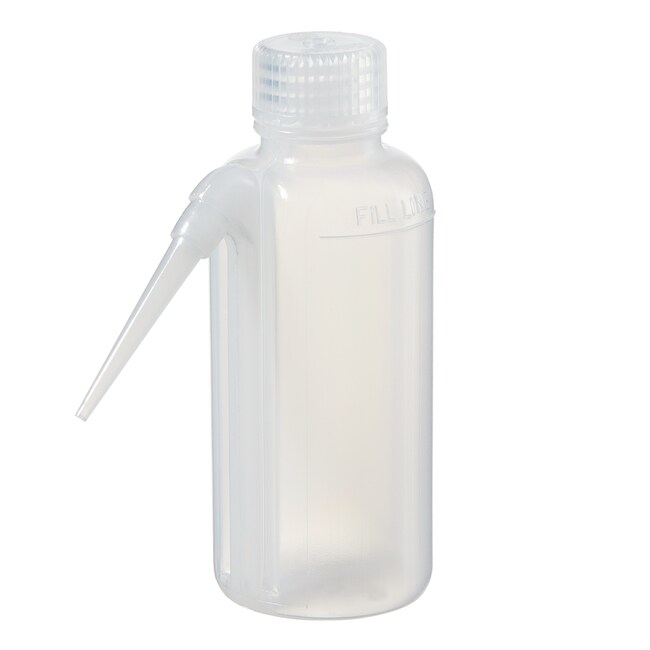
Nalgene™ Unitary™ LDPE 洗瓶
Thermo Scientific Nalgene Unitary洗瓶具有广口设计,更易于灌注和挤压分配液体。
Have Questions?
更改视图

| 货号 | 容量(公制) | 盖子尺寸 | 单位规格 |
|---|---|---|---|
| 2402-0125 | 125 mL | 24 mm | Case of 48 |
| 2402-0125PK 又称 2402-0125 | 125 mL | 24 mm | Pack of 6 |
| 2402-0250 | 250mL | 24 mm | Case of 36 |
| 2402-0250PK 又称 2402-0250 | 250mL | 24 mm | Pack of 4 |
| 2402-0500 | 500mL | 38 mm | Case of 24 |
| 2402-0500PK 又称 2402-0500 | 500mL | 38 mm | Pack of 4 |
| 2402-0750 | 750mL | 38 mm | Case of 24 |
| 2402-0750PK 又称 2402-0750 | 750mL | 38 mm | Pack of 4 |
| 2402-1000 | 1000mL | 43 mm | Case of 12 |
| 2402-1000PK 又称 2402-1000 | 1000mL | 43 mm | Pack of 2 |
货号 2402-0125
价格(CNY)
1,730.00
飞享价
Ends: 31-Dec-2026
4,325.01共减 2,595.01 (60%)
Case of 48
容量(公制):
125 mL
盖子尺寸:
24 mm
Unit Size:
Case of 48
价格(CNY)
1,730.00
飞享价
Ends: 31-Dec-2026
4,325.01共减 2,595.01 (60%)
Case of 48
Thermo Scientific™ Nalgene™ Unitary™ LDPE 洗瓶分装内容物时不会溢出或摇晃。广口设计可进行快速方便地灌注。瓶和管路整体模制,可提供均匀的防漏效果,准确的液流无喷溅。可剪短分液头以提高流速。采用高质量的实验室级塑料材料制成,能可靠地降低溶出物和萃取物含量。 自然弹性 LDPE 材料与多种实验室试剂化学相容,采用符合人体工程学的软压挤压技术,有助于减少手部疲劳。
特点:
- 瓶和管路整体模制,可提供均匀的防漏效果
- 分液头喷射超细流体,无喷溅,也可将其剪短以提高流速
- 瓶和纸箱在大多数社区会得到回收
- 由无毒材料制成
- 弹性 LDPE 瓶采用符合人体工程学的软压挤压技术
- 聚丙烯螺旋盖
包括:
聚丙烯螺旋盖。
循环利用信息:
可重复使用的 Nalgene LDPE 瓶在常规实验室条件下经久耐用。然而,与所有耐用型产品一样,它们也难免面临最终停用和被替换的命运。 Nalgene LDPE 瓶及其包装材料随即便会被回收。 请循环利用封装 Nalgene 瓶产品的纸箱和 LDPE 袋。产品到达使用寿命限期时,请洗净并回收利用 Nalgene LDPE 瓶。
对内部研究使用限制的免责声明:关于买方仅可将产品用于内部研究的任何限制事项并不适用于与此声明相关的网页上的产品。† 术语防漏适用于符合以下标准的 Thermo Scientific Nalgene 产品:a) 对于盖尺寸小于 100 mm 的瓶/烧瓶/漏斗密封系统,当注满水后,在 2 psig 的气体压力下,倒置 2 分钟,内部的水不会溢出;b) 对于盖尺寸大于 100 mm 的瓶/漏斗/烧瓶密封系统,当注满水后,将其倒置 15 分钟,内部的水不会溢出。注意:如果使用其他液体进行以上测试,可能会得出不同的结果。为确保使用安全,建议客户在计划的应用条件下测试 Thermo Scientific Nalgene 瓶和瓶盖。Thermo Scientific Nalgene 产品和 Nalgene 瓶盖一起使用时,常温常压下防漏。
规格
容量4 oz.,125 mL
容积(英制)4 oz.
盖子材料聚丙烯
盖子尺寸24 mm
盖子类型螺旋盖
描述LDPE 瓶/管
直径(公制)48.3 mm
高度(英制)4.7 in.
高度(公制)119.4 mm
每箱数量48
每架数量6
产品类型洗瓶
形状Cylindrical
通过密封盖分装否
容量(公制)125 mL
包括瓶盖是
颜色Translucent
带刻度No
材质LDPE
口径广口
Unit SizeCase of 48
引用和文献 (4)
引用和文献
Abstract
Identification of Biologically Active Chemokine Isoforms from Ascitic Fluid and Elevated Levels of CCL18/Pulmonary and Activation-regulated Chemokine in Ovarian Carcinoma.
Journal:J Biol Chem
PubMed ID:11978786
'Chemokines are important in leukocyte homeostasis, inflammation, angiogenesis, and metastasis. Here, the molecular diversity of chemokines present in ovarian carcinoma was studied by purifying the proteins to homogeneity from ascitic fluid. Biologically active intact CCL2 and processed CXCL8, CCL3, and CCL18 isoforms were recovered. CCL7 and CCL20 were also purified,
beta 1-Integrin-mediated Glioma Cell Adhesion and Free Radical-induced Apoptosis Are Regulated by Binding to a C-terminal Domain of PG-M/Versican.
Journal:J Biol Chem
PubMed ID:11805102
'Integrins are cell-surface glycoproteins that mediate cell activities, including tissue morphogenesis, development, immune response, and cancer, through interaction with extracellular proteins. Here we report a novel means by which integrin signaling and functions are regulated. In pull-down assays and immunoprecipitation, beta(1)-integrin bound to the C-terminal domain of PG-M/versican, an extracellular
Cleavage of the carboxyl tail from the G3 domain of aggrecan but not versican and identification of the amino acids involved in the degradation.
Journal:J Biol Chem
PubMed ID:11932252
'Aggrecan, a major structural proteoglycan in cartilage, contains three globular domains, G1, G2, and G3, as well as sequences for glycosaminoglycan modification. A large number of proteases are implicated in aggrecan cleavage in normal metabolism, aging, and arthritis. These proteases are known to cleave at the IGD, KS, and CS
Cell docking and on-chip monitoring of cellular reactions with a controlled concentration gradient on a microfluidic device.
Journal:Anal Chem
PubMed ID:12199565
We have developed a microfluidic device for on-chip monitoring of cellular reactions. The device consists of two primary analytical functions: control of cell transport and immobilization, and dilution of an analyte solution to generate a concentration gradient. In this device, a dam structure in parallel to the fluid flow was