Search


引用和文献 (1)
Invitrogen™
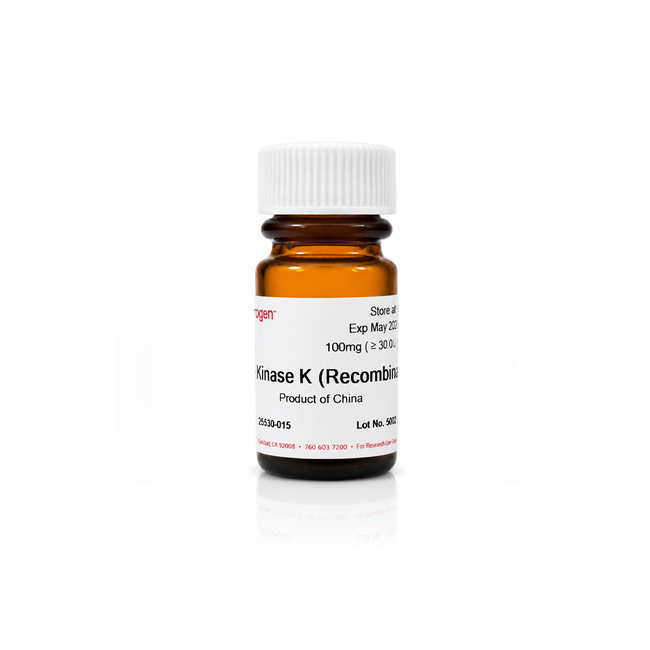
蛋白酶 K,重组
真菌白色侧齿霉菌中的蛋白酶 K 是一种非特异性丝氨酸蛋白酶,适用于蛋白的常规酶切。蛋白酶 K 可在以下条件下保持活性:• 在较宽 pH 值范围内–在 6.5了解更多信息
Have Questions?
更改视图

| 货号 | 数量 |
|---|---|
| 25530031 | 1 g |
| 25530015 | 100 mg |
货号 25530031
价格(CNY)
16,279.00
Each
数量:
1 g
价格(CNY)
16,279.00
Each
真菌白色侧齿霉菌中的蛋白酶 K 是一种非特异性丝氨酸蛋白酶,适用于蛋白的常规酶切。
蛋白酶 K 可在以下条件下保持活性:
• 在较宽 pH 值范围内–在 6.5 至 9.5 之间活性较佳
• 在变性条件下–例如存在 SDS 或尿素
• 在存在金属螯合剂的情况下—例如 EDTA
• 在相对较高的温度下–最佳酶切温度为 65°C
应用
在制备 DNA 和 RNA 过程中去除内源性核酸酶;制备用于原位杂交的组织切片。
性能和质量测试
脱氧核糖核酸内切酶和脱氧核糖核酸外切酶测定;检测液体剂型是否缺乏 RNase 活性。
单位定义
一个 mAnson 单位描述为在 37°C 下以血红蛋白为底物在 1 分钟内释放 1 µmole 福林阳性氨基酸的酶量。
蛋白酶 K 可在以下条件下保持活性:
• 在较宽 pH 值范围内–在 6.5 至 9.5 之间活性较佳
• 在变性条件下–例如存在 SDS 或尿素
• 在存在金属螯合剂的情况下—例如 EDTA
• 在相对较高的温度下–最佳酶切温度为 65°C
应用
在制备 DNA 和 RNA 过程中去除内源性核酸酶;制备用于原位杂交的组织切片。
性能和质量测试
脱氧核糖核酸内切酶和脱氧核糖核酸外切酶测定;检测液体剂型是否缺乏 RNase 活性。
单位定义
一个 mAnson 单位描述为在 37°C 下以血红蛋白为底物在 1 分钟内释放 1 µmole 福林阳性氨基酸的酶量。
仅供科研使用。不可用于诊断程序。
规格
产品类型蛋白酶 K
数量1 g
运输条件经批准可在室温下或置于湿冰上运输
最大浓度≥40 U/mg
形式粉末
Unit SizeEach
内容与储存
一管蛋白酶 K
储存在冰箱 (2–8°C) 中。
储存在冰箱 (2–8°C) 中。
常见问题解答 (FAQ)
蛋白酶K应该如何储存?
How do you recommend storing proteinase K?
How do I isolate DNA from single bacterial colonies before PCR?
What are the recommended conditions for proteinase K treatment when isolating RNA or DNA samples?
引用和文献 (1)
引用和文献
Abstract
Improved cloning efficiency of polymerase chain reaction (PCR) products after proteinase K digestion.
Journal:Nucleic Acids Res
PubMed ID:2011503
Not available