Search

Thermo Scientific™
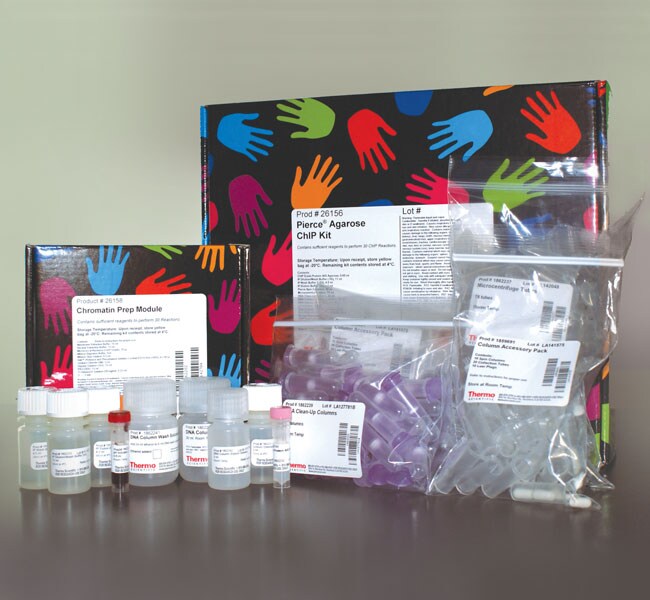
Pierce™ 琼脂糖 ChIP 试剂盒
Thermo Scientific Pierce 琼脂糖 ChIP 试剂盒提供了一整套试剂以及简单、快速且可重现的方案,可进行染色质免疫沉淀 (ChIP) 检测。琼脂糖了解更多信息
| 货号 | 数量 |
|---|---|
| 26156 | 30 次反应试剂盒 |
货号 26156
价格(CNY)
6,147.00
飞享价
Ends: 31-Dec-2026
9,598.00共减 3,451.00 (36%)
Each
数量:
30 次反应试剂盒
价格(CNY)
6,147.00
飞享价
Ends: 31-Dec-2026
9,598.00共减 3,451.00 (36%)
Each
Thermo Scientific Pierce 琼脂糖 ChIP 试剂盒提供了一整套试剂以及简单、快速且可重现的方案,可进行染色质免疫沉淀 (ChIP) 检测。
琼脂糖 ChIP 试剂盒的特点:
•简单且快速的 ChIP 检测方案(< 8 小时)
•高效核分离和裂解
•简单且可重现的酶酶切
•低背景和高结合能力蛋白 A/G 琼脂糖树脂
•高度特异性的阳性对照试剂包括:RNA 聚合酶 II 抗体以及 GAPDH PCR 引物
•快速且可重现的离心柱规格
•高回收率 DNA 纯化
•可提供经验证适用于 ChIP 的抗体
Pierce 琼脂糖 ChIP 试剂盒包含足够试剂,可使用优化的方案和便利的离心柱格式采用适当对照品进行 30 次 ChIP 检测。我们也提供经验证适用于 ChIP 且具备质量保证的抗体,可与 Pierce 琼脂糖 ChIP 试剂盒一起使用。因为适用于 Western 印迹的抗体可能在 ChIP 检测中不起作用,所以我们组装了较广泛采用的经验证适用于 ChIP 的单克隆和多克隆抗体,以使从实验设置至获得结果这一过程的进展更快。
ChIP 检测的优势在于,它能够捕获活细胞中特异性蛋白-DNA 相互作用的快照,然后使用标准或定量 PCR 来定量分析相互作用。要想成功进行 ChIP 检测,需要在检测靶标基因组 DNA 序列之前执行多个关键步骤(交联、染色质制备、免疫沉淀)。单独优化 ChIP 检测方案中的每个步骤都可能非常耗时。Pierce 琼脂糖 ChIP 检测试剂盒简化了流程,确保更易获得准确且可重现的结果。
要使用 Pierce 琼脂糖 ChIP 试剂盒进行 ChIP 检测,使蛋白-DNA 复合物保持稳定,然后进行提取。通常使用甲醛实现体内交联。直接在细胞中进行交联会锁定蛋白-DNA 复合物,从而捕获这些不稳定且有时是瞬时的相互作用。为了裂解、提取和溶解交联复合物,ChIP 检测试剂盒包括 Thermo Scientific 染色质制备模块(也可单独出售,产品编号 26158)。总之,这一全套 ChIP 检测试剂盒提供了一种简单、可靠且便利的方法,该方法可用于分离染色质结合 DNA 且可在不使用杜恩斯均质仪的情况下富集目标蛋白的样品,且来自其他细胞区室的污染小于 15%。
相关产品
Pierce™ 染色质制备模块
Pierce™ ChIP 级蛋白 A/G Plus 琼脂糖
蛋白酶 K
琼脂糖 ChIP 试剂盒的特点:
•简单且快速的 ChIP 检测方案(< 8 小时)
•高效核分离和裂解
•简单且可重现的酶酶切
•低背景和高结合能力蛋白 A/G 琼脂糖树脂
•高度特异性的阳性对照试剂包括:RNA 聚合酶 II 抗体以及 GAPDH PCR 引物
•快速且可重现的离心柱规格
•高回收率 DNA 纯化
•可提供经验证适用于 ChIP 的抗体
Pierce 琼脂糖 ChIP 试剂盒包含足够试剂,可使用优化的方案和便利的离心柱格式采用适当对照品进行 30 次 ChIP 检测。我们也提供经验证适用于 ChIP 且具备质量保证的抗体,可与 Pierce 琼脂糖 ChIP 试剂盒一起使用。因为适用于 Western 印迹的抗体可能在 ChIP 检测中不起作用,所以我们组装了较广泛采用的经验证适用于 ChIP 的单克隆和多克隆抗体,以使从实验设置至获得结果这一过程的进展更快。
ChIP 检测的优势在于,它能够捕获活细胞中特异性蛋白-DNA 相互作用的快照,然后使用标准或定量 PCR 来定量分析相互作用。要想成功进行 ChIP 检测,需要在检测靶标基因组 DNA 序列之前执行多个关键步骤(交联、染色质制备、免疫沉淀)。单独优化 ChIP 检测方案中的每个步骤都可能非常耗时。Pierce 琼脂糖 ChIP 检测试剂盒简化了流程,确保更易获得准确且可重现的结果。
要使用 Pierce 琼脂糖 ChIP 试剂盒进行 ChIP 检测,使蛋白-DNA 复合物保持稳定,然后进行提取。通常使用甲醛实现体内交联。直接在细胞中进行交联会锁定蛋白-DNA 复合物,从而捕获这些不稳定且有时是瞬时的相互作用。为了裂解、提取和溶解交联复合物,ChIP 检测试剂盒包括 Thermo Scientific 染色质制备模块(也可单独出售,产品编号 26158)。总之,这一全套 ChIP 检测试剂盒提供了一种简单、可靠且便利的方法,该方法可用于分离染色质结合 DNA 且可在不使用杜恩斯均质仪的情况下富集目标蛋白的样品,且来自其他细胞区室的污染小于 15%。
相关产品
Pierce™ 染色质制备模块
Pierce™ ChIP 级蛋白 A/G Plus 琼脂糖
蛋白酶 K
仅供科研使用。不可用于诊断程序。
规格
结合功能>50 mg 人 IgG/mL 树脂结合容量
描述Pierce 琼脂糖 ChIP 试剂盒
产品规格试剂盒
数量30 次反应试剂盒
足够用于30 次反应
容量(公制)结合 ≥50 mg 人 IgG/mL 树脂
产品线Pierce
类型琼脂糖 ChIP 试剂盒
Unit SizeEach
内容与储存
足够用于:30 次完整染色质 IP 检测实验• ChIP 级蛋白 A/G Plus 琼脂糖,0.65 mL(在 4°C 下储存)
• IP 稀释/洗涤缓冲液 (5X),11 mL(在 4°C 下储存)
• IP 洗涤缓冲液 3 (5X),4.5 mL(在 4°C 下储存)
• IP 洗脱缓冲液 (2X),4.5 mL(在 4°C 下储存)
• 色谱柱附件包,3 包(在室温或 4°C 下储存)
• 微量离心管 (1.5 mL),75 管(在室温或 4°C 下储存)
• DNA 纯化柱,40 柱(在室温或 4°C 下储存)
• DNA 柱结合溶液,30 mL(在室温或 4°C 下储存)
• DNA 柱洗涤液,6 mL(在室温或 4°C 下储存)
• pH 值指示器,0.8 mL(在室温或 4°C 下储存)
• DNA 柱洗脱溶液,5 mL(在室温或 4°C 下储存)
• 抗 RNA 聚合酶 II 抗体,25 μL(在 -20°C 下储存)
• 正常兔 IgG (1 mg/mL),10 μL(在 -20°C 下储存)
• ChIP 阳性对照引物(GAPDH 启动子,人特异性),100 μL(在 -20°C 下储存)
• Pierce 染色质制备模块(产品编号 26158)(在 -20°C 下储存蛋白酶 K 和微球菌核酸酶。在 4°C 下储存所有其他组分)。
• IP 稀释/洗涤缓冲液 (5X),11 mL(在 4°C 下储存)
• IP 洗涤缓冲液 3 (5X),4.5 mL(在 4°C 下储存)
• IP 洗脱缓冲液 (2X),4.5 mL(在 4°C 下储存)
• 色谱柱附件包,3 包(在室温或 4°C 下储存)
• 微量离心管 (1.5 mL),75 管(在室温或 4°C 下储存)
• DNA 纯化柱,40 柱(在室温或 4°C 下储存)
• DNA 柱结合溶液,30 mL(在室温或 4°C 下储存)
• DNA 柱洗涤液,6 mL(在室温或 4°C 下储存)
• pH 值指示器,0.8 mL(在室温或 4°C 下储存)
• DNA 柱洗脱溶液,5 mL(在室温或 4°C 下储存)
• 抗 RNA 聚合酶 II 抗体,25 μL(在 -20°C 下储存)
• 正常兔 IgG (1 mg/mL),10 μL(在 -20°C 下储存)
• ChIP 阳性对照引物(GAPDH 启动子,人特异性),100 μL(在 -20°C 下储存)
• Pierce 染色质制备模块(产品编号 26158)(在 -20°C 下储存蛋白酶 K 和微球菌核酸酶。在 4°C 下储存所有其他组分)。