Search

Thermo Scientific™
十二烷基硫酸钠 (SDS),C12
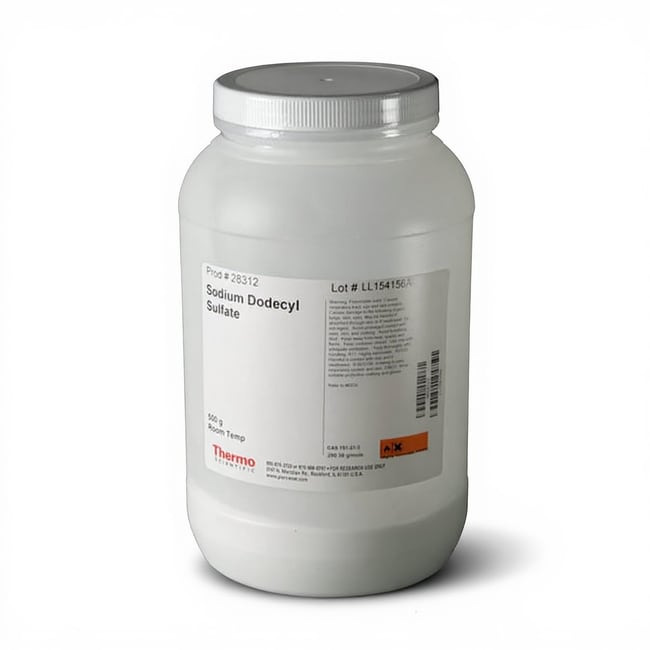
Thermo Scientific 十二烷基硫酸钠 (C12) 是一种高度纯化形式的 SDS,特别适用于需要严格控制溶解度参数的蛋白实验。十二烷基硫酸钠 (C12) 的特点:•用于蛋白电泳和增溶的常用阴离子去污剂• 许多细胞裂解缓冲液配方的组分•了解更多信息
| 货号 | 数量 |
|---|---|
| 28312 | 500 g |
货号 28312
价格(CNY)
3,183.00
飞享价
Ends: 31-Dec-2026
4,039.00共减 856.00 (21%)
Each
数量:
500 g
价格(CNY)
3,183.00
飞享价
Ends: 31-Dec-2026
4,039.00共减 856.00 (21%)
Each
Thermo Scientific 十二烷基硫酸钠 (C12) 是一种高度纯化形式的 SDS,特别适用于需要严格控制溶解度参数的蛋白实验。
十二烷基硫酸钠 (C12) 的特点:
•用于蛋白电泳和增溶的常用阴离子去污剂
• 许多细胞裂解缓冲液配方的组分
• 经过特殊纯化的配方为 >98% C12 烷基硫酸盐
• 含低水平的十六烷基硫酸盐 (C16),可抑制蛋白复性
十二烷基硫酸钠 (SDS) 是一种经常用于蛋白电泳和蛋白增溶方法的烷基硫酸盐阴离子去污剂。它是很多细胞裂解缓冲液配方的成分,包括RIPA缓冲液。典型 SDS 或十二烷基硫酸盐制备物是多种不同链长度(C10 至 C18)的混合物。但是,蛋白复性和其他特殊方法要求非常特定的表面活性剂和缓冲液条件。SDS 的这一特殊配方经高度纯化,从而消除除 C12 外几乎所有二级链长度。
十二烷基硫酸钠(纯 C12)的特性:
• 分子量:288.5 g
• 去污剂类型:离子(阴离子)
• 聚集数:62
• 胶束分子量:18,000g
• 临界胶束浓度 (CMC):6 至 8 mM(0.1728 至 0.2304%,w/v)
• 浊点:>100°C
• 是否可透析:否
十二烷基硫酸钠 (SDS) C12(产品编号 28312)的规格:
• 外观:白色粉末,无外来物质。
•溶解性10%(水性,w/v)溶液必须透明、无色且不含颗粒。
• 链长度:C12 ≥ 98.0%,如果 C16 ≤ 0.8%
• 报告 C10、C12、C14、C16、C18 浓度。
相关产品
十二烷基硫酸钠 (SDS),十二烷基
十二烷基硫酸钠 (SDS),20% 溶液
十二烷基硫酸钠 (C12) 的特点:
•用于蛋白电泳和增溶的常用阴离子去污剂
• 许多细胞裂解缓冲液配方的组分
• 经过特殊纯化的配方为 >98% C12 烷基硫酸盐
• 含低水平的十六烷基硫酸盐 (C16),可抑制蛋白复性
十二烷基硫酸钠 (SDS) 是一种经常用于蛋白电泳和蛋白增溶方法的烷基硫酸盐阴离子去污剂。它是很多细胞裂解缓冲液配方的成分,包括RIPA缓冲液。典型 SDS 或十二烷基硫酸盐制备物是多种不同链长度(C10 至 C18)的混合物。但是,蛋白复性和其他特殊方法要求非常特定的表面活性剂和缓冲液条件。SDS 的这一特殊配方经高度纯化,从而消除除 C12 外几乎所有二级链长度。
十二烷基硫酸钠(纯 C12)的特性:
• 分子量:288.5 g
• 去污剂类型:离子(阴离子)
• 聚集数:62
• 胶束分子量:18,000g
• 临界胶束浓度 (CMC):6 至 8 mM(0.1728 至 0.2304%,w/v)
• 浊点:>100°C
• 是否可透析:否
十二烷基硫酸钠 (SDS) C12(产品编号 28312)的规格:
• 外观:白色粉末,无外来物质。
•溶解性10%(水性,w/v)溶液必须透明、无色且不含颗粒。
• 链长度:C12 ≥ 98.0%,如果 C16 ≤ 0.8%
• 报告 C10、C12、C14、C16、C18 浓度。
相关产品
十二烷基硫酸钠 (SDS),十二烷基
十二烷基硫酸钠 (SDS),20% 溶液
仅供科研使用。不可用于诊断程序。
规格
数量500 g
试剂类型去污剂(纯)
形式粉末
产品类型去垢剂
Unit SizeEach
内容与储存
储存在原容器中,置于干燥、阴凉且通风良好的区域内,避免阳光直照,在以下温度之间:20°C 至 25°℃ 。