Search

Applied Biosystems™
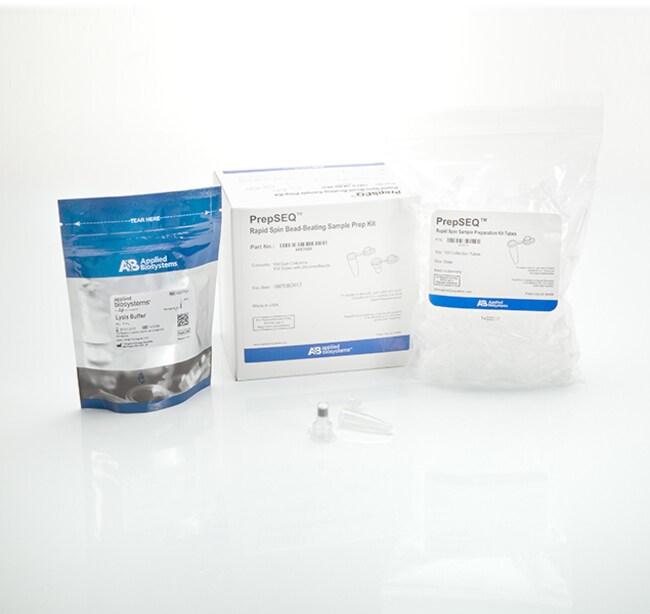
PrepSEQ™ 快速离心样品制备试剂盒 - Extra Clean & Bead Beating
PrepSEQ™ 快速离心样品制备试剂盒 - Extra Clean & Bead Beating 专门开发用于 AFNOR了解更多信息
| 货号 | 数量 |
|---|---|
| 4468304 | 100 preps |
货号 4468304
价格(CNY)
-
数量:
100 preps
PrepSEQ™ 快速离心样品制备试剂盒 - Extra Clean & Bead Beating 专门开发用于 AFNOR 批准的 MicroSEQ™ 李斯特菌属和单核细胞增多性李斯特菌实时荧光定量 PCR 检测工作流程。离心、转移和珠磨方案可有效裂解 750 µL 等份更具挑战性富集食品样品(例如,具有高脂肪含量或易发生 PCR 抑制的样品)中的李斯特菌。PrepSEQ™ 快速离心样品制备试剂盒 - Extra Clean & Bead Beating 可满足较低通量食品实验室的需求。
注意:对于不含高脂质成分或易发生 PCR 抑制的标准样品,应使用 PrepSEQ™ 快速离心样品制备试剂盒 - Bead Beating 进行处理。
•设计用于食品安全和环境监测应用
• 支持低至中等通量(每天多达 100 份样品)
• 灭活 PCR 抑制剂,生成高品质 DNA 以用于下游检测
• 使用简单离心方案
针对基于 PCR 的食品安全和环境监测进行优化
对于从事食品和环境监测的实验室,基于 PCR 的方法正迅速成为准确、灵敏的细菌检测的标准。使用这种样品制备方法从极具挑战性样品类型中快速、低成本地提取高质量 DNA。
专为每天制备多达 100 份样品的实验室而设计
使用基于离心柱的制备方法,可以管理较小批次规模,同时只需要简单的台式设备即可进行处理,无需与高通量自动化设备相关的资本支出。
去除 PCR 抑制剂,生成高质量 DNA
PrepSEQ™ 快速离心样品制备试剂盒 - Extra Clean & Bead Beating 提供了一种可从诸如奶酪、牛奶和高脂肪肉类等较难起始基质中制备李斯特菌 DNA 的简单且极具性价比的方法。在提取过程中,离心柱内的基质可去除样品中的 PCR 抑制剂,使细菌进入样品收集管。将沉淀物重悬,然后转移(避免任何携带污染以抑制 PCR)至含有锆珠的新试管中进行机械裂解。
注意:对于不含高脂质成分或易发生 PCR 抑制的标准样品,应使用 PrepSEQ™ 快速离心样品制备试剂盒 - Bead Beating 进行处理。
•设计用于食品安全和环境监测应用
• 支持低至中等通量(每天多达 100 份样品)
• 灭活 PCR 抑制剂,生成高品质 DNA 以用于下游检测
• 使用简单离心方案
针对基于 PCR 的食品安全和环境监测进行优化
对于从事食品和环境监测的实验室,基于 PCR 的方法正迅速成为准确、灵敏的细菌检测的标准。使用这种样品制备方法从极具挑战性样品类型中快速、低成本地提取高质量 DNA。
专为每天制备多达 100 份样品的实验室而设计
使用基于离心柱的制备方法,可以管理较小批次规模,同时只需要简单的台式设备即可进行处理,无需与高通量自动化设备相关的资本支出。
去除 PCR 抑制剂,生成高质量 DNA
PrepSEQ™ 快速离心样品制备试剂盒 - Extra Clean & Bead Beating 提供了一种可从诸如奶酪、牛奶和高脂肪肉类等较难起始基质中制备李斯特菌 DNA 的简单且极具性价比的方法。在提取过程中,离心柱内的基质可去除样品中的 PCR 抑制剂,使细菌进入样品收集管。将沉淀物重悬,然后转移(避免任何携带污染以抑制 PCR)至含有锆珠的新试管中进行机械裂解。
仅用于检测食品和环境样品。
规格
高通量能力兼容高通量应用、自动化方案
试剂盒类型快速离心样品制备试剂盒
产品线PrepSEQ
纯化目标细菌 DNA
数量100 preps
样品类型食品 & 环境样品
适用于(应用)食品与饮料
Unit SizeEach
内容与储存
裂解缓冲液应冷藏储存 (2–8°C)。切勿冷冻。