Search


引用和文献 (1)
Invitrogen™
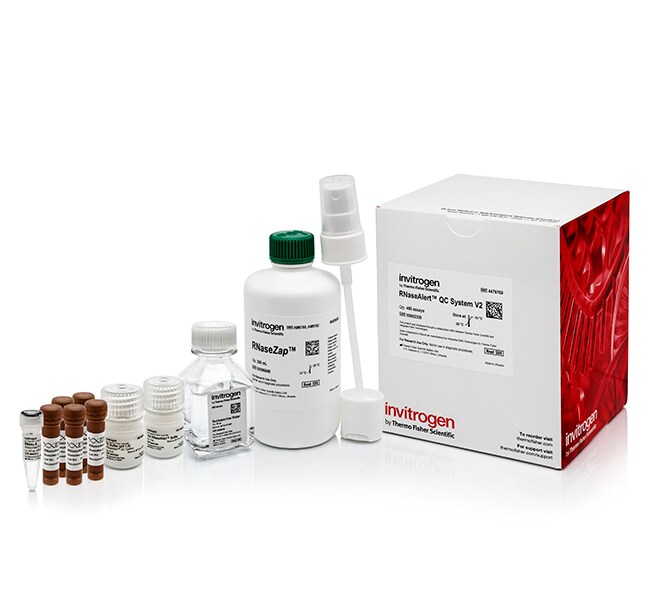
RNaseAlert™ QC 系统 v2
RNaseAlert™ QC 系统 v2 通过便利且灵敏的荧光测定法检测 RNase 活性,此测定法能获得实时结果。此版本包含比之前版本更灵敏(高 ∼60%了解更多信息
| 货号 | 数量 |
|---|---|
| 4479769 | 480 reactions |
货号 4479769
价格(CNY)
11,585.00
飞享价
Ends: 31-Dec-2026
16,905.00共减 5,320.00 (31%)
Each
数量:
480 reactions
价格(CNY)
11,585.00
飞享价
Ends: 31-Dec-2026
16,905.00共减 5,320.00 (31%)
Each
RNaseAlert™ QC 系统 v2 通过便利且灵敏的荧光测定法检测 RNase 活性,此测定法能获得实时结果。此版本包含比之前版本更灵敏(高 ∼60%)的底物。本款试剂盒包含足够进行 5 x 96 (480) 次高通量测定的试剂。
RnaseAlert™ QC 系统 v2 具有以下特点:
• 利用荧光计检测低至 ∼0.3 pg 的 RNase A
• 简单且直接的30分钟测定
• 设计用于监测蛋白纯化期间柱馏分中的 RNase 活性
• 与 DNaseAlert™ QC 系统一起使用以定量检测同一样品中的 RNase 和 DNase
RNaseAlert™ QC 系统 v2 采用一种全新且灵敏度更高的新型 RNA 底物,该底物一端标记有荧光报告基团分子 (fluor) 和另一端标记有淬灭基团。在不存在 RNase 的情况下,淬灭剂的物理接近会将 fluor 中的荧光抑制到极低水平。然而,当 RNA 酶存在时,RNA 底物被裂解,fluor 和淬灭剂在溶液中的空间上是分离的。这导致 fluor 在被适当波长的光激发时发出明亮的绿色信号。
荧光可以很容易地通过基于过滤器或单色器的荧光计检测到。由于 RNaseAlert™ 底物的荧光在 RNase 活性存在时会逐渐增加,因此可对使用荧光计监测得到的结果进行动力学评估。RNaseAlert™ 底物的序列经过精心优化,可检测几种 RNase,包括 RNase A、RNase T1、RNase I、微球菌核酸酶、S1 核酸酶、绿豆核酸酶和 Benzonase™。
迅速且便利的实验方案
RNaseAlert™ 程序仅需几分钟即可完成设置。冻干的荧光底物复溶于提供的管中,并与检测溶液一起孵育几分钟。然后用荧光计读取结果。与阴性对照品相比明显发荧光的样品已受到污染,不应与 RNA 一起使用。提供无核酸酶水和 RNase A 作为对照。
配件产品
RNaseAlert™ QC 系统 v2 与 DNaseAlert™ QC 系统完全兼容。由于 DNaseAlert™ 底物包含与 RNaseAlert™ 底物光谱不同的荧光标记,因此,两种试剂盒可以同时用于对单个样品中的 Rnase 和 DNases 进行定量实时分析。
RnaseAlert™ QC 系统 v2 具有以下特点:
• 利用荧光计检测低至 ∼0.3 pg 的 RNase A
• 简单且直接的30分钟测定
• 设计用于监测蛋白纯化期间柱馏分中的 RNase 活性
• 与 DNaseAlert™ QC 系统一起使用以定量检测同一样品中的 RNase 和 DNase
RNaseAlert™ QC 系统 v2 采用一种全新且灵敏度更高的新型 RNA 底物,该底物一端标记有荧光报告基团分子 (fluor) 和另一端标记有淬灭基团。在不存在 RNase 的情况下,淬灭剂的物理接近会将 fluor 中的荧光抑制到极低水平。然而,当 RNA 酶存在时,RNA 底物被裂解,fluor 和淬灭剂在溶液中的空间上是分离的。这导致 fluor 在被适当波长的光激发时发出明亮的绿色信号。
荧光可以很容易地通过基于过滤器或单色器的荧光计检测到。由于 RNaseAlert™ 底物的荧光在 RNase 活性存在时会逐渐增加,因此可对使用荧光计监测得到的结果进行动力学评估。RNaseAlert™ 底物的序列经过精心优化,可检测几种 RNase,包括 RNase A、RNase T1、RNase I、微球菌核酸酶、S1 核酸酶、绿豆核酸酶和 Benzonase™。
迅速且便利的实验方案
RNaseAlert™ 程序仅需几分钟即可完成设置。冻干的荧光底物复溶于提供的管中,并与检测溶液一起孵育几分钟。然后用荧光计读取结果。与阴性对照品相比明显发荧光的样品已受到污染,不应与 RNA 一起使用。提供无核酸酶水和 RNase A 作为对照。
配件产品
RNaseAlert™ QC 系统 v2 与 DNaseAlert™ QC 系统完全兼容。由于 DNaseAlert™ 底物包含与 RNaseAlert™ 底物光谱不同的荧光标记,因此,两种试剂盒可以同时用于对单个样品中的 Rnase 和 DNases 进行定量实时分析。
仅供科研使用。不可用于诊断程序。
规格
适用于(应用)RNA 提取
数量480 reactions
试剂类型RNase 对照试剂
产品线RNaseAlert
Unit SizeEach
内容与储存
在-20°C 下储存:
5 管装 RNaseAlert™ 底物 v2
5 mL 10X RNaseAlert 实验室检测缓冲液
500 µL RNase A
在室温下储存:
250 mL RNaseZap™ 溶液
在任何温度下储存:
50 mL 无核酸酶水
5 管装 RNaseAlert™ 底物 v2
5 mL 10X RNaseAlert 实验室检测缓冲液
500 µL RNase A
在室温下储存:
250 mL RNaseZap™ 溶液
在任何温度下储存:
50 mL 无核酸酶水
引用和文献 (1)
引用和文献
Abstract
Implementing routine monitoring for nuclease contamination of equipment and consumables into the quality Management system of a laboratory.
Journal:Heliyon
PubMed ID:38298678
Nucleases are ubiquitous in the environment, present in biospecimens and widely used in many laboratory processes. However, in the wrong context, as contaminants, they have catastrophic potential because of their ability to rapidly degrade nucleic acids whilst retaining high resilience to inactivation. Although laboratories undertake rigorous precautions to prevent nuclease