Search

Ion Torrent™
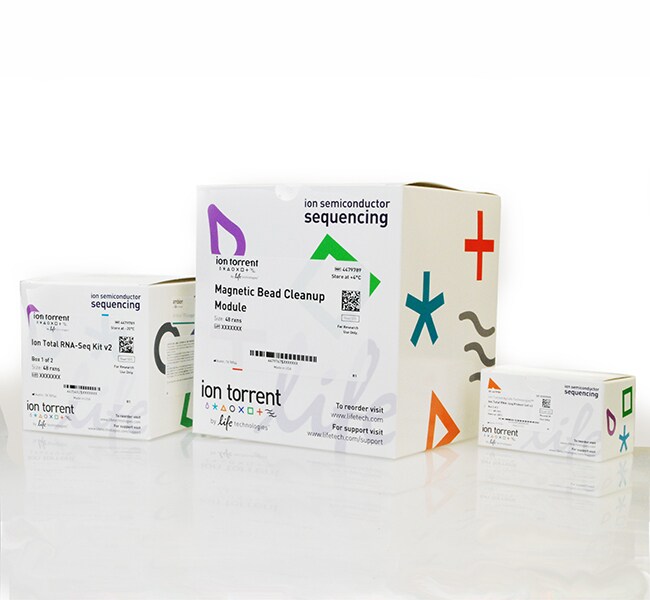
Ion Total RNA-Seq 试剂盒 v2
Ion Total RNA-Seq 试剂盒 v2 包括在 Ion GeneStudio S5、Ion了解更多信息
Have Questions?
更改视图

| 货号 | 反应次数 |
|---|---|
| 4479789 | 12 或 48 |
| 4475936 | 12 或 48 |
货号 4479789
价格(CNY)
-
反应次数:
12 或 48
Ion Total RNA-Seq 试剂盒 v2 包括在 Ion GeneStudio S5、Ion Proton 或 Ion Personal Genome Machine (PGM) 系统上为链特异性 RNA 测序制备代表性 cDNA 文库所需的试剂。Ion GeneStudio S5 和 Ion Proton 系统是适用于全转录组(去除核糖体 RNA 或 polyA)测序的理想选择,而 Ion GeneStudio S5 和 Ion PGM 系统适用于病毒和细菌转录组。Ion Total RNA-Seq 试剂盒版本2是第一代试剂盒的改进版本。磁珠法纯化替代了所有过滤纯化步骤,总反应时间减少到6小时。
新 Ion Total RNA-Seq 试剂盒 v2 的其他特点:
•准确度更高 — 添加 SuperScript VILO 和 Platinum PCR SuperMix High Fidelity 以达到极高的模板保真度
•兼容条形码 — 与用于多通路检测的 Ion Xpress RNA-Seq 条形码01-16试剂盒配合使用
•适用于自动化 — 磁珠法纯化可简化文库构建的自动化
与之前试剂盒一样,Ion Total RNA-Seq 试剂盒 v2:
•保留链的信息 — 所有图谱读段与染色体链相关的转录方向一致
•使您可以分析不同类型的 RNA — 支持去除 rRNA 的总 RNA 和 poly(A) RNA
Ion Total RNA-Seq 试剂盒 v2 设计用于使 cDNA 文库制备快速灵活。它可用于通过任何类型的 RNA 样品生成代表性 cDNA 文库,以测序所需要的特定序列为侧翼。
通过设计为包含普通工作流程的完整解决方案,Ion Total RNA-Seq 试剂盒 v2 结合了优化的试剂和方案,可发现编码 RNA、非编码 RNA 和选择性剪接变体。
全转录组分析
全转录组方案可确保在约5小时内构建链特异性文库。按照手册中提供的 RNA 富集和文库生成方案,从低至 100 ng 的总 RNA 开始,使用 1 ng poly(A) RNA 或 25 ng 去除 rRNA 的总 RNA 构建一个文库。由于文库不限于仅来源于 poly(A) RNA 的 cDNA,Ion Total RNA-Seq 试剂盒文库支持对转录组复杂性进行更全面的研究,能够表征已知和未记录的转录本,包括选择性剪接变体、融合转录本和 SNP。
保留链信息
与连接接头至双链 cDNA 的方法不同,Ion Total RNA-Seq 试剂盒v2使用专有的 Ambion 技术以定向方式连接接头,以保留生成的文库中的链信息。此外,同时连接 3' 和 5' 接头,减少连接和纯化步骤。
在文库构建期间保持链定向有助于更精确测定转录本的结构和表达水平,并有助于从阳性和阴性基因组链中发现新型转录区域。
Ion Total RNA-Seq 试剂盒 v2 设计用于利用至多48份样品创建 RNA 文库,以在 Ion GeneStudio S5、Ion Proton 或 Ion PGM 系统上进行全转录组测序。
新 Ion Total RNA-Seq 试剂盒 v2 的其他特点:
•准确度更高 — 添加 SuperScript VILO 和 Platinum PCR SuperMix High Fidelity 以达到极高的模板保真度
•兼容条形码 — 与用于多通路检测的 Ion Xpress RNA-Seq 条形码01-16试剂盒配合使用
•适用于自动化 — 磁珠法纯化可简化文库构建的自动化
与之前试剂盒一样,Ion Total RNA-Seq 试剂盒 v2:
•保留链的信息 — 所有图谱读段与染色体链相关的转录方向一致
•使您可以分析不同类型的 RNA — 支持去除 rRNA 的总 RNA 和 poly(A) RNA
Ion Total RNA-Seq 试剂盒 v2 设计用于使 cDNA 文库制备快速灵活。它可用于通过任何类型的 RNA 样品生成代表性 cDNA 文库,以测序所需要的特定序列为侧翼。
通过设计为包含普通工作流程的完整解决方案,Ion Total RNA-Seq 试剂盒 v2 结合了优化的试剂和方案,可发现编码 RNA、非编码 RNA 和选择性剪接变体。
全转录组分析
全转录组方案可确保在约5小时内构建链特异性文库。按照手册中提供的 RNA 富集和文库生成方案,从低至 100 ng 的总 RNA 开始,使用 1 ng poly(A) RNA 或 25 ng 去除 rRNA 的总 RNA 构建一个文库。由于文库不限于仅来源于 poly(A) RNA 的 cDNA,Ion Total RNA-Seq 试剂盒文库支持对转录组复杂性进行更全面的研究,能够表征已知和未记录的转录本,包括选择性剪接变体、融合转录本和 SNP。
保留链信息
与连接接头至双链 cDNA 的方法不同,Ion Total RNA-Seq 试剂盒v2使用专有的 Ambion 技术以定向方式连接接头,以保留生成的文库中的链信息。此外,同时连接 3' 和 5' 接头,减少连接和纯化步骤。
在文库构建期间保持链定向有助于更精确测定转录本的结构和表达水平,并有助于从阳性和阴性基因组链中发现新型转录区域。
Ion Total RNA-Seq 试剂盒 v2 设计用于利用至多48份样品创建 RNA 文库,以在 Ion GeneStudio S5、Ion Proton 或 Ion PGM 系统上进行全转录组测序。
仅供科研使用。不可用于诊断程序。
规格
适用于(设备)Ion GeneStudio™ S5、Ion PGM™、Ion Proton™ 系统
库cDNA 文库
反应次数12 或 48
产品线Ion Torrent
数量48 reactions
测序类型转录组测序
原始材料量对于 RNA(去除 rRNA):1-100 ng mRNA
对于全转录组:≥100 ng 总 RNA
对于全转录组:≥100 ng 总 RNA
工作流程步骤NGS 文库制备
样品类型RNA
Unit SizeEach
内容与储存
在 -20°C 下储存:
1管,10X RT 缓冲液48次反应
1管,2.5 mM dNTP 混合物48次反应
1管,Platinum HiFi 预混液48次反应
1管,10x Superscript 酶混合物48次反应
1管,Ion 3'-PCR-引物 v2 48次反应
1管,Ion 5'-PCR-引物 v2 48次反应
1管,Ion 5'-PCR-引物 v2 48次反应
1管,Ion RT 引物 v2 48次反应
1管,Ion 接头混合物 v2 48次反应
在 4°C 下储存:
1瓶,结合溶液浓缩液48次反应
1瓶,洗涤溶液浓缩液48次反应
1瓶,核酸结合珠48次反应
1管,10X RT 缓冲液48次反应
1管,2.5 mM dNTP 混合物48次反应
1管,Platinum HiFi 预混液48次反应
1管,10x Superscript 酶混合物48次反应
1管,Ion 3'-PCR-引物 v2 48次反应
1管,Ion 5'-PCR-引物 v2 48次反应
1管,Ion 5'-PCR-引物 v2 48次反应
1管,Ion RT 引物 v2 48次反应
1管,Ion 接头混合物 v2 48次反应
在 4°C 下储存:
1瓶,结合溶液浓缩液48次反应
1瓶,洗涤溶液浓缩液48次反应
1瓶,核酸结合珠48次反应