Search

Ion Torrent™
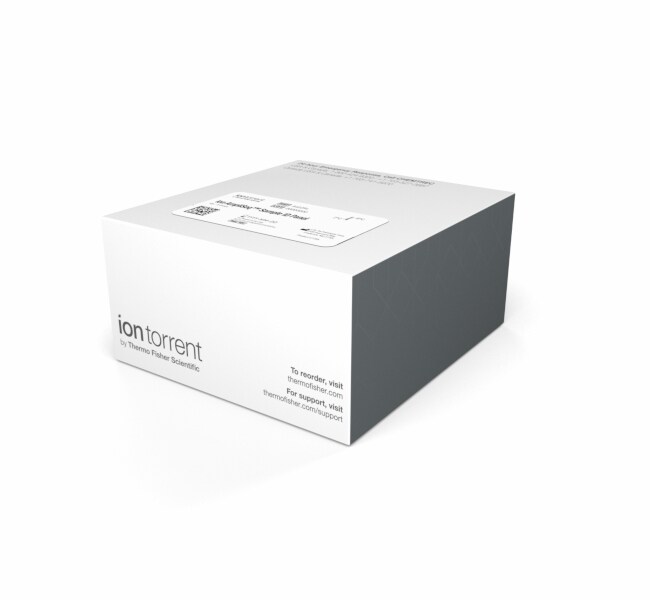
Ion AmpliSeq™ 样品 ID 检测组合
Ion AmpliSeq 样品 ID 检测组合是一种通用、高性价比且易于使用的人 SNP 基因分型检测组合,包括9种特殊设计的引物对,可添加至多重 PCR 反应中,以在研究样品的测序后分析期间生成独特的了解更多信息
| 货号 | 数量 |
|---|---|
| 4479790 | 96 reactions |
货号 4479790
价格(CNY)
-
数量:
96 reactions
Ion AmpliSeq 样品 ID 检测组合是一种通用、高性价比且易于使用的人 SNP 基因分型检测组合,包括9种特殊设计的引物对,可添加至多重 PCR 反应中,以在研究样品的测序后分析期间生成独特的 ID。
设计用于推进临床研究,Ion AmpliSeq 样品 ID 检测组合有助于显示样品错误标识,以提高数据分析和报告期间的置信度。Ion AmpliSeq 样品 ID 检测组合可与任一 Ion AmpliSeq 即用型检测组合或定制检测组合配合使用,定制检测组合可通过 Ion AmpliSeq Designer (www.ampliseq.cn) 进行设计。
验证多种样品组合:
• 肿瘤/正常配对样品
• 纵向研究中来自同一个体的样品
• 来自同一个体的多组织或多肿瘤样品
通过 SNP 基因分型进行样品鉴定
• 检测组合包括九个引物对,靶向九个(女性样品)或十个(男性样品)经验证的 SNP
• SNP 是不连锁的,在不同的人群中表现出出色的稳健性和持续的高次要等位基因频率
• 一个引物对以釉原蛋白基因为靶标,扩增 X 染色体上的一个靶标和 Y 染色体上的不同靶标,从而实现简单快速的样品性别测定
• 样本 ID 代码的第一个字母为样品提供即时性别确定
• 只需极少的测序操作,便可提供良好的鉴别能力 (∼1:5,000*)
工作流程简单—只需一个移液步骤
• 将 1 µL 20X 样品 ID 引物池直接加样到任何 Ion AmpliSeq 引物池中,用于共扩增和下游测序以及数据分析
• 可与任何 Ion Xpress 条形码配合使用
• 与 Ion Reporter 软件兼容,该软件是一种用于自动变异分析的云托管软件工具
包括:
20X Ion AmpliSeq 样品 ID 引物池
需要:
• Torrent Suite 软件(v3.0 或更高版本)包括 Ion AmpliSeq 样品 ID 检测组合插件
• Ion AmpliSeq 文库试剂盒2.0用户指南
• Ion AmpliSeq 即用型检测组合或通过 Ion AmpliSeq Designer (www.ampliseq.cn)设计定制的检测组合
1Pakstis AJ 等人。用于通用型单一鉴定检测组合的 SNP。Hum Genet.2010 Mar; 127(3):315-24.
*4641 鉴别能力计算假定未遗漏基因分型数据
设计用于推进临床研究,Ion AmpliSeq 样品 ID 检测组合有助于显示样品错误标识,以提高数据分析和报告期间的置信度。Ion AmpliSeq 样品 ID 检测组合可与任一 Ion AmpliSeq 即用型检测组合或定制检测组合配合使用,定制检测组合可通过 Ion AmpliSeq Designer (www.ampliseq.cn) 进行设计。
验证多种样品组合:
• 肿瘤/正常配对样品
• 纵向研究中来自同一个体的样品
• 来自同一个体的多组织或多肿瘤样品
通过 SNP 基因分型进行样品鉴定
• 检测组合包括九个引物对,靶向九个(女性样品)或十个(男性样品)经验证的 SNP
• SNP 是不连锁的,在不同的人群中表现出出色的稳健性和持续的高次要等位基因频率
• 一个引物对以釉原蛋白基因为靶标,扩增 X 染色体上的一个靶标和 Y 染色体上的不同靶标,从而实现简单快速的样品性别测定
• 样本 ID 代码的第一个字母为样品提供即时性别确定
• 只需极少的测序操作,便可提供良好的鉴别能力 (∼1:5,000*)
工作流程简单—只需一个移液步骤
• 将 1 µL 20X 样品 ID 引物池直接加样到任何 Ion AmpliSeq 引物池中,用于共扩增和下游测序以及数据分析
• 可与任何 Ion Xpress 条形码配合使用
• 与 Ion Reporter 软件兼容,该软件是一种用于自动变异分析的云托管软件工具
包括:
20X Ion AmpliSeq 样品 ID 引物池
需要:
• Torrent Suite 软件(v3.0 或更高版本)包括 Ion AmpliSeq 样品 ID 检测组合插件
• Ion AmpliSeq 文库试剂盒2.0用户指南
• Ion AmpliSeq 即用型检测组合或通过 Ion AmpliSeq Designer (www.ampliseq.cn)设计定制的检测组合
1Pakstis AJ 等人。用于通用型单一鉴定检测组合的 SNP。Hum Genet.2010 Mar; 127(3):315-24.
*4641 鉴别能力计算假定未遗漏基因分型数据
仅供科研使用。不可用于诊断程序。
规格
适用于(应用)测序
适用于(设备)Ion PGM™ System, Ion Proton™ System, Ion GeneStudio™ S5 System
库靶向测序库
多路传输能力9 个扩增子
反应次数96
引物样品 ID 引物
产品线Ion AmpliSeq
产品类型样品 ID 检测组合
数量96 reactions
样品类型DNA
运输条件可在室温或干冰上运输
种属人
原始材料量10 ng gDNA
技术扩增子测序
工作流程步骤样品 QC
测序类型基因组和 DNA 测序
Unit SizeEach
内容与储存
1 管 20X Ion AmpliSeq™ 样品 ID 引物池
储存在 -30°C 至 -10°C 下
储存在 -30°C 至 -10°C 下