Search

Thermo Scientific™
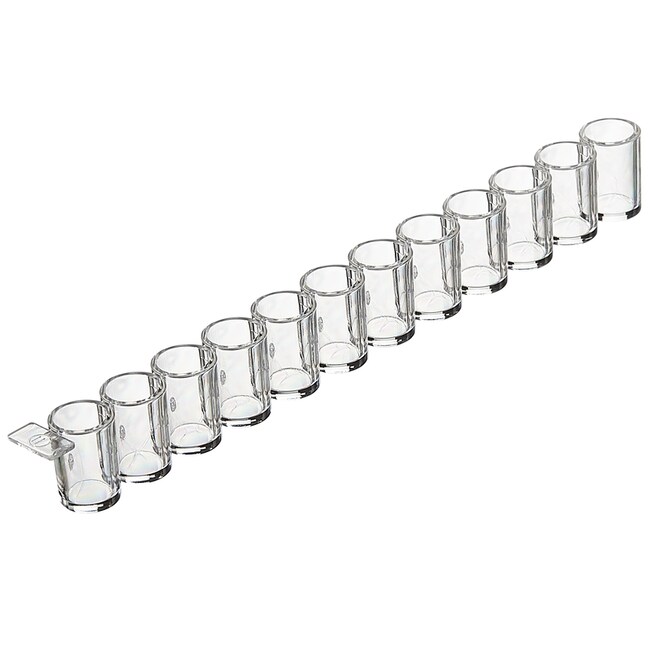
Immuno 透明标准模块,上限工作体积:330 μL
Immuno 透明标准模块具有为 ELISA 技术开发的 Nunc™、Immulon™ 和 Microtiter™ 模块板,并适用于标准设备。
| 货号 | 表面处理 |
|---|---|
| 6404TS 又称 6404 | Immulon 4 HBX |
货号 6404TS
又称 6404
价格(CNY)
1,767.50
飞享价
Ends: 31-Dec-2026
4,418.75共减 2,651.25 (60%)
Case of 320
表面处理:
Immulon 4 HBX
价格(CNY)
1,767.50
飞享价
Ends: 31-Dec-2026
4,418.75共减 2,651.25 (60%)
Case of 320
Thermo Scientific™ Immuno 透明标准模块具有为 ELISA 技术开发的 Nunc™、Immulon™ 和 Microtiter™ 模块板,并适用于标准设备。其规格灵活,可与多种小样本量的组件搭配使用。该模块具有批次间可靠性、孔间重现性,以及行业领先的质量标准和认证的支持。
Thermo Scientific 标准模块为带固体模块的联排板,插入框架和移除均十分方便。这使得微孔板能更好地用于更少量样品。
- 几种可拆板条规格:8 孔联排、12 孔联排、16 孔联排(两列,各 8 孔)
- 几种孔形:平底,C 型底(平底折角),U 形孔,星形孔(孔内带凸棱,以增加表面积和增强性能)
- 几种表面修饰,最大程度提升测定性能
- 倒置时,模块仍可固定在框架里
- 框架可堆叠,有方便盖子定位的标记
- 聚苯乙烯板条,聚乙烯框架
- 外部尺寸:128 × 86mm
可选表面
- PolySorp™、Immulon 1B 和通用结合 (UB) 产品,用于吸附疏水分子
- Medisorp™ 和 Immulon 2HB 有轻微亲水性,可结合多种生物分子
- MaxiSorp™、Immulon 4 HBX 和增强结合 (EB) 产品具有亲水性,适用于抗体夹心法测定
- MultiSorp™ 表面非常亲水,非常适合用于多糖和水溶性蛋白
订购信息:
独立模块。货货号 95029440 和 464394 有证书。框架和模块可单独购买。提供密封膜和硅胶盖。可根据要求提供不同颜色的可拆条。更多详细信息,请联系您的客户服务或销售代表。
内部研究使用限制的免责声明:买方将本产品用于内部研究用途的任何限制仅仅不适用于与此声明有关的网页上的产品。
规格
结合属性亲水
结合类型吸附
转折点可拆分联排管
认证/合规通过 IgG 吸附认证;孔间 CV < 5%
认证级是
检测方法比色法
每箱数量320
每架数量320
包装320 包,320 箱
板封闭无
产品类型无框 – 使用框架 6604
靶标分子抗体(糖蛋白)
工作容积(公制)330 μL
孔设计F12
颜色透明
产品规格单条可拆
材质聚苯乙烯
孔数量96
表面处理Immulon 4 HBX
孔容积(公制)380 μL
孔形圆形
Unit SizeCase of 320