Search

Thermo Scientific™
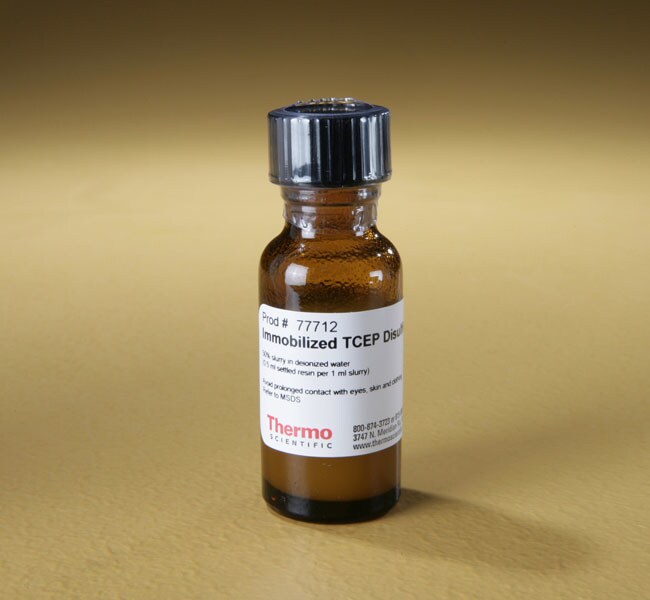
Pierce™ 固定化 TCEP 二硫化物还原凝胶
固定化 TCEP 二硫化物还原凝胶无需使用费力且低效的凝胶过滤方法从还原剂中分离还原样品。固定化 TCEP 二硫化物还原凝胶可以便利地适应各种规模和形式(即:批量、离心柱和重力流柱程序)。这种还原凝胶适用于一次性应用;不可再生和重复使用了解更多信息
| 货号 | 数量 |
|---|---|
| 77712 | 5 mL |
货号 77712
价格(CNY)
3,710.00
Each
数量:
5 mL
价格(CNY)
3,710.00
Each
固定化 TCEP 二硫化物还原凝胶无需使用费力且低效的凝胶过滤方法从还原剂中分离还原样品。固定化 TCEP 二硫化物还原凝胶可以便利地适应各种规模和形式(即:批量、离心柱和重力流柱程序)。这种还原凝胶适用于一次性应用;不可再生和重复使用。
固定化 TCEP 二硫化物还原凝胶的特点:
•无味—在实验台上还原蛋白质;有助于保持更健康的实验室环境
• 稳定—冷藏储存时几乎无活性损失
• 通用—可在多种 pH 值、盐或去污剂浓度及温度条件下还原肽和蛋白质
• 灵活—树脂浆可灵活用于离心管、色谱柱或批量模式
• 节约时间—无需去除可溶性还原剂,能够节约时间并节省样品
• 高效—可裂解天然二硫键和通过交联结合的二硫键
与可溶性二硫化物还原剂相比的优势:
•不含还原剂的出色回收—去除还原剂和回收还原分子而无样品损失是 DTT 或 β-巯基乙醇 (BME) 固有的问题。固定化 TCEP 可让您以高得率(85% 或更高)回收还原蛋白质/肽,而无需透析或脱盐。
•无味—与 DTT 或 BME 不同,固定化 TCEP 无味,因此可在实验台上便利地进行还原。
•空气中性质稳定—鉴于 TCEP 的固有稳定性,在处理、使用或储存固定化 TCEP 二硫化物还原凝胶时无需采取避免氧化的特殊预防措施。
•易于处理—固定化 TCEP 还原剂可让您轻松分配每次应用所需的支持量。可在多种 pH 值(pH 值 4 至 9)和温度(5 至 95°C)条件下进行还原。
三烷基膦是用于对蛋白质、肽和其他含二硫键分子进行二硫键还原的优良试剂 [1,2],对其他官能团相对无反应性。[3] 三烷基膦 TCEP 在水溶液中性质稳定,不会发生在使用其他还原剂(例如二硫苏糖醇 (DTT) 和 β-巯基乙醇 (BME))时经常发生的快速氧化。[4] TCEP 不会干扰常用的巯基反应性试剂(例如马来酰亚胺交联剂)。[5] 然而,许多方案要求回收与还原剂分离的还原样品。固定化 TCEP 二硫化物还原凝胶能够进行样品还原并即时回收不含还原剂的还原样品。
固定化 TCEP 二硫化物还原凝胶的使用注意事项:
• 可在多种 pH 值(pH 值 4.0-9.0)和温度 (5°-95°C) 条件下进行还原。
• 无需使用变性剂即可高效还原大多数蛋白质。然而,加入变性剂(如盐酸胍)可能有助于将内部二硫化物暴露于固定化 TCEP。·
•不推荐将尿素用作变性剂,因为它会形成与巯基发生反应的氰酸盐。
•请勿使金属接触固定化 TCEP,因为这会降低其活性。
•在还原过程中,向样品缓冲液中加入 5—20 mM EDTA 有助于防止二价金属(如 Zn 2+、Cu 2+ 和 Mg 2+)对巯基进行再氧化。
•还原样品应在还原后立即使用,因为二硫化物会随时间重新形成。
相关产品
Pierce™ TCEP-HCl
固定化 TCEP 二硫化物还原凝胶的特点:
•无味—在实验台上还原蛋白质;有助于保持更健康的实验室环境
• 稳定—冷藏储存时几乎无活性损失
• 通用—可在多种 pH 值、盐或去污剂浓度及温度条件下还原肽和蛋白质
• 灵活—树脂浆可灵活用于离心管、色谱柱或批量模式
• 节约时间—无需去除可溶性还原剂,能够节约时间并节省样品
• 高效—可裂解天然二硫键和通过交联结合的二硫键
与可溶性二硫化物还原剂相比的优势:
•不含还原剂的出色回收—去除还原剂和回收还原分子而无样品损失是 DTT 或 β-巯基乙醇 (BME) 固有的问题。固定化 TCEP 可让您以高得率(85% 或更高)回收还原蛋白质/肽,而无需透析或脱盐。
•无味—与 DTT 或 BME 不同,固定化 TCEP 无味,因此可在实验台上便利地进行还原。
•空气中性质稳定—鉴于 TCEP 的固有稳定性,在处理、使用或储存固定化 TCEP 二硫化物还原凝胶时无需采取避免氧化的特殊预防措施。
•易于处理—固定化 TCEP 还原剂可让您轻松分配每次应用所需的支持量。可在多种 pH 值(pH 值 4 至 9)和温度(5 至 95°C)条件下进行还原。
三烷基膦是用于对蛋白质、肽和其他含二硫键分子进行二硫键还原的优良试剂 [1,2],对其他官能团相对无反应性。[3] 三烷基膦 TCEP 在水溶液中性质稳定,不会发生在使用其他还原剂(例如二硫苏糖醇 (DTT) 和 β-巯基乙醇 (BME))时经常发生的快速氧化。[4] TCEP 不会干扰常用的巯基反应性试剂(例如马来酰亚胺交联剂)。[5] 然而,许多方案要求回收与还原剂分离的还原样品。固定化 TCEP 二硫化物还原凝胶能够进行样品还原并即时回收不含还原剂的还原样品。
固定化 TCEP 二硫化物还原凝胶的使用注意事项:
• 可在多种 pH 值(pH 值 4.0-9.0)和温度 (5°-95°C) 条件下进行还原。
• 无需使用变性剂即可高效还原大多数蛋白质。然而,加入变性剂(如盐酸胍)可能有助于将内部二硫化物暴露于固定化 TCEP。·
•不推荐将尿素用作变性剂,因为它会形成与巯基发生反应的氰酸盐。
•请勿使金属接触固定化 TCEP,因为这会降低其活性。
•在还原过程中,向样品缓冲液中加入 5—20 mM EDTA 有助于防止二价金属(如 Zn 2+、Cu 2+ 和 Mg 2+)对巯基进行再氧化。
•还原样品应在还原后立即使用,因为二硫化物会随时间重新形成。
相关产品
Pierce™ TCEP-HCl
仅供科研使用。不可用于诊断程序。
规格
形式液体
产品线Pierce
数量5 mL
产品类型二硫化物还原试剂
Unit SizeEach
内容与储存
接收后在 4°C 下储存。切勿冷冻。