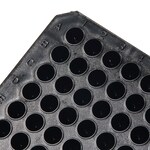
For Clear Flat-Bottom Immuno Nonsterile 96-Well Plates, is the surface treatment solely on the bottom of the well, or is it also applied to the sides?
For energy treated plates, the entire plate surface receives the energy treatment. The MaxiSorp, PolySorp, MediSorp and MultiSorp plates are energy treated plates. For traditionally treated plates, the well surface is treated up to the listed working volume.
Are your Thermo Scientific 8-Well Strip Caps for Immuno Standard Modules compatible with all Nunc MicroWell 96-Well Microplates and Nunc Immuno 96-Well Plates?
Our Thermo Scientific 8-Well Strip Caps for Immuno Standard Modules were designed to provide a positive seal for flat and round bottom wells of our Nunc MicroWell 96-Well Microplates and Nunc Immuno 96-Well Plates.
8-Well Strip Caps for Immuno Standard Modules are not compatible with C or V bottom wells of the Nunc Microwell 96-Well Microplates and Nunc Immuno 96-Well Plates.
For Nunc Immuno plates and modules, what are the advantages of one well geometry type over another? Which types should I use for various applications?
The following list describes the geometries of wells available for Nunc Immuno-plates and modules:
- Flat bottom (F): Allows maximum transmission of light. These plates can be read on a monochromatic reader.
- Round bottom (U): This geometry optimizes washing and coating. These plates can be read using a dual wavelength reader.
- "C" bottom (C): This design of the well is a combination of both flat and round bottoms. Basically, it is a flat bottomed well with curved edges at the bottom. These plates also can be read using a monochromatic reader combining optimal reading and washing.
- StarWell: These wells have a modified "C" shape geometry with eight fins strategically placed at the bottom. This feature increases surface area, allowing more molecules to become immobilized which reduces incubation times.
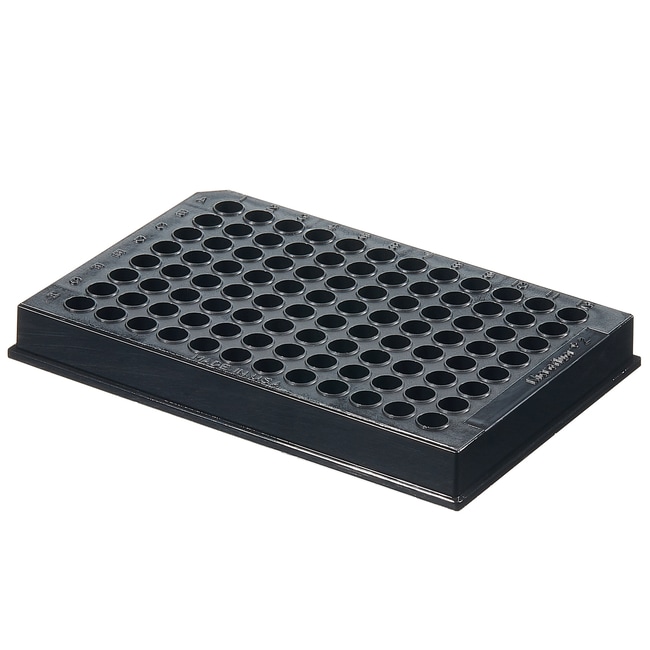
Should I use an opaque black/white immuno plate, or an "optical-bottom" design?
Opaque plates can only be used on “top reader” instruments, which detect (or, in fluorescence mode, excite and detect) from above the plate. Readers that detect from underneath the plate (or imaging systems) use optical-bottom plates, which have a black or white upper well structure and a transparent (polystyrene film or optical coverglass) bottom.
Find additional tips, troubleshooting help, and resources within our Antibodies and Immunoassays Support Center.
Why would I use a black or white (instead of clear) immuno plate?
Black plates are often used in assays that make use of a fluorescent reporter because the opaque black surface effectively isolates the signal from each well in order to eliminate “crosstalk” or signal bleed. White plates also isolate well-to-well signals somewhat, but also provide a reflective background to direct luminescent output to the reader, and so often serve as a better choice to improve dynamic range from a luminescent reporter.
Find additional tips, troubleshooting help, and resources within our Antibodies and Immunoassays Support Center.