Search

Thermo Scientific™
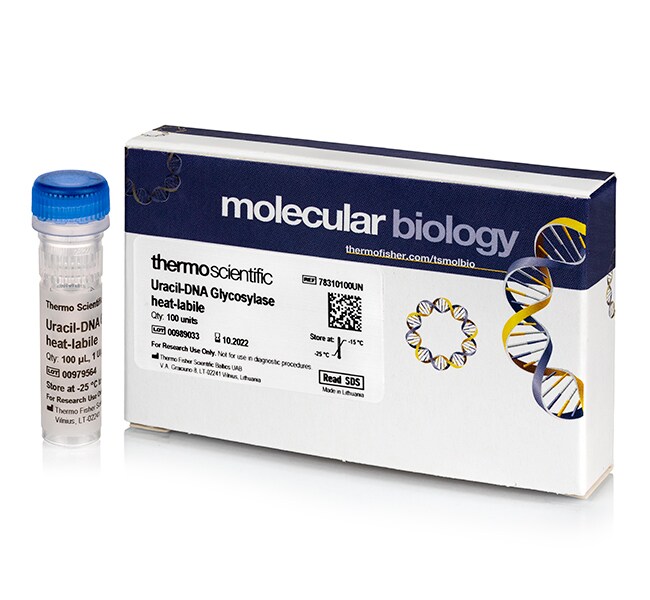
Uracil-DNA Glycosylase,不耐热性
通过切割尿嘧啶碱基与糖骨架之间的 N-糖苷键,Uracil-DNA Glycosylase 从含 dU DNA 中去除尿嘧啶。该切割生成碱敏感的无嘧啶位点,DNA 聚合酶阻断了这些位点的复制或防止其变为杂交位点。双链和单链含了解更多信息
| 货号 | 数量 |
|---|---|
| 78310100UN | 100 U |
货号 78310100UN
价格(CNY)
1,042.00
飞享价
Ends: 31-Dec-2026
1,389.00共减 347.00 (25%)
Each
数量:
100 U
价格(CNY)
1,042.00
飞享价
Ends: 31-Dec-2026
1,389.00共减 347.00 (25%)
Each
通过切割尿嘧啶碱基与糖骨架之间的 N-糖苷键,Uracil-DNA Glycosylase 从含 dU DNA 中去除尿嘧啶。该切割生成碱敏感的无嘧啶位点,DNA 聚合酶阻断了这些位点的复制或防止其变为杂交位点。
双链和单链含 dU DNA 是 Uracil-DNA Glycosylase 的底物,而 RNA 和普通含 dT DNA 则不是。
Uracil-DNA Glycosylase 亦可用于提升 PCR 产物的克隆效率(通过将含 dU 引物掺入 PCR 产物以及提升定点突变效率)。
从大西洋鳕鱼获得的 Uracil-DNA Glycosylase 拥有大肠杆菌衍生酶的所有特质,并附加了不耐热性。在50°C 下孵育 10 分钟后,其彻底地、不可逆转地失活。
纯度:
该酶经过色谱分析纯化,并检测了其污染性核酸内切酶和核酸外切酶。
储存缓冲液:
50 mM Tris-HCl(pH 值 7.5)、100 mM NaCl、0.5 mM EDTA、1 mM DTT、0.1% Triton X-100、 50% 甘油。
测定条件:
反应混合物包含 70 mM Tris-HCl(pH 值 8.0)、10 mM NaCl、1 mM EDTA、100 μg/mL BSA、3H-dUTP 标记 DNA 和 Uracil-DNA Glycosylase。在 37°C 下持续孵育 1 小时。
单位定义:
一个单位是指从含 dU DNA 释放 1 nmoL 尿嘧啶所需的酶量(一小时、37°C 下)。
浓度:
1 个单位/μL
应用:
1. DNA 修复和突变检测研究。
2. 提升 PCR 产物的克隆效率。
3. 提升定点突变的效率。
4. 蛋白-DNA 相互作用研究。
来源:
来自大西洋鳕鱼(鱼肝)的重组体
双链和单链含 dU DNA 是 Uracil-DNA Glycosylase 的底物,而 RNA 和普通含 dT DNA 则不是。
Uracil-DNA Glycosylase 亦可用于提升 PCR 产物的克隆效率(通过将含 dU 引物掺入 PCR 产物以及提升定点突变效率)。
从大西洋鳕鱼获得的 Uracil-DNA Glycosylase 拥有大肠杆菌衍生酶的所有特质,并附加了不耐热性。在50°C 下孵育 10 分钟后,其彻底地、不可逆转地失活。
纯度:
该酶经过色谱分析纯化,并检测了其污染性核酸内切酶和核酸外切酶。
储存缓冲液:
50 mM Tris-HCl(pH 值 7.5)、100 mM NaCl、0.5 mM EDTA、1 mM DTT、0.1% Triton X-100、 50% 甘油。
测定条件:
反应混合物包含 70 mM Tris-HCl(pH 值 8.0)、10 mM NaCl、1 mM EDTA、100 μg/mL BSA、3H-dUTP 标记 DNA 和 Uracil-DNA Glycosylase。在 37°C 下持续孵育 1 小时。
单位定义:
一个单位是指从含 dU DNA 释放 1 nmoL 尿嘧啶所需的酶量(一小时、37°C 下)。
浓度:
1 个单位/μL
应用:
1. DNA 修复和突变检测研究。
2. 提升 PCR 产物的克隆效率。
3. 提升定点突变的效率。
4. 蛋白-DNA 相互作用研究。
来源:
来自大西洋鳕鱼(鱼肝)的重组体
仅供科研使用。不可用于诊断程序。
规格
兼容缓冲液储存缓冲液
产品类型尿嘧啶 DNA 糖基化酶
数量100 U
酶糖基化酶
Unit SizeEach
内容与储存
置于干冰上运输。保存于 -20°C。