Search

Thermo Scientific™
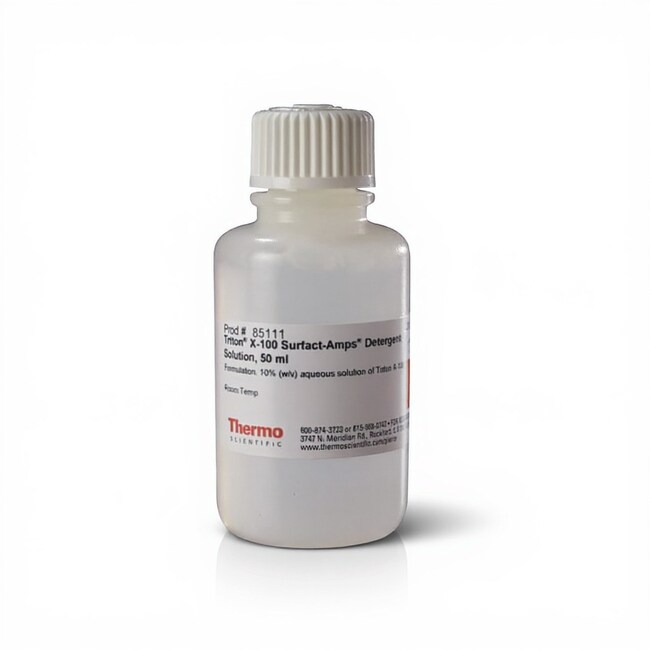
Triton™ X-100 Surfact-Amps™ 去污剂溶液
Thermo Scientific Triton X-100 Surfact-Amps 去污剂溶液是一种高度纯化的 Triton™ X-100 去污剂,以不同规格的 10%了解更多信息
Have Questions?
更改视图

| 货号 | 数量 |
|---|---|
| 85111 | 50 mL |
| 28314 | 6 x 10 mL |
| 85112 | 250 mL |
| 28313 | 1 L |
货号 85111
价格(CNY)
1,072.00
飞享价
Ends: 31-Dec-2026
1,394.00共减 322.00 (23%)
Each
数量:
50 mL
价格(CNY)
1,072.00
飞享价
Ends: 31-Dec-2026
1,394.00共减 322.00 (23%)
Each
Thermo Scientific Triton X-100 Surfact-Amps 去污剂溶液是一种高度纯化的 Triton™ X-100 去污剂,以不同规格的 10% 溶液 (w/v) 形式稳定存在,并包装在 10 mL 玻璃安瓿或三种规格的非浸出 HDPE 瓶中的氮气下,以确保其稳定性和消除过氧化物和降解产物的积聚。
Triton X-100 Surfact-Amps 去污剂溶液的特点:
•Triton X-100—一种适用于多种蛋白方法的非离子去污剂
• 准确—精确的 10% 去污剂溶液溶于超纯水中
• 易于使用—溶液易于分取和稀释
• 超度极高—低于 1.0µeq/mL 过氧化物和碳酰基
• 稳定—包装在玻璃安瓿或 HDPE 瓶中的惰性氮气下
Triton X-100 Surfact-Amps 去污剂溶液的规格:
• 外观:透明至轻度浑浊、无色溶液,不含微粒。
• 浓度:10.0±1.0%
• 氧化剂:≤1.0µ eq/mL
• 羰基:≤1.0µ eq/mL
• 悬浮固体:残留物不能超过残留物参考值。
Triton X-100 的特性:
• 分子量:647g
• 去污剂类别:非离子聚环氧乙烷表面活性剂
• 积聚数量:140
•胶束分子量:90,000g
• 临界胶束浓度 (CMC):0.24 mM (0.0155% w/v)
• 浊点:64°C
• 透析:否
Triton X-100 经常作为细胞裂解缓冲液或其他溶液的组分用于提取并溶解多种蛋白。
相关产品
Surfact-Amps™ 去污剂采样器
Triton X-100 Surfact-Amps 去污剂溶液的特点:
•Triton X-100—一种适用于多种蛋白方法的非离子去污剂
• 准确—精确的 10% 去污剂溶液溶于超纯水中
• 易于使用—溶液易于分取和稀释
• 超度极高—低于 1.0µeq/mL 过氧化物和碳酰基
• 稳定—包装在玻璃安瓿或 HDPE 瓶中的惰性氮气下
Triton X-100 Surfact-Amps 去污剂溶液的规格:
• 外观:透明至轻度浑浊、无色溶液,不含微粒。
• 浓度:10.0±1.0%
• 氧化剂:≤1.0µ eq/mL
• 羰基:≤1.0µ eq/mL
• 悬浮固体:残留物不能超过残留物参考值。
Triton X-100 的特性:
• 分子量:647g
• 去污剂类别:非离子聚环氧乙烷表面活性剂
• 积聚数量:140
•胶束分子量:90,000g
• 临界胶束浓度 (CMC):0.24 mM (0.0155% w/v)
• 浊点:64°C
• 透析:否
Triton X-100 经常作为细胞裂解缓冲液或其他溶液的组分用于提取并溶解多种蛋白。
相关产品
Surfact-Amps™ 去污剂采样器
仅供科研使用。不可用于诊断程序。
规格:
- 外观:透明至轻度浑浊、无色溶液,不含微粒。
- 浓度:10.0 ± 1.0%
- 氧化剂:≤ 1.0 μeq/mL
- 碳酰基:≤ 1.0 μeq/mL
- 悬浮固体:存在的残余物含量不得超过残余物参考值。
规格
数量50 mL
试剂类型去污剂溶液
形式液体
产品线Surfact-Amps, Triton
产品类型去垢剂
Unit SizeEach
内容与储存
在 20°C 至 25°C 下储存