Search


引用和文献 (1)
Thermo Scientific™
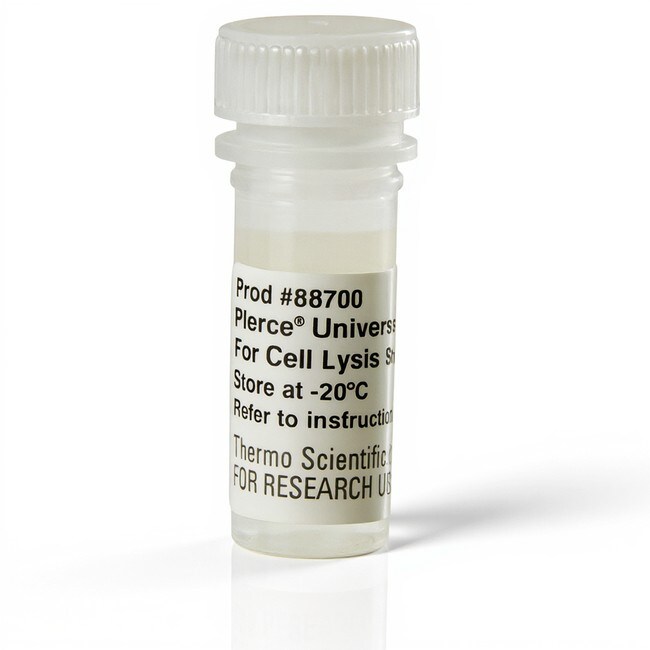
用于细胞裂解的 Pierce™ 通用核酸酶
用于细胞裂解的 Thermo Scientific Pierce 通用核酸酶是制备细胞裂解液时需要完全酶切核酸的各种应用的理想选择。用于细胞裂解的通用核酸酶的特点:•宽光谱—降解所有形式的 DNA 和 RNA• 高质量的酶—经了解更多信息
Have Questions?
更改视图

| 货号 | 数量 |
|---|---|
| 88700 | 5 kU |
| 88702 | 100 kU |
| 88701 | 25 kU |
货号 88700
价格(CNY)
712.00
5 kU
数量:
5 kU
价格(CNY)
712.00
5 kU
用于细胞裂解的 Thermo Scientific Pierce 通用核酸酶是制备细胞裂解液时需要完全酶切核酸的各种应用的理想选择。
用于细胞裂解的通用核酸酶的特点:
•宽光谱—降解所有形式的 DNA 和 RNA
• 高质量的酶—经 SDS-PAGE 检测核酸酶纯度为 ≥99%
• 健壮的活性—特异性活性比 DNase I 提高了 100 倍
• 多功能—可用于各种细胞裂解试剂
用于细胞裂解的 Pierce 通用核酸酶是一种由粘质沙雷菌基因改造而来的核酸内切酶。这种酶从大肠杆菌产生并纯化,由两个带有两个关键二硫键的完全相同的 30-kDa 亚单元组成。这种不加选择的核酸内切酶会降解单链、双链、线性和循环 DNA 及 RNA,在广泛的温度和 pH 范围内有效。这种酶具有较高的特异性活性(比 DNase I 高 100 倍),并且与其他核酸酶相比,热稳定性更高。Pierce 通用核酸酶是纯度为 ≥99 的酶,无任何可测量的蛋白酶活性,以 250U/μL 的浓度提供。用于细胞裂解的 Pierce 通用核酸酶在性能上与 Benzonase™ 核酸酶 (EMD Merck) 完全相同。
应用:
• 与 B-PER、Y-PER 或其他商业或自制的细胞裂解试剂和/或机械破坏结合使用以减少蛋白提取物中的粘度
• 在下游处理前从重组蛋白制剂中去除 DNA 和 RNA
用于细胞裂解的 Pierce 通用核酸酶常用于通过去除蛋白制剂中的核酸为下游应用减少细菌和哺乳动物蛋白提取物的粘度。该酶可以将核酸完全酶切为长度小于 5 个碱基的寡核苷酸。用于细胞裂解的 Pierce 通用核酸酶有助于提高从上清液中分离裂解物沉淀的效率,增强处理过的裂解物的过滤能力,提高色谱处理时间并增加总蛋白产量。核酸内切酶还被证明能够提高 2D 凝胶电泳的蛋白质提取物的兼容性。一个单位对应于在 37°C 条件下 30 分钟内 260nm 超声处理后 Herring DNA 的吸光度变化 1.0 所需的酶量,使用 Merck™ 粘质沙雷菌体积活性检测试剂盒中的标准核酸酶确定。
相关产品
微球菌核酸酶溶液 (≥ 1 单位/μL)
用于细胞裂解的通用核酸酶的特点:
•宽光谱—降解所有形式的 DNA 和 RNA
• 高质量的酶—经 SDS-PAGE 检测核酸酶纯度为 ≥99%
• 健壮的活性—特异性活性比 DNase I 提高了 100 倍
• 多功能—可用于各种细胞裂解试剂
用于细胞裂解的 Pierce 通用核酸酶是一种由粘质沙雷菌基因改造而来的核酸内切酶。这种酶从大肠杆菌产生并纯化,由两个带有两个关键二硫键的完全相同的 30-kDa 亚单元组成。这种不加选择的核酸内切酶会降解单链、双链、线性和循环 DNA 及 RNA,在广泛的温度和 pH 范围内有效。这种酶具有较高的特异性活性(比 DNase I 高 100 倍),并且与其他核酸酶相比,热稳定性更高。Pierce 通用核酸酶是纯度为 ≥99 的酶,无任何可测量的蛋白酶活性,以 250U/μL 的浓度提供。用于细胞裂解的 Pierce 通用核酸酶在性能上与 Benzonase™ 核酸酶 (EMD Merck) 完全相同。
应用:
• 与 B-PER、Y-PER 或其他商业或自制的细胞裂解试剂和/或机械破坏结合使用以减少蛋白提取物中的粘度
• 在下游处理前从重组蛋白制剂中去除 DNA 和 RNA
用于细胞裂解的 Pierce 通用核酸酶常用于通过去除蛋白制剂中的核酸为下游应用减少细菌和哺乳动物蛋白提取物的粘度。该酶可以将核酸完全酶切为长度小于 5 个碱基的寡核苷酸。用于细胞裂解的 Pierce 通用核酸酶有助于提高从上清液中分离裂解物沉淀的效率,增强处理过的裂解物的过滤能力,提高色谱处理时间并增加总蛋白产量。核酸内切酶还被证明能够提高 2D 凝胶电泳的蛋白质提取物的兼容性。一个单位对应于在 37°C 条件下 30 分钟内 260nm 超声处理后 Herring DNA 的吸光度变化 1.0 所需的酶量,使用 Merck™ 粘质沙雷菌体积活性检测试剂盒中的标准核酸酶确定。
相关产品
微球菌核酸酶溶液 (≥ 1 单位/μL)
仅供科研使用。不可用于诊断程序。
用于细胞裂解的 Pierce 通用核酸酶常用于通过去除蛋白制剂中的核酸为下游应用减少细菌和哺乳动物蛋白提取物的粘度。该酶可以将核酸完全酶切为长度小于 5 个碱基的寡核苷酸。用于细胞裂解的 Pierce 通用核酸酶有助于提高从上清液中分离裂解物沉淀的效率,增强处理过的裂解物的过滤能力,提高色谱处理时间并增加总蛋白产量。核酸内切酶还被证明能够提高 2D 凝胶电泳的蛋白质提取物的兼容性。一个单位对应于在 37°C 条件下 30 分钟内 260nm 超声处理后 Herring DNA 的吸光度变化 1.0 所需的酶量,使用 Merck™ 粘质沙雷菌体积活性检测试剂盒中的标准核酸酶确定。
规格
描述Pierce 细胞裂解通用核酸酶
酶核酸酶
配方至少 99% 纯酶 (250 U/uL) 的 50% 甘油溶液 (v/v)、20 mM NaCl、2 mM MgCl2、20 mM Tris,pH 8.0
数量5 kU
试剂类型用于细胞裂解的酶
足够用于200 mL 裂解物
形式液体
产品线Pierce
产品类型通用核酸酶
Unit Size5 kU
内容与储存
储存在阴凉、干燥、通风良好的区域,避免阳光直射。
常见问题解答 (FAQ)
At which concentration/dilution should the Pierce Universal Nuclease for Cell Lysis (Cat. No. 88700) be used, and what is the suggested incubation time and incubation temperature?
After cell lysis, my mass spectrometry sample is very viscous and difficult to pipette. How do I reduce the sample viscosity?
Can you explain how the B-PER Bacterial Protein Extraction Reagent lyses cells?
引用和文献 (1)
引用和文献
Abstract
p53 is active in murine stem cells and alters the transcriptome in a manner that is reminiscent of mutant p53.
Journal:
PubMed ID:25719246
Since it was found that p53 is highly expressed in murine embryonic stem cells, it remained a mystery whether p53 is active in this cell type. We show that a significant part of p53 is localised in the nucleus of murine embryonic stem cells and that the majority of this