Search

Thermo Scientific™
Pierce™ 蛋白重折叠试剂盒
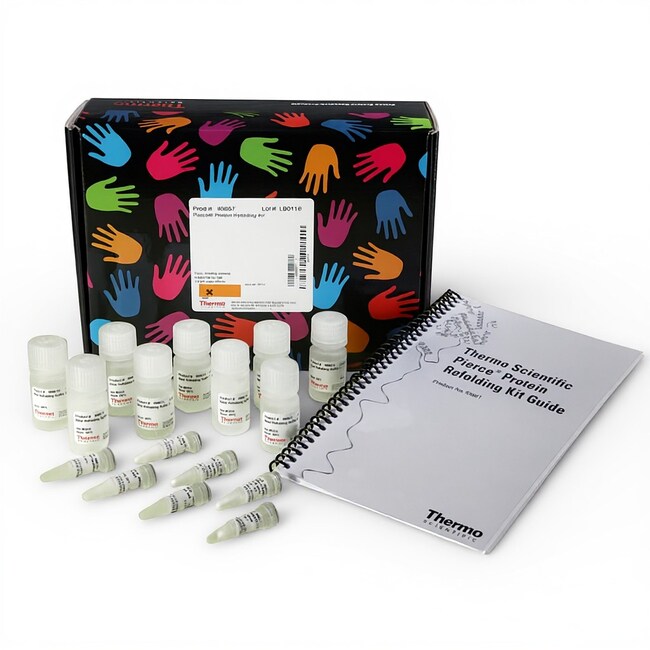
Thermo Scientific Pierce 蛋白质重折叠试剂盒包括高纯度试剂及详细说明(旨在使用基质策略确定对已从包涵体中变性和溶解的重组蛋白进行重折叠的最佳缓冲液条件)。蛋白质重折叠试剂盒的特点:•稳健—所检查的条件和组分只限于作为折叠缓冲液具有最显著及通用效用的条件和组分• 便利—三等级基质设计显著减少了所需的二次优化数量并提高了数据解读的简易性• 可调基质形式—可根据靶蛋白定制重折叠实验;并考虑到缓冲液组分之间已知的正面和负面相互作用,从而尽可能减少不必要的分析• 高纯度试剂—使用严格的标准配制试剂,以便获得一致的结果该试剂盒包含用于确定最佳缓冲液条件以使变性重组蛋白重折叠从而恢复天然结构和功能的必需试剂和完整策略了解更多信息
| 货号 | 数量 |
|---|---|
| 89867 | 100 次反应 |
货号 89867
价格(CNY)
7,678.00
Each
数量:
100 次反应
价格(CNY)
7,678.00
Each
Thermo Scientific Pierce 蛋白质重折叠试剂盒包括高纯度试剂及详细说明(旨在使用基质策略确定对已从包涵体中变性和溶解的重组蛋白进行重折叠的最佳缓冲液条件)。
蛋白质重折叠试剂盒的特点:
•稳健—所检查的条件和组分只限于作为折叠缓冲液具有最显著及通用效用的条件和组分
• 便利—三等级基质设计显著减少了所需的二次优化数量并提高了数据解读的简易性
• 可调基质形式—可根据靶蛋白定制重折叠实验;并考虑到缓冲液组分之间已知的正面和负面相互作用,从而尽可能减少不必要的分析
• 高纯度试剂—使用严格的标准配制试剂,以便获得一致的结果
该试剂盒包含用于确定最佳缓冲液条件以使变性重组蛋白重折叠从而恢复天然结构和功能的必需试剂和完整策略。九种基础复性缓冲液构成一个包含各种强和弱变性条件以抑制蛋白聚集的矩阵。根据被复性的蛋白类型,提供的添加剂被用作附加的矩阵因子。在三个浓度级别检查缓冲液成分,并可在一次实验中测试多种复性条件。可调式设计可根据目标蛋白调整矩阵条件,以防止样本浪费及不必要的分析,同时最大化复性产出。Pierce 蛋白质重折叠试剂盒附带全面的重折叠指南,其中包含以下方面的详细信息:分离、溶解和纯化包涵体;优化重折叠条件;分析重折叠得率。
注:以下章节根据报告了 Pierce 蛋白质重折叠试剂盒开发情况的原始预览文章而编写,该试剂盒最初称为“Pro-Matrix”。
方法
在 4°C 下将溶菌酶置于 8 M GdnHCl、10 mM DTT、50 mM Tris(pH 值 8.0)中进行过夜变性处理,浓度为 20 mg/mL。根据基质布局确定,将还原型谷胱甘肽、氧化型谷胱甘肽和 DTT 添加到重折叠缓冲液中(表 3)。所有溶液均平衡至 4°C。在将已溶解的溶菌酶添加到重折叠缓冲液前即刻,使用在 8 M GdnHCl、50 mM Tris(pH 值 8.0)中平衡的蛋白脱盐离心柱去除 DTT。然后将溶菌酶加入到重折叠缓冲液中,使得最终浓度为 1 mg/mL。这一添加物向基础重折叠缓冲液提供 0.4 M GdnHCl。在 4°C 下进行 18 小时重折叠。通过使用 Tecan(tm) SPECTRAFluor Plus 系统利用 EnzChek(tm) 溶菌酶检测试剂盒 (Molecular Probes) 测定溶菌酶活性,确定重折叠得率。
结果和讨论
蛋白质重折叠的基本方案要求首先分离、纯化包涵体,然后用强变性剂(如盐酸胍 (GdnHCl))溶解,以产生完全未折叠的蛋白质。然后将溶解的蛋白质稀释或透析到重折叠缓冲液中以降低变性剂浓度,从而使蛋白质能够根据其一级序列中所包含的信息进行重折叠。当使用优化条件时,许多蛋白质可在 >1 mg/mL 的浓度下进行可靠重折叠。然而,如果变性剂被去除并替换为未经优化的重折叠缓冲液,蛋白质聚集会与复性产生强烈竞争,并且只能回收极少量的天然蛋白。重折叠过程中发生的聚集程度很大程度上取决于蛋白浓度、强和弱变性剂浓度、pH 值、温度以及氧化还原反应环境。离子强度、二价阳离子、聚合物和辅因子也可促进某些蛋白的重折叠。
使用 Pierce 蛋白质重折叠试剂盒进行还原和变性溶菌酶重折叠的结果见表 3。在此示例中,我们将溶菌酶天然状态下是否存在二硫键视为未知。在蛋白质重折叠基质中存在的最低和最高变性剂浓度下,天然溶菌酶的重新形成受到抑制(试验编号 1、2 和 9)。DTT 的存在(试验编号 1、6 和 8)也抑制了重折叠,表明重新形成的二硫键在溶菌酶折叠中起重要作用。在试验 7 中获得了实验中恢复的最高溶菌酶活性,其包含 1.4 M GdnHCl、0 M L-精氨酸、2 mM GSH: 0.4 mM GSSG,代表超过 90% 的溶解溶菌酶被重折叠。
蛋白质重折叠试剂盒的特点:
•稳健—所检查的条件和组分只限于作为折叠缓冲液具有最显著及通用效用的条件和组分
• 便利—三等级基质设计显著减少了所需的二次优化数量并提高了数据解读的简易性
• 可调基质形式—可根据靶蛋白定制重折叠实验;并考虑到缓冲液组分之间已知的正面和负面相互作用,从而尽可能减少不必要的分析
• 高纯度试剂—使用严格的标准配制试剂,以便获得一致的结果
该试剂盒包含用于确定最佳缓冲液条件以使变性重组蛋白重折叠从而恢复天然结构和功能的必需试剂和完整策略。九种基础复性缓冲液构成一个包含各种强和弱变性条件以抑制蛋白聚集的矩阵。根据被复性的蛋白类型,提供的添加剂被用作附加的矩阵因子。在三个浓度级别检查缓冲液成分,并可在一次实验中测试多种复性条件。可调式设计可根据目标蛋白调整矩阵条件,以防止样本浪费及不必要的分析,同时最大化复性产出。Pierce 蛋白质重折叠试剂盒附带全面的重折叠指南,其中包含以下方面的详细信息:分离、溶解和纯化包涵体;优化重折叠条件;分析重折叠得率。
注:以下章节根据报告了 Pierce 蛋白质重折叠试剂盒开发情况的原始预览文章而编写,该试剂盒最初称为“Pro-Matrix”。
方法
在 4°C 下将溶菌酶置于 8 M GdnHCl、10 mM DTT、50 mM Tris(pH 值 8.0)中进行过夜变性处理,浓度为 20 mg/mL。根据基质布局确定,将还原型谷胱甘肽、氧化型谷胱甘肽和 DTT 添加到重折叠缓冲液中(表 3)。所有溶液均平衡至 4°C。在将已溶解的溶菌酶添加到重折叠缓冲液前即刻,使用在 8 M GdnHCl、50 mM Tris(pH 值 8.0)中平衡的蛋白脱盐离心柱去除 DTT。然后将溶菌酶加入到重折叠缓冲液中,使得最终浓度为 1 mg/mL。这一添加物向基础重折叠缓冲液提供 0.4 M GdnHCl。在 4°C 下进行 18 小时重折叠。通过使用 Tecan(tm) SPECTRAFluor Plus 系统利用 EnzChek(tm) 溶菌酶检测试剂盒 (Molecular Probes) 测定溶菌酶活性,确定重折叠得率。
结果和讨论
蛋白质重折叠的基本方案要求首先分离、纯化包涵体,然后用强变性剂(如盐酸胍 (GdnHCl))溶解,以产生完全未折叠的蛋白质。然后将溶解的蛋白质稀释或透析到重折叠缓冲液中以降低变性剂浓度,从而使蛋白质能够根据其一级序列中所包含的信息进行重折叠。当使用优化条件时,许多蛋白质可在 >1 mg/mL 的浓度下进行可靠重折叠。然而,如果变性剂被去除并替换为未经优化的重折叠缓冲液,蛋白质聚集会与复性产生强烈竞争,并且只能回收极少量的天然蛋白。重折叠过程中发生的聚集程度很大程度上取决于蛋白浓度、强和弱变性剂浓度、pH 值、温度以及氧化还原反应环境。离子强度、二价阳离子、聚合物和辅因子也可促进某些蛋白的重折叠。
使用 Pierce 蛋白质重折叠试剂盒进行还原和变性溶菌酶重折叠的结果见表 3。在此示例中,我们将溶菌酶天然状态下是否存在二硫键视为未知。在蛋白质重折叠基质中存在的最低和最高变性剂浓度下,天然溶菌酶的重新形成受到抑制(试验编号 1、2 和 9)。DTT 的存在(试验编号 1、6 和 8)也抑制了重折叠,表明重新形成的二硫键在溶菌酶折叠中起重要作用。在试验 7 中获得了实验中恢复的最高溶菌酶活性,其包含 1.4 M GdnHCl、0 M L-精氨酸、2 mM GSH: 0.4 mM GSSG,代表超过 90% 的溶解溶菌酶被重折叠。
仅供科研使用。不可用于诊断程序。
规格
数量100 次反应
试剂类型离液剂、变性剂
形式液体、粉末
产品线Pierce
产品类型蛋白质重折叠试剂盒
Unit SizeEach
内容与储存
接收后,在 -20°C 下储存。产品可在 4°C 下储存长达两个月。产品以干冰运输。