Search

Thermo Scientific™
Pierce™ 细胞表面蛋白分离试剂盒
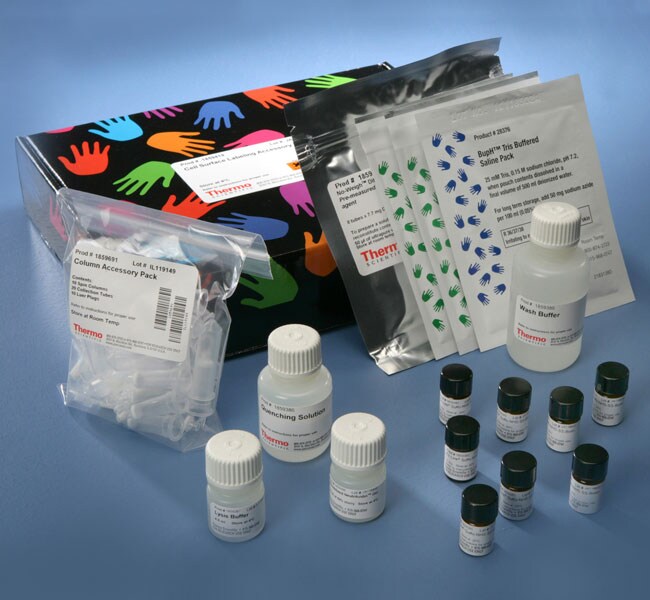
Thermo Scientific 细胞表面蛋白分离试剂盒是一整套试剂,用于对哺乳动物细胞蛋白进行选择性生物素化,并随后进行纯化,以排除细胞内蛋白。细胞表面蛋白分离试剂盒的特点:•分离细胞表面蛋白—降低总细胞蛋白复杂性•高效回收标记蛋白—通过可裂解生物素,可几乎 100% 回收分离的细胞表面蛋白•便利—一个试剂盒中提供了所有试剂以及细胞表面膜蛋白标记、细胞裂解和纯化的完整说明•Western 印迹应用—在 SDS-PAGE 缓冲液中回收的蛋白可直接上样至聚丙烯酰胺凝胶•稳健的系统—方案设计用于多种细胞系,包括了解更多信息
| 货号 | 数量 |
|---|---|
| 89881 | 1 个试剂盒 |
货号 89881
价格(CNY)
9,291.00
Each
数量:
1 个试剂盒
价格(CNY)
9,291.00
Each
Thermo Scientific 细胞表面蛋白分离试剂盒是一整套试剂,用于对哺乳动物细胞蛋白进行选择性生物素化,并随后进行纯化,以排除细胞内蛋白。
细胞表面蛋白分离试剂盒的特点:
•分离细胞表面蛋白—降低总细胞蛋白复杂性
•高效回收标记蛋白—通过可裂解生物素,可几乎 100% 回收分离的细胞表面蛋白
•便利—一个试剂盒中提供了所有试剂以及细胞表面膜蛋白标记、细胞裂解和纯化的完整说明
•Western 印迹应用—在 SDS-PAGE 缓冲液中回收的蛋白可直接上样至聚丙烯酰胺凝胶
•稳健的系统—方案设计用于多种细胞系,包括 NIH 3T3、HeLa、C6 和 A431
该试剂盒可高效标记具有可获取赖氨酸残基和充分细胞外暴露的蛋白。分离程序使用不可透过细胞的可裂解生物素化试剂(Sulfo-NHS-SS-生物素)来标记完整贴壁或悬浮细胞表面的蛋白上暴露的伯胺。之后收获并水解经处理的细胞,并使用 Thermo Scientific NeutrAvidin 琼脂糖树脂对标记的表面蛋白进行亲和纯化。分离出的细胞表面蛋白含一个原来标记伯胺、但不再生物素化(生物素保持连结至树脂)的小型、非反应标记。该试剂盒含足以进行八次实验的试剂,每次实验涉及装有融合细胞的四个 T75 瓶。
细胞表面蛋白分离试剂盒已成功用于标记和纯化细胞表面蛋白。在一次实验中,使用或不使用 Sulfo-NHS-SS-生物素处理 HeLa 细胞,并根据试剂盒程序对细胞进行处理。通过 Western 印迹分析收集的组分,包括洗脱、流过物和洗脱后凝胶。在用生物素标记处理的细胞的洗脱组分中鉴定出四种细胞表面蛋白。这些蛋白包括表皮生长因子受体 (EGFR)、胰岛素样生长因子-1 受体 β IGF (IGF-1β)、整合素 1 和整合素 5。与之形成鲜明对比的是,在未标记细胞的洗脱组分中未鉴定出这些蛋白;未标记蛋白仅在流过物中发现。此外,还在来自标记细胞的流过物组分中鉴定出一些细胞表面蛋白。由于空间位阻,这些蛋白很可能未被标记。洗脱后凝胶组分中存在的已捕获蛋白量可忽略不计,表明已捕获蛋白回收率将近 100%。在所有检测样品的洗脱组分中检测到了痕量热休克蛋白 90 (Hsp90),表明细胞表面与细胞内蛋白标记具有特异性。
相关产品
用于培养细胞的亚细胞蛋白分离试剂盒
由于组织的亚细胞蛋白分离试剂盒
细胞表面蛋白分离试剂盒的特点:
•分离细胞表面蛋白—降低总细胞蛋白复杂性
•高效回收标记蛋白—通过可裂解生物素,可几乎 100% 回收分离的细胞表面蛋白
•便利—一个试剂盒中提供了所有试剂以及细胞表面膜蛋白标记、细胞裂解和纯化的完整说明
•Western 印迹应用—在 SDS-PAGE 缓冲液中回收的蛋白可直接上样至聚丙烯酰胺凝胶
•稳健的系统—方案设计用于多种细胞系,包括 NIH 3T3、HeLa、C6 和 A431
该试剂盒可高效标记具有可获取赖氨酸残基和充分细胞外暴露的蛋白。分离程序使用不可透过细胞的可裂解生物素化试剂(Sulfo-NHS-SS-生物素)来标记完整贴壁或悬浮细胞表面的蛋白上暴露的伯胺。之后收获并水解经处理的细胞,并使用 Thermo Scientific NeutrAvidin 琼脂糖树脂对标记的表面蛋白进行亲和纯化。分离出的细胞表面蛋白含一个原来标记伯胺、但不再生物素化(生物素保持连结至树脂)的小型、非反应标记。该试剂盒含足以进行八次实验的试剂,每次实验涉及装有融合细胞的四个 T75 瓶。
细胞表面蛋白分离试剂盒已成功用于标记和纯化细胞表面蛋白。在一次实验中,使用或不使用 Sulfo-NHS-SS-生物素处理 HeLa 细胞,并根据试剂盒程序对细胞进行处理。通过 Western 印迹分析收集的组分,包括洗脱、流过物和洗脱后凝胶。在用生物素标记处理的细胞的洗脱组分中鉴定出四种细胞表面蛋白。这些蛋白包括表皮生长因子受体 (EGFR)、胰岛素样生长因子-1 受体 β IGF (IGF-1β)、整合素 1 和整合素 5。与之形成鲜明对比的是,在未标记细胞的洗脱组分中未鉴定出这些蛋白;未标记蛋白仅在流过物中发现。此外,还在来自标记细胞的流过物组分中鉴定出一些细胞表面蛋白。由于空间位阻,这些蛋白很可能未被标记。洗脱后凝胶组分中存在的已捕获蛋白量可忽略不计,表明已捕获蛋白回收率将近 100%。在所有检测样品的洗脱组分中检测到了痕量热休克蛋白 90 (Hsp90),表明细胞表面与细胞内蛋白标记具有特异性。
相关产品
用于培养细胞的亚细胞蛋白分离试剂盒
由于组织的亚细胞蛋白分离试剂盒
仅供科研使用。不可用于诊断程序。
规格
缓冲液裂解缓冲液
数量1 个试剂盒
试剂类型细胞裂解缓冲液、去污剂溶液、亚细胞分离
足够用于8 次反应
形式液体、粉末
产品线Pierce
产品类型分离试剂盒
Unit SizeEach
内容与储存
接收后,在 4°C 下储存试剂盒。产品在环境温度下运输。