Search


引用和文献 (2)
Thermo Scientific™
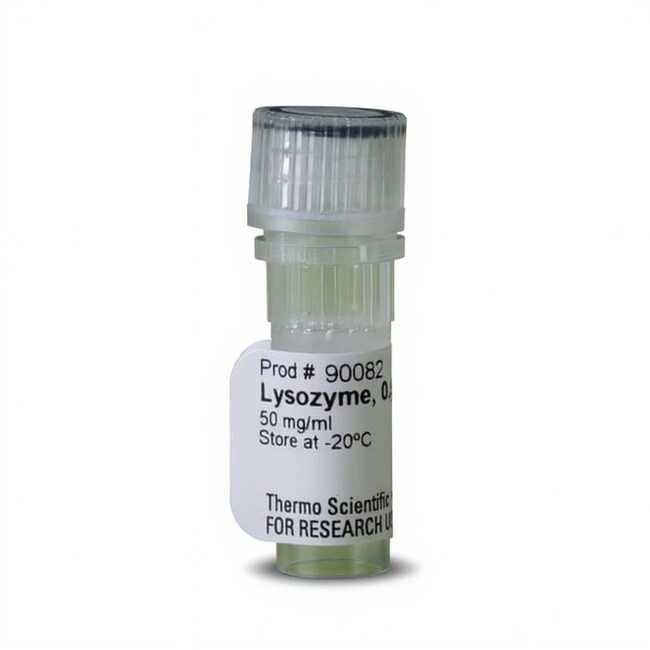
溶菌酶溶液 (50 mg/mL)
Thermo Scientific 溶菌酶是一种酶,其特征在于能够破坏细菌细胞壁以提高蛋白或核酸提取效率。甘油冻存溶菌酶的特点:•细菌细胞壁溶解酶可改善包涵体蛋白纯化•与 Thermo Scientific Pierce 细胞裂解试剂兼容•透明无色,不含不溶性材料•pH 值:4.7 ±0.2•了解更多信息
| 货号 | 数量 |
|---|---|
| 90082 | 0.5 mL |
货号 90082
价格(CNY)
882.00
Each
数量:
0.5 mL
价格(CNY)
882.00
Each
Thermo Scientific 溶菌酶是一种酶,其特征在于能够破坏细菌细胞壁以提高蛋白或核酸提取效率。
甘油冻存溶菌酶的特点:
•细菌细胞壁溶解酶可改善包涵体蛋白纯化
•与 Thermo Scientific Pierce 细胞裂解试剂兼容
•透明无色,不含不溶性材料
•pH 值:4.7 ±0.2
• ≥50 单位/mL (5 µg/mL)
溶菌酶是一种可裂解细菌细胞壁以提高蛋白或核酸提取效率的酶。溶解酵素(溶菌酶)是一个有抗菌活性的酶族,可破坏细菌细胞壁。这种酶可催化肽聚糖中 N-乙酰胞壁酸和 N-乙酰-D-葡萄糖胺残基间以及壳糊精中 N-乙酰-D-葡萄糖胺残基间的 1,4-β-连键的水解。尽管鸡蛋清溶菌酶对革兰氏阳性菌的裂解极为有效,但它还有助于革兰氏阴性细菌的裂解,如沙门氏菌属和志贺氏菌属。大肠杆菌的裂解通过添加溶菌酶和核酸酶(如 DNase I)而得到特别改善。
溶菌酶的描述和特性:
溶菌酶自然存在于植物和动物组织以及眼泪、唾液和粘液等分泌物中;其在蛋清中的含量尤其丰富,是商业用品的主要来源。鸡蛋清溶菌酶(鸡型和 c 型)是第一种 2-埃晶体结构得到解析的酶,并且已被广泛研究。溶解酵素被广泛用于细菌蛋白抽提。对于包涵体纯化,添加溶解酵素以消化细胞碎片并释放包涵体。在对靶标重组蛋白进行融合标签特定亲和纯化以形成包涵体期间,可很容易地将这种酶与其他蛋白一起去除。
•酶功能:催化肽聚糖中 N-乙酰胞壁酸和 N-乙酰-D-葡萄糖胺残基间以及壳糊精中 N-乙酰-D-葡萄糖胺残基间的 1,4-β-连键的水解
•分子量:14.388 kDa
•消光系数:280 nm 处 ∼26.4
• 等电点:pH 值 11.0
• 单位定义:1 单位是在 25 摄氏度、pH 值为 6.24 的环境下,在 1 cm 比色皿中因使用 ∼0.25 mg/mL 藤黄微球菌悬浮液裂解催化 450 nm 处吸光度下降 0.001/min 所需的酶量。
相关产品
溶菌酶
甘油冻存溶菌酶的特点:
•细菌细胞壁溶解酶可改善包涵体蛋白纯化
•与 Thermo Scientific Pierce 细胞裂解试剂兼容
•透明无色,不含不溶性材料
•pH 值:4.7 ±0.2
• ≥50 单位/mL (5 µg/mL)
溶菌酶是一种可裂解细菌细胞壁以提高蛋白或核酸提取效率的酶。溶解酵素(溶菌酶)是一个有抗菌活性的酶族,可破坏细菌细胞壁。这种酶可催化肽聚糖中 N-乙酰胞壁酸和 N-乙酰-D-葡萄糖胺残基间以及壳糊精中 N-乙酰-D-葡萄糖胺残基间的 1,4-β-连键的水解。尽管鸡蛋清溶菌酶对革兰氏阳性菌的裂解极为有效,但它还有助于革兰氏阴性细菌的裂解,如沙门氏菌属和志贺氏菌属。大肠杆菌的裂解通过添加溶菌酶和核酸酶(如 DNase I)而得到特别改善。
溶菌酶的描述和特性:
溶菌酶自然存在于植物和动物组织以及眼泪、唾液和粘液等分泌物中;其在蛋清中的含量尤其丰富,是商业用品的主要来源。鸡蛋清溶菌酶(鸡型和 c 型)是第一种 2-埃晶体结构得到解析的酶,并且已被广泛研究。溶解酵素被广泛用于细菌蛋白抽提。对于包涵体纯化,添加溶解酵素以消化细胞碎片并释放包涵体。在对靶标重组蛋白进行融合标签特定亲和纯化以形成包涵体期间,可很容易地将这种酶与其他蛋白一起去除。
•酶功能:催化肽聚糖中 N-乙酰胞壁酸和 N-乙酰-D-葡萄糖胺残基间以及壳糊精中 N-乙酰-D-葡萄糖胺残基间的 1,4-β-连键的水解
•分子量:14.388 kDa
•消光系数:280 nm 处 ∼26.4
• 等电点:pH 值 11.0
• 单位定义:1 单位是在 25 摄氏度、pH 值为 6.24 的环境下,在 1 cm 比色皿中因使用 ∼0.25 mg/mL 藤黄微球菌悬浮液裂解催化 450 nm 处吸光度下降 0.001/min 所需的酶量。
相关产品
溶菌酶
仅供科研使用。不可用于诊断程序。
规格
酶溶菌酶(胞壁酸酶)
数量0.5 mL
试剂类型用于细胞裂解的酶
形式液体
产品类型裂解液
Unit SizeEach
内容与储存
在低于 -20°C 下储存
常见问题解答 (FAQ)
How can I measure the amount of protein I have extracted with B-PER reagent?
How do I process bacterial samples with EasyPep MS Sample Prep kits?
Can you explain how the B-PER Bacterial Protein Extraction Reagent lyses cells?
引用和文献 (2)
引用和文献
Abstract
Next-generation sequencing of whole saliva from patients with primary Sjögren's syndrome and non-Sjögren's sicca reveals comparable salivary microbiota.
Journal:Journal of oral microbiology
PubMed ID:31497258
Objective: To characterize and compare the salivary microbiota in patients with pSS and patients with non-Sjögren's-related sicca, and to relate the findings to their oral health status and saliva flow rates. Methods: Twenty-four patients fulfilled the 2016 classification criteria for pSS and 34 did not (non-pSS). A clinical examination included
Porphyromonas gingivalis in saliva associates with chronic and aggressive periodontitis.
Journal:Journal of oral microbiology
PubMed ID:31489129
Objective: To characterize the salivary microbiota of patients with aggressive periodontitis, patients with chronica periodontitis and orally healthy individuals. Methods: A total of 81 unstimulated saliva samples from aggressive periodontitis patients (n = 31), chronic periodontitis patients (n = 25), and orally healthy controls (n = 25) were examined. The