Search

Applied Biosystems™
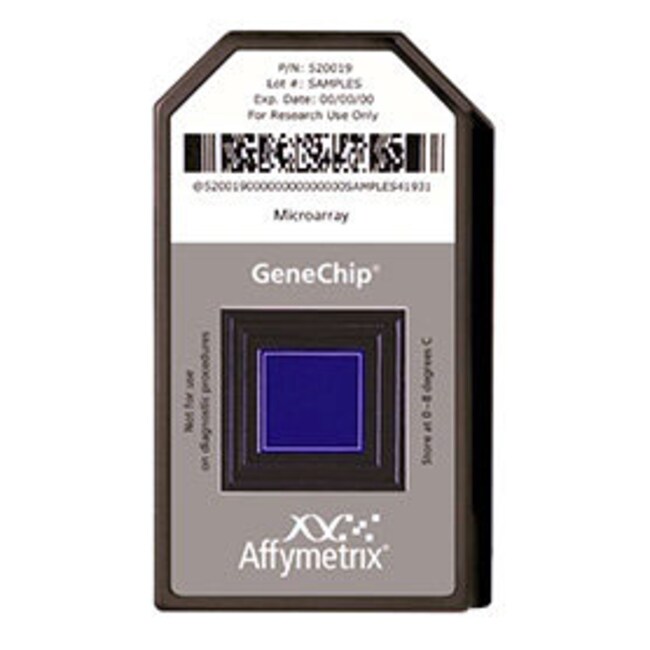
GeneChip™ Mouse Gene 1.0 ST Array
GeneChip™ Mouse Gene 1.0 ST Array 是一个全转录本阵列,包括测量信使 (mRNA) 和长链基因间非编码 RNA了解更多信息
Have Questions?
更改视图

| 货号 | 阵列数量 |
|---|---|
| 901171 | 30 阵列 |
| 901168 | 2 阵列 |
| 901169 | 6 阵列 |
货号 901171
价格(CNY)
-
阵列数量:
30 阵列
GeneChip™ Mouse Gene 1.0 ST Array 是一个全转录本阵列,包括测量信使 (mRNA) 和长链基因间非编码 RNA 转录本 (lincRNA) 的探针。这种全转录本阵列设计提供 mRNA 的完整表达谱以及影响 mRNA 表达谱的中间 lincRNA 转录本。
全面的设计
过去 20 年的研究主要关注编码蛋白的 mRNA 及其在细胞过程(如疾病发展)中的作用。近期,研究人员已经在小鼠基因组中发现了 2,000 多个转录本 (>200 个碱基),几乎没有/没有蛋白质编码潜能。到目前为止,这些非编码 RNA 中仅有一小部分具备功能注释。然而,有充分证据表明,lincRNA 的差异表达在疾病的发生和进展中起着重要作用,并且这些分子的异常表达也与癌症相关。转录组谱分析的最新进展提供了在各种细胞功能中 lincRNA 关联的证据:
•mRNA 转录调控
•mRNA 转录后修饰的调控
•转录因子结合的活化/封闭
•转录因子的激活和转运
•与辅助蛋白相互作用
•将蛋白质复合物引导至基因组位置
关键优势
•覆盖范围广有助于发现感兴趣的生物学信息
- >28,000个编码转录本
- >7,000个非编码(包括˜2,000 个)长链基因间非编码转录本
•用探针检测选择性剪接事件/转录物变体,设计的探针具有较大的外显子覆盖率
•重现性:批次内相关系数 = 0.99
内容概况
自设计出 GeneChip 小鼠基因 1.0 ST 阵列以来,对于小鼠基因组结构和功能的理解已有了很大提升。这种认知的增加包括识别大量长链基因间 lincRNA,这些均由研究界发现。为了向研究界提供一种可以测定令人兴奋的 RNA 转录本差异表达的工具,我们设计了 GeneChip 小鼠基因 2.0 ST 阵列(单独出售)。为了补充 RefSeq 中包含的 lincRNA 数据,我们使用了 lncRNA 数据库 (http://lncrnadb.cn/) 的序列和转录本数据。
全面的设计
过去 20 年的研究主要关注编码蛋白的 mRNA 及其在细胞过程(如疾病发展)中的作用。近期,研究人员已经在小鼠基因组中发现了 2,000 多个转录本 (>200 个碱基),几乎没有/没有蛋白质编码潜能。到目前为止,这些非编码 RNA 中仅有一小部分具备功能注释。然而,有充分证据表明,lincRNA 的差异表达在疾病的发生和进展中起着重要作用,并且这些分子的异常表达也与癌症相关。转录组谱分析的最新进展提供了在各种细胞功能中 lincRNA 关联的证据:
•mRNA 转录调控
•mRNA 转录后修饰的调控
•转录因子结合的活化/封闭
•转录因子的激活和转运
•与辅助蛋白相互作用
•将蛋白质复合物引导至基因组位置
关键优势
•覆盖范围广有助于发现感兴趣的生物学信息
- >28,000个编码转录本
- >7,000个非编码(包括˜2,000 个)长链基因间非编码转录本
•用探针检测选择性剪接事件/转录物变体,设计的探针具有较大的外显子覆盖率
•重现性:批次内相关系数 = 0.99
内容概况
自设计出 GeneChip 小鼠基因 1.0 ST 阵列以来,对于小鼠基因组结构和功能的理解已有了很大提升。这种认知的增加包括识别大量长链基因间 lincRNA,这些均由研究界发现。为了向研究界提供一种可以测定令人兴奋的 RNA 转录本差异表达的工具,我们设计了 GeneChip 小鼠基因 2.0 ST 阵列(单独出售)。为了补充 RefSeq 中包含的 lincRNA 数据,我们使用了 lncRNA 数据库 (http://lncrnadb.cn/) 的序列和转录本数据。
仅供科研使用。不可用于诊断程序。
规格
产品线GeneChip
数量30 arrays
类型小鼠基因 1.0 ST 阵列
数组转录组谱分析
产品规格阵列检测盒
阵列数量30 阵列
种属小鼠
Unit SizeEach