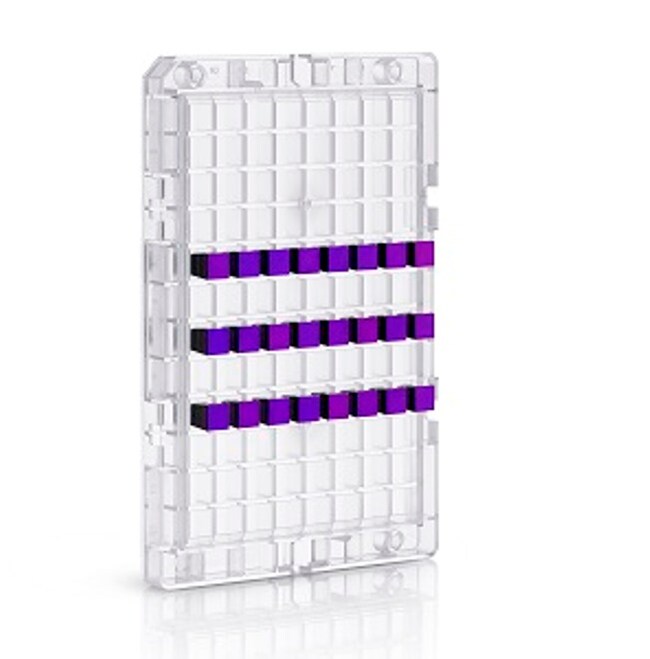
GeneChip™ miRNA 4.1 阵列板
Applied Biosystems™

GeneChip™ miRNA 4.1 阵列板

包括癌症在内的很多疾病常常被描述为基因表达紊乱疾病。估计超过 30% 的编码基因的蛋白质翻译是由 miRNA 调节的。还有越来越多的证据提示 miRNA 与信号网络中调节选择性剪接事件的非编码长链 RNA了解更多信息
Have Questions?
更改视图buttonViewtableView
货号阵列数量
90240924 阵列
90241096 阵列
货号 902409
价格(CNY)
-
阵列数量:
24 阵列
包括癌症在内的很多疾病常常被描述为基因表达紊乱疾病。估计超过 30% 的编码基因的蛋白质翻译是由 miRNA 调节的。还有越来越多的证据提示 miRNA 与信号网络中调节选择性剪接事件的非编码长链 RNA 相互作用,影响细胞凋亡、增殖和分化等细胞过程这些都被证明是许多疾病(如癌症)的致病因素。

测量调节中关键节点的改变对于破译差异表达基因的生物学背景来说极其重要。此阵列设计是研究非编码短链 RNA 的作用及其在各项发育和生理机制中的参与情况的强大工具。

为了与新型和创新性 miRNA 的发现保持同步,我们很高兴为我们的 miRNA 阵列产品目录提供 miRNA 4.1 96 阵列板和托盘。此产品提供与上一代阵列相同高性能的更新内容。

miRNA 4.1 阵列板和托盘帮助您更接近生物学:
全面覆盖 –设计用于研究 miRBase(版本 20)中的所有成熟 miRNA 序列
轻松关联 miRNA 结果 –分析文件包含宿主基因 ID、预测和经验证的 miRNA 靶基因以及 miRNA 簇信息
分析简单 –使用相同的阵列,分析人类、小鼠、大鼠或所有物种的每个 miRNA
低样本量 –仅需要 130 ng 总 RNA
简单、快速和免费的分析解决方案 –联合 Expression Console™ 软件转录组分析控制台 (TAC) 软件,研究人员可在数分钟内得到从数据到作出决策的完整解决方案

相关链接
GeneTitan™ 洗涤缓冲液 A 和 B 模块
B2 对照寡核苷酸 (3nM)
Genetitan™ miRNA 阵列固定缓冲液
FlashTag™ 生物素 HSR RNA 标记试剂盒
GeneTitan™ 杂交模块(用于 miRNA 板)
GeneChip™ 杂交对照试剂盒
仅供科研使用。不可用于诊断程序。
规格
产品线GeneChip™
数量1 x 24-array plate
类型miRNA 4.1 阵列板
数组miRNA 表达谱分析
产品规格24阵列板和托盘
阵列数量24 阵列
种属所有微生物、人、小鼠、大鼠
Unit SizeEach

常见问题解答 (FAQ)

Is the hybridization mix for cartridges the same as the hybridization mix for PEG arrays (array plates)?

The hybridization mix for PEG arrays is different from the hybridization mix for cartridges. The concentrations of the hybridization mix are different and in addition, DMSO is not added into the hybridization mix for PEG arrays because it can affect the glue that holds the PEG to the plate.

Where can I find the species information for your GeneChip miRNA arrays?

The species information can be found in the annotation file of the miRNA array of interest.
Please complete the following steps:
- Go to www.thermofisher.com and go to the product page of the array of interest.
- Scroll down to support files.
- Download the annotation files for the miRNA array of interest, and open in excel.
- In the file, there will be a column, species scientific name. This column will have all the species present on the array.

Find additional tips, troubleshooting help, and resources within our Microarray Analysis Support Center.

How are sno/sca and hairpin probe sets selected and how does that impact my signal summarization?

Probes for snoRNA, scaRNA, and hairpins are selected to maximize probe response to target concentration in the sample while minimizing cross-hybridization to other potential targets in the sample. In order to minimize cross-hybridization, potential targets are inferred from the landscape of known sequences from the input dataset and used in a filtering process called pruning which penalizes probe candidates that may cross-hybridize to unwanted targets. As the landscape of known sequences improves, we can improve our pruning set to avoid probe candidates previously thought to be unique. An improved pruning set will reduce the chances a probe will cross-hybridize to unwanted target, improving the probe set representation of the intended target. As a result of the improved probe selection, few probe sets are required to represent the same number of sequences.

Find additional tips, troubleshooting help, and resources within our Microarray Analysis Support Center.

Can I combine the CEL files from GeneChip miRNA Arrays, miRNA Array Strips, and miRNA Array Plates into the same experiment?

No, the CEL files from GeneChip miRNA Array, Thermo Fisher Scientific miRNA Array Strip, and miRNA Array Plates are not compatible.

Find additional tips, troubleshooting help, and resources within our Microarray Analysis Support Center.

What is the difference between GeneChip miRNA Array, miRNA Array Strip, and miRNA Array Plate?

The only difference is the form factor of the array. The arrays have the exact same design and contain the same number of probes and probe sets.

Find additional tips, troubleshooting help, and resources within our Microarray Analysis Support Center.