Search

Gibco™
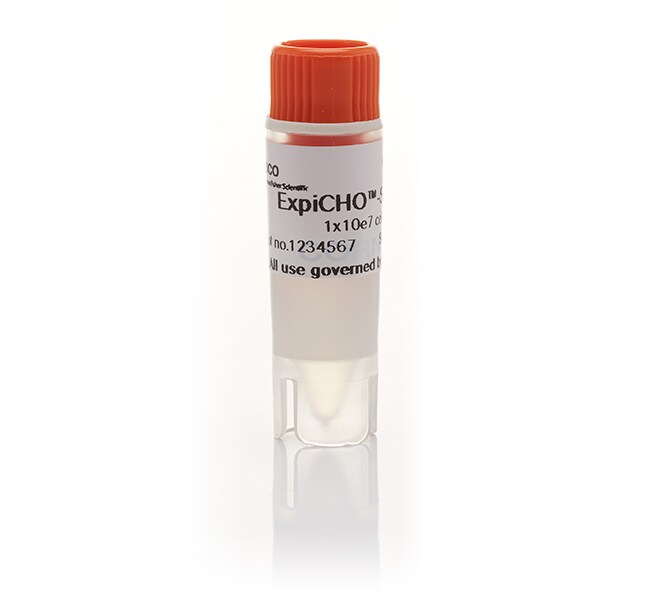
ExpiCHO-S™ Cells
ExpiCHO-S Cells are derived from a non-engineered subclone that has been screened and isolated from CHO-S Chinese hamster ovary (CHO) cells.
Have Questions?
更改视图

| 货号 | Format |
|---|---|
| A29127 | |
| A29132 |
货号 A29127
价格(CNY)
18,004.00
Each
价格(CNY)
18,004.00
Each
ExpiCHO-S Cells are derived from a non-engineered subclone that has been screened and isolated from CHO-S Chinese hamster ovary (CHO) cells (1). They are a core component of the ExpiCHO Expression System Kit (Cat. No. A29133). ExpiCHO-S Cells are maintained in suspension culture, have minimal tendency to clump, and grow to high density in ExpiCHO Expression Medium (Cat. No. A2910001). As part of the ExpiCHO Expression System Kit, the cells generate superior protein yields by transient transfection compared to standard CHO and 293 cells.
Features of ExpiCHO-S Cells include:
- Suspension culture cells adapted in ExpiCHO Expression Medium
- Demonstrated yields of up to 3 g of protein per L of transfected culture as part of the ExpiCHO expression system
- Rapid doubling times of approximately 17 hours
- Consistent transient expression performance for over 20 passages after thaw
- High cell viability and productivity for greater than 10 days post-transfection as part of the ExpiCHO expression system
- Enable rapid, high-yield transient protein production, allowing labs developing protein biotherapeutics to work with CHO-expressed proteins from start to finish in the drug development process
Frozen cells are supplied in a vial containing 1 mL of cells at 1 x 10⁷ viable cells per mL in ExpiCHO Expression Medium and 10% DMSO. The cells should be thawed directly into ExpiCHO Expression Medium. The 6-vial multipack eliminates the need to expand and bank the cells in the lab.
Cells are typically grown in flasks on a shaker platform in a humidified, CO2 cell culture incubator. However, cultures are scalable from volumes of <1 mL up to 5 L when using a Nalgene 5-L angled-bottom flask. Protein harvest can be performed at 5 to 14 days post-transfection, depending on the protein expressed.
Reference
1. Wurm, FM. CHO Quasispecies—Implications for Manufacturing Processes (2013) Processes 1:296-311.
For Research Use Only. Not for use in diagnostic procedures.
规格
数量1 mL
Unit SizeEach