Search


引用和文献 (2)
Thermo Scientific™
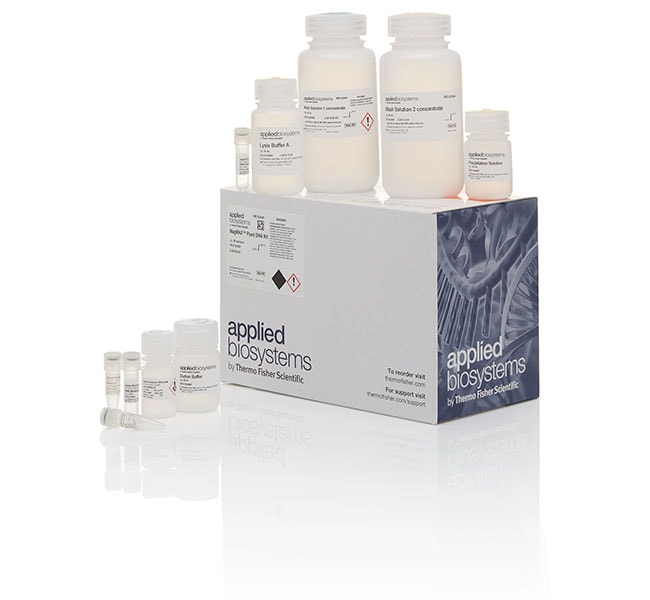
MagMAX™ 植物 DNA 分离试剂盒
MagMAX™ 植物 DNA 分离试剂盒设计用于从多种植物物种中自动、高通量或手动纯化 DNA。该试剂盒使用 MagMAX 磁珠技术,无需进行苯酚/氯仿提取或酒精沉淀。
Have Questions?
更改视图

| 货号 | 数量 |
|---|---|
| A32580 | 384 次制备 |
| A32549 | 96 次制备 |
| A47156 | 1000 次制备 |
货号 A32580
价格(CNY)
7,283.00
飞享价
Ends: 31-Dec-2026
9,056.00共减 1,773.00 (20%)
Each
数量:
384 次制备
价格(CNY)
7,283.00
飞享价
Ends: 31-Dec-2026
9,056.00共减 1,773.00 (20%)
Each
MagMAX™ 植物 DNA 分离试剂盒设计用于从多种植物物种中自动、高通量或手动纯化 DNA。该试剂盒使用 MagMAX 磁珠技术,无需进行苯酚/氯仿提取或酒精沉淀。该程序针对从 10–100 mg 植物样品分离 DNA 进行了优化。DNA 产量在不同物种和组织间因基因组大小、倍性、细胞数、组织样品的年龄和储存条件而异。
MagMAX 植物 DNA 分离试剂盒依赖于磁珠技术,可实现可重现产量和稳健性能。磁珠的高结合容量、均一的粒径和快速磁响应使该技术成为自动高通量核酸纯化的理想选择,可用于低样品处理量的手动纯化。所获得的高质量 DNA 不含蛋白、核酸酶和其他污染物或抑制剂,可用于多种下游应用,如 PCR、qPCR 或下一代测序。关于不同来源的典型基因组 DNA 产量,请参见下面的柱状图。
MagMAX 植物 DNA 分离试剂盒的特点包括:
•通用型—适用于大多数植物类型和部分,包括木质、富含多酚和木质化样品
•DNA 得率高—与传统 CTAB 方法相比
•高质量—分离 DNA 的完整性高,不含抑制剂和 RNA 污染
•灵活—易于调整用于高通量自动化平台和手动处理
应用
分离 DNA 是用于常见分子生物学程序的理想选择,包括:
•qPCR
•下一代测序
MagMAX 磁珠法–纯化的优势
试剂盒的磁珠法–纯化形式可轻松增减使用磁力架手动处理或使用磁粒子处理器(如 KingFisher™ Duo Prime 或 KingFisher™ Flex 处理器)处理的样品数量。
与其他分离核酸的技术相比,磁珠具备许多优势。相比玻璃纤维滤器,磁珠可以更有效地结合 RNA 和 DNA,获得更高、更一致的产量。此外,由于不使用过滤柱和真空多联器,在提取过程中不会存在未酶切组织颗粒堵塞这些部件的风险。这种堵塞问题对于在破碎和均质化步骤中未完全溶解的纤维植物组织样品特别重要。
优化的磁珠表面化学
MagMAX 植物 DNA 试剂盒中使用的 Dynabeads™ MyOne™ 羧酸具有优化的表面化学结构,具有高比表面积,可实现高效动力学和高灵敏度核酸捕获。这些方面使得 Dynabeads 磁性技术成为多种植物样品中 DNA 靶标回收的理想选择。捕获后,DNA 将在 150 µL 中洗脱,并准备用于下游应用。
仅供研究使用。不可用于诊断程序。
规格
适用于(应用)实时荧光定量PCR(qPCR)
高通量能力兼容高通量应用
产品线MagMAX
产品类型植物 DNA 分离试剂盒
数量384 次制备
样品类型植物
运输条件室温
靶标基因组 DNA 纯化
产品规格试剂盒
分离技术磁珠
Unit SizeEach
内容与储存
•4 x 60 mL 裂解缓冲液 A,在室温下储存
•4 x 8.4 mL 裂解缓冲液 B,在室温下储存
•8 x 1.4 mL Rnase A,在 -5°C 至 -30°C 下储存
• 4 x 16.5 mL 沉淀溶液,在室温下储存
•8 x 1.4 mL DNA 结合珠,在 2°C 至 8°C 下储存
•4 x 45 mL 洗涤液 1 浓缩液,在室温下储存
•4 x 60 mL 洗涤液 2 浓缩液,在室温下储存
•4 x 30 mL 洗脱缓冲液,储存(在室温下
)
•4 x 8.4 mL 裂解缓冲液 B,在室温下储存
•8 x 1.4 mL Rnase A,在 -5°C 至 -30°C 下储存
• 4 x 16.5 mL 沉淀溶液,在室温下储存
•8 x 1.4 mL DNA 结合珠,在 2°C 至 8°C 下储存
•4 x 45 mL 洗涤液 1 浓缩液,在室温下储存
•4 x 60 mL 洗涤液 2 浓缩液,在室温下储存
•4 x 30 mL 洗脱缓冲液,储存(在室温下
)
常见问题解答 (FAQ)
What kind of Polyvinylpyrrolidone (PVP) do you recommend using with MagMAX Plant DNA and RNA isolation kits since there are different kinds available?
What is the advantage of adding polyvinyl pyrollidone (PVP) or dithiothreitol (DTT) to Lysis Buffer A of the MagMAX Plant DNA Isolation Kit?
The manual for the MagMAX Plant Isolation Kit recommends using 150 µL of elution buffer, but can I use less than that?
Where can I find the script for using the MagMAX Plant DNA Isolation Kit on the KingFisher Flex or KingFisher Duo instrument?
What kind of plants have you tested with the MagMAX Plant DNA Isolation Kit?
引用和文献 (2)
引用和文献
Abstract
First report of halo blight of hop (Humulus lupulus) caused by Diaporthe humulicola in Quebec, Canada.
Journal:Plant disease
PubMed ID:34798784
First report of halo blight on hop (Humulus lupulus) caused by Diaporthe humulicola in Minnesota.
Journal:Plant disease
PubMed ID:36948225