Search

Ion Torrent™
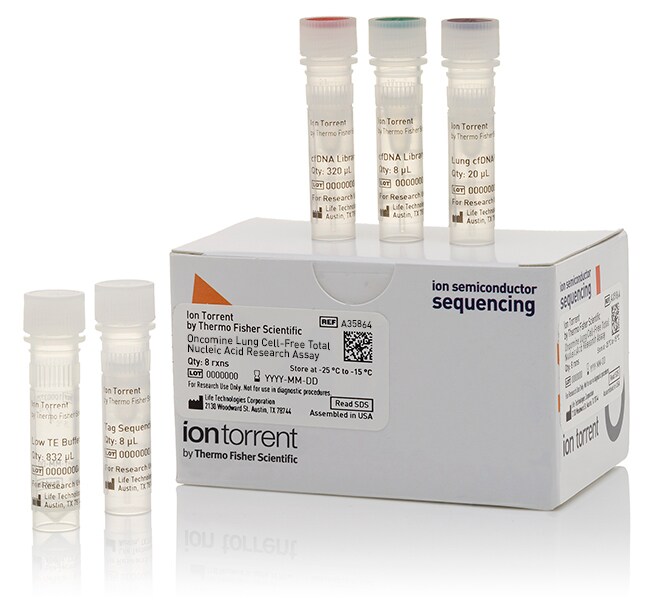
Oncomine Lung 无细胞总核酸研究检测
Oncomine Lung cfTNA 研究检测是检测从全血血浆组分中分离的肺癌肿瘤来源无细胞 DNA 和 RNA(无细胞总核酸;cfTNA)的完整解决方案的一部分。其提供了文库构建试剂,以及用于从单管了解更多信息
| 货号 | 数量 |
|---|---|
| A35864 | 8 reactions |
货号 A35864
价格(CNY)
-
数量:
8 reactions
Oncomine Lung cfTNA 研究检测是检测从全血血浆组分中分离的肺癌肿瘤来源无细胞 DNA 和 RNA(无细胞总核酸;cfTNA)的完整解决方案的一部分。其提供了文库构建试剂,以及用于从单管 10 mL 全血的血浆组分中获得的 cfTNA 制备扩增子文库的一池多重 PCR 引物。
液体活检相对于传统实体瘤活检具有几大优势:
•侵入性较小,可在多个时间点采集样品以监测癌症进展
•成本较低
•从样品到结果的周转时间更短
•更好地表示肿瘤异质性
Oncomine Lung cfTNA 研究检测可实现以下分析:
• 热点基因 (SNV) 和短插入缺失:ALK、BRAF、EGFR、ERBB2、KRAS、MAP2K1、MET、NRAS、PIK3CA、ROS1 和 TP53(覆盖 ∼168 个热点)
• 基因融合:ALK、RET、ROS1
• MET 外显子 14 跳读
• 拷贝数基因 (CNV):MET
已确定这些基因在非小细胞肺癌 (NSCLC) 中经常突变。通过使用标签测序技术,可以实现各种变体类型的检测下限 (LOD)*:
•对于 SNV/短插入缺失,可实现 LOD 为 0.1%、灵敏度 ∼90%、特异性 >99%
• 对于融合和 MET 外显子跳读,可实现 LOD 为 1%、灵敏度 >90%、特异性 >99%
• 对于 MET CNV 靶标,可实现检测低至 1.2 倍扩增、灵敏度 >90%、特异性 >99%
使用 Ion S5 XL 测序系统可仅在 2 天内完成从使用 MagMAX 无细胞总核酸分离试剂盒进行 cfTNA 分离到样品分析的整个工作流程。
技术
在全血血浆组分中观察到极低浓度 cfDNA 和 cfRNA。由于此低发病率,所以该检测中采用了标签测序技术。该技术将独特的分子标签连接至基因特异性引物上(下图)。扩增后,将根据标签对已标记分子进行分组。在 80% 或更长的时间含有相同突变体的组将被称为阳性。使用标签技术,通过文库构建/测序过程生成的随机错误序列能够被清除。
与 LOD 为 1-5% 的其他技术不同,Oncomine 肺 cfTNA 研究测定试剂盒针对 SNV 具有低至 0.1% 的灵活检测限或在 1,000 个野生型拷贝背景中具有 1 个突变体拷贝。为了达到 0.1% LOD,需要 20 ng cfDNA 上样量。cfTNA 用量可以更低,但 LOD 将更高,这取决于起始量。
优势:
•用于短 cfDNA 的优化扩增子设计确保可能较高的捕获率
• 标签测序技术通过去除随机掺入的错误,尽可能减少假阳性结果
• 优化的靶向测定试剂盒设计可进行高度多重下一代测序 (NGS),
降低每份样品的测序成本
• 2 天内即可完成的高效工作流程
使用 Torrent Suite 软件 5.2 或更高版本,可以实现对 SNV 和短插入缺失的分析。为分析 SNV、短插入缺失、融合和 CNV,需要 Ion Reporter 5.6(基于云端或服务器)。
标签测序技术具有简单性、快速和可扩展性
Oncomine 肺 cfTNA 研究测定试剂盒只需 5 ng cfTNA 上样量即可进行靶向文库构建从而进行癌症基因研究。Oncomine Lung cfTNA 研究检测与 FFPE 样品兼容,可用于潜在的一致性研究。获得靶向文库的总时间仅为 4 小时。使用标签测序条形码套件 1-24 或 25-48(货号 A31830、A31847)实现可扩展性和灵活性,用于在 Ion S5 芯片上倍增条形码样品。
*使用从正常健康供体中分离的人工阳性样品和 cfTNA,测定各变体类型的敏感性和特异性。
液体活检相对于传统实体瘤活检具有几大优势:
•侵入性较小,可在多个时间点采集样品以监测癌症进展
•成本较低
•从样品到结果的周转时间更短
•更好地表示肿瘤异质性
Oncomine Lung cfTNA 研究检测可实现以下分析:
• 热点基因 (SNV) 和短插入缺失:ALK、BRAF、EGFR、ERBB2、KRAS、MAP2K1、MET、NRAS、PIK3CA、ROS1 和 TP53(覆盖 ∼168 个热点)
• 基因融合:ALK、RET、ROS1
• MET 外显子 14 跳读
• 拷贝数基因 (CNV):MET
已确定这些基因在非小细胞肺癌 (NSCLC) 中经常突变。通过使用标签测序技术,可以实现各种变体类型的检测下限 (LOD)*:
•对于 SNV/短插入缺失,可实现 LOD 为 0.1%、灵敏度 ∼90%、特异性 >99%
• 对于融合和 MET 外显子跳读,可实现 LOD 为 1%、灵敏度 >90%、特异性 >99%
• 对于 MET CNV 靶标,可实现检测低至 1.2 倍扩增、灵敏度 >90%、特异性 >99%
使用 Ion S5 XL 测序系统可仅在 2 天内完成从使用 MagMAX 无细胞总核酸分离试剂盒进行 cfTNA 分离到样品分析的整个工作流程。
技术
在全血血浆组分中观察到极低浓度 cfDNA 和 cfRNA。由于此低发病率,所以该检测中采用了标签测序技术。该技术将独特的分子标签连接至基因特异性引物上(下图)。扩增后,将根据标签对已标记分子进行分组。在 80% 或更长的时间含有相同突变体的组将被称为阳性。使用标签技术,通过文库构建/测序过程生成的随机错误序列能够被清除。
与 LOD 为 1-5% 的其他技术不同,Oncomine 肺 cfTNA 研究测定试剂盒针对 SNV 具有低至 0.1% 的灵活检测限或在 1,000 个野生型拷贝背景中具有 1 个突变体拷贝。为了达到 0.1% LOD,需要 20 ng cfDNA 上样量。cfTNA 用量可以更低,但 LOD 将更高,这取决于起始量。
优势:
•用于短 cfDNA 的优化扩增子设计确保可能较高的捕获率
• 标签测序技术通过去除随机掺入的错误,尽可能减少假阳性结果
• 优化的靶向测定试剂盒设计可进行高度多重下一代测序 (NGS),
降低每份样品的测序成本
• 2 天内即可完成的高效工作流程
使用 Torrent Suite 软件 5.2 或更高版本,可以实现对 SNV 和短插入缺失的分析。为分析 SNV、短插入缺失、融合和 CNV,需要 Ion Reporter 5.6(基于云端或服务器)。
标签测序技术具有简单性、快速和可扩展性
Oncomine 肺 cfTNA 研究测定试剂盒只需 5 ng cfTNA 上样量即可进行靶向文库构建从而进行癌症基因研究。Oncomine Lung cfTNA 研究检测与 FFPE 样品兼容,可用于潜在的一致性研究。获得靶向文库的总时间仅为 4 小时。使用标签测序条形码套件 1-24 或 25-48(货号 A31830、A31847)实现可扩展性和灵活性,用于在 Ion S5 芯片上倍增条形码样品。
*使用从正常健康供体中分离的人工阳性样品和 cfTNA,测定各变体类型的敏感性和特异性。
仅供科研使用。不可用于诊断程序。
规格
适用于(应用)测序
反应次数8
产品线Oncomine
产品类型Oncomine Lung 无细胞总核酸研究检测
数量8 reactions
运输条件干冰
Unit SizeEach
内容与储存
• 16 μL lung cfTNA 检测板
• 320 μL cfDNA 文库 PCR 预混液
• 832 μL 低 TE 缓冲液
• 8 μL cfDNA 文库引物 P1
• 8 μL cfDNA 文库引物 A/BC1
• 22 μL SuperScript VILO 预混液
• 320 μL cfDNA 文库 PCR 预混液
• 832 μL 低 TE 缓冲液
• 8 μL cfDNA 文库引物 P1
• 8 μL cfDNA 文库引物 A/BC1
• 22 μL SuperScript VILO 预混液