Search

Thermo Scientific™
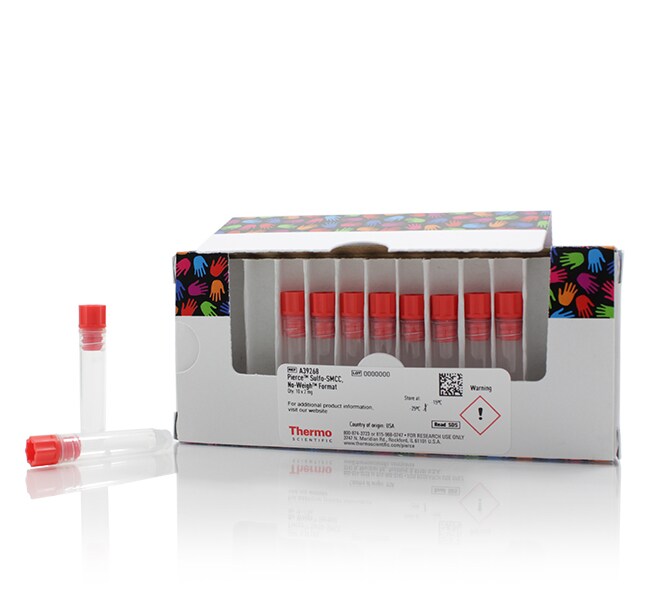
Sulfo-SMCC(磺基琥珀酰亚胺 4-(N-马来酰亚胺甲基)环己烷-1-羧酸盐),No-Weigh™ 规格
Thermo Scientific Pierce Sulfo-SMCC No-Weigh 规格是一种水溶性胺对巯基交联剂,含有 NHS 酯和马来酰亚胺反应性基团,位于中等长度环己烷间隔臂(8.3 埃了解更多信息
Have Questions?
更改视图

| 货号 | 数量 |
|---|---|
| A39268 | 10 x 2 mg |
| 22322 | 50 mg |
| 22122 | 1 g |
货号 A39268
价格(CNY)
1,815.00
飞享价
Ends: 31-Dec-2026
2,630.00共减 815.00 (31%)
Each
数量:
10 x 2 mg
价格(CNY)
1,815.00
飞享价
Ends: 31-Dec-2026
2,630.00共减 815.00 (31%)
Each
Thermo Scientific Pierce Sulfo-SMCC No-Weigh 规格是一种水溶性胺对巯基交联剂,含有 NHS 酯和马来酰亚胺反应性基团,位于中等长度环己烷间隔臂(8.3 埃)的相对两端。
Sulfo-SMCC No-Weigh 规格的特点:
•反应性基团:sulfo-NHS 酯和马来酰亚胺
•可与以下基团发生反应:氨基和巯基基团
• 具有水溶性(与 SMCC 相比),因此可在生理溶液中进行交联
•高纯度结晶试剂可用于生成高纯度马来酰亚胺活化衍生物
• 环己烷桥可为马来酰亚胺基团提供额外稳定性,使 Sulfo-SMCC 成为马来酰亚胺活化蛋白的理想交联剂。马来酰亚胺基团在 4°C 下于 0.1 M 磷酸钠缓冲液(pH 值 7)中可保持稳定 64 小时。
磺基琥珀酰亚胺-4-(N-马来酰亚胺甲基)环己烷-1-羧酸盐 (Sulfo-SMCC) 是一种不可裂解和具有膜不可透过性的交联剂。它含有一个胺反应性 N-羟基琥珀酰亚胺(NHS 酯)和巯基反应性马来酰亚胺基团。NHS 酯在 pH 值 7-9 条件下与伯胺反应形成稳定的酰胺键。马来酰亚胺在 pH 值 6.5-7.5 条件下与巯基反应形成稳定的硫醚键。由于间隔臂中存在环己烷桥,Sulfo-SMCC 和 SMCC 的马来酰亚胺基团可在 pH 值高达 7.5 条件下保持稳定。因为它包含亲水磺酰基团,Sulfo-SMCC 在水和许多常用缓冲液中溶解多达 ∼10 mM,因此避免了使用可能会破坏蛋白结构的有机溶剂。
应用:
•抗体酶标记 - 酶和抗体特异性均可保留
• 通过一步或两步交联反应创建特异性生物偶联
•创建巯基反应性、马来酰亚胺活化载体蛋白,以用于偶联半抗原
规格:
按照最高规格生产 Sulfo-SMCC,以生产高特异性生物偶联物和马来酰亚胺活化蛋白,确保数据完整性并提供较高程度的交联一致性。每批 Sulfo-SMCC 都经过检测以符合以下最低质量标准。
• 鉴别:IR 扫描仅显示具有 Sulfo-SMCC 交联剂的结构和官能团特征的峰
•纯度:≥90%(通过 NMR 法定量,交联剂纯度的较高标准)
• 溶解度:≥10 mg/mL(溶于去离子水)
产品参考:
交联剂应用指南 -- 检索本产品的最新参考文献
相关产品
Pierce™优级 Sulfo-SMCC(磺基琥珀酰亚胺 4-(N-马来酰亚胺甲基)环己烷-1-羧酸盐)
SM(PEG)4(聚乙二醇化 SMCC 交联剂)
Sulfo-SMCC No-Weigh 规格的特点:
•反应性基团:sulfo-NHS 酯和马来酰亚胺
•可与以下基团发生反应:氨基和巯基基团
• 具有水溶性(与 SMCC 相比),因此可在生理溶液中进行交联
•高纯度结晶试剂可用于生成高纯度马来酰亚胺活化衍生物
• 环己烷桥可为马来酰亚胺基团提供额外稳定性,使 Sulfo-SMCC 成为马来酰亚胺活化蛋白的理想交联剂。马来酰亚胺基团在 4°C 下于 0.1 M 磷酸钠缓冲液(pH 值 7)中可保持稳定 64 小时。
磺基琥珀酰亚胺-4-(N-马来酰亚胺甲基)环己烷-1-羧酸盐 (Sulfo-SMCC) 是一种不可裂解和具有膜不可透过性的交联剂。它含有一个胺反应性 N-羟基琥珀酰亚胺(NHS 酯)和巯基反应性马来酰亚胺基团。NHS 酯在 pH 值 7-9 条件下与伯胺反应形成稳定的酰胺键。马来酰亚胺在 pH 值 6.5-7.5 条件下与巯基反应形成稳定的硫醚键。由于间隔臂中存在环己烷桥,Sulfo-SMCC 和 SMCC 的马来酰亚胺基团可在 pH 值高达 7.5 条件下保持稳定。因为它包含亲水磺酰基团,Sulfo-SMCC 在水和许多常用缓冲液中溶解多达 ∼10 mM,因此避免了使用可能会破坏蛋白结构的有机溶剂。
应用:
•抗体酶标记 - 酶和抗体特异性均可保留
• 通过一步或两步交联反应创建特异性生物偶联
•创建巯基反应性、马来酰亚胺活化载体蛋白,以用于偶联半抗原
规格:
按照最高规格生产 Sulfo-SMCC,以生产高特异性生物偶联物和马来酰亚胺活化蛋白,确保数据完整性并提供较高程度的交联一致性。每批 Sulfo-SMCC 都经过检测以符合以下最低质量标准。
• 鉴别:IR 扫描仅显示具有 Sulfo-SMCC 交联剂的结构和官能团特征的峰
•纯度:≥90%(通过 NMR 法定量,交联剂纯度的较高标准)
• 溶解度:≥10 mg/mL(溶于去离子水)
产品参考:
交联剂应用指南 -- 检索本产品的最新参考文献
相关产品
Pierce™优级 Sulfo-SMCC(磺基琥珀酰亚胺 4-(N-马来酰亚胺甲基)环己烷-1-羧酸盐)
SM(PEG)4(聚乙二醇化 SMCC 交联剂)
仅供科研使用。不可用于诊断程序。
规格
细胞渗透性否
描述Sulfo-SMCC
形式实心
标记方法化学标记
分子量436.37
聚乙二醇化否
产品线No-Weigh
数量10 x 2 mg
反应一部分马来酰亚胺、Sulfo-NHS 酯
运输条件环境
溶解度水
间隔臂长8.3 Å
水溶性是
化学反应性胺-巯基
可裂解否
交联剂类型异型双功能团试剂
产品规格标准品,一次性使用,优级
产品类型交联剂
间隔子短 (<10 Å)
Unit SizeEach
内容与储存
接收后在 -20°C 下干燥储存。