Search

Invitrogen™
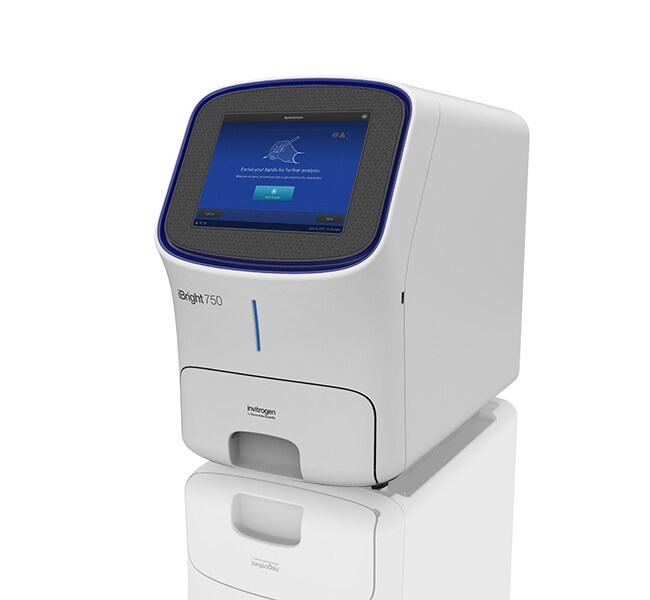
iBright™ CL750 成像系统
使用 Invitrogen iBright CL750 成像系统轻松高效地采集 Western 印迹和凝胶图像并进行数据分析。此系统支持与化学发光 Western 印迹了解更多信息
| 货号 | 数量 |
|---|---|
| A44116 | 1 System |
货号 A44116
价格(CNY)
-
数量:
1 System
使用 Invitrogen iBright CL750 成像系统轻松高效地采集 Western 印迹和凝胶图像并进行数据分析。此系统支持与化学发光 Western 印迹、荧光染色核酸凝胶、荧光染色蛋白凝胶和比色染色蛋白凝胶相关的基本成像应用。
为了扩展功能,我们还提供更强大的 iBright CL1500 成像系统和 iBright FL1500 成像系统。iBright CL1500 成像系统支持与化学发光和比色 Western 印迹相关的主要成像应用,除此之外,还支持荧光染色核酸凝胶、荧光染色蛋白凝胶、比色染色蛋白凝胶和比色膜染色成像。iBright FL1500 成像系统具有与 iBright CL1500 成像系统相同的成像能力,但还提供荧光 Western 印迹成像功能。
了解 iBright 成像系统的所有型号和特点›
iBright CL750 成像系统的特点:
• 910 万像素冷光 CCD 相机 — 高灵敏度和宽动态范围,有助于检测样本中的细微差异
• 智能曝光技术 — 快速确定较佳曝光时间,无需重复曝光即可获得理想信号
• 宽动态范围成像* — 智能系列 HDR 将优化的短曝光和长曝光结合在单个 HDR 图像中,以捕获扩展线性动态范围并提供优质非饱和数据,从而改善定量
• 简单操作界面 — 12.1英寸电容式触摸屏界面上的功能和布局简洁合理,给用户以流畅的成像体验
• 22.5 x 18.0 cm 视野 — 大视野实现高通量成像(一次可拍摄多达四个小型印迹或两个中型印迹的图像)
• 绿色 LED 透射仪 — 有效地激发常用 DNA 染料,如溴化乙锭和 SYBR Green 染料,可替代紫外线透射仪
• 可扩展成像应用* — 使用优化的成像通道和板载分析工作流程捕获和分析单孔或多孔细胞培养板上可见、化学发光或荧光染色的菌落
• 灵活的连接 — 通过以太网连接、Wi-Fi(含选配附件)、USB 导出捕获的图像或直接导出到 Connect 云端平台
• 多图像分析选项 — 使用仪器上的软件直接执行光密度测定、定量和归一化,或使用 iBright 分析软件(可在桌面和云端版本中使用)进行更加深入的分析
*某些功能通过固件实现。确保您的系统运行新的固件版本。
下载新的固件和分析软件 ›
为了扩展功能,我们还提供更强大的 iBright CL1500 成像系统和 iBright FL1500 成像系统。iBright CL1500 成像系统支持与化学发光和比色 Western 印迹相关的主要成像应用,除此之外,还支持荧光染色核酸凝胶、荧光染色蛋白凝胶、比色染色蛋白凝胶和比色膜染色成像。iBright FL1500 成像系统具有与 iBright CL1500 成像系统相同的成像能力,但还提供荧光 Western 印迹成像功能。
了解 iBright 成像系统的所有型号和特点›
iBright CL750 成像系统的特点:
• 910 万像素冷光 CCD 相机 — 高灵敏度和宽动态范围,有助于检测样本中的细微差异
• 智能曝光技术 — 快速确定较佳曝光时间,无需重复曝光即可获得理想信号
• 宽动态范围成像* — 智能系列 HDR 将优化的短曝光和长曝光结合在单个 HDR 图像中,以捕获扩展线性动态范围并提供优质非饱和数据,从而改善定量
• 简单操作界面 — 12.1英寸电容式触摸屏界面上的功能和布局简洁合理,给用户以流畅的成像体验
• 22.5 x 18.0 cm 视野 — 大视野实现高通量成像(一次可拍摄多达四个小型印迹或两个中型印迹的图像)
• 绿色 LED 透射仪 — 有效地激发常用 DNA 染料,如溴化乙锭和 SYBR Green 染料,可替代紫外线透射仪
• 可扩展成像应用* — 使用优化的成像通道和板载分析工作流程捕获和分析单孔或多孔细胞培养板上可见、化学发光或荧光染色的菌落
• 灵活的连接 — 通过以太网连接、Wi-Fi(含选配附件)、USB 导出捕获的图像或直接导出到 Connect 云端平台
• 多图像分析选项 — 使用仪器上的软件直接执行光密度测定、定量和归一化,或使用 iBright 分析软件(可在桌面和云端版本中使用)进行更加深入的分析
*某些功能通过固件实现。确保您的系统运行新的固件版本。
下载新的固件和分析软件 ›
仅供科研使用。不可用于诊断程序。
规格
相机类型CCD
尺寸68 x 38 x 60 cm
领域22.5 cm x 18.0 cm (WxD)
产品规格图像格式:G2i(专有)、TIFF、JPG、PNG、PDF
包括Imaging Sample Blot, Preinstalled Filter Sets, Safe Imager Viewing Glasses, Orange Contrast Tray for Visible Protein Gel Imaging, iBright Imager Quick Start Guide
数量1 System
分辨率910 万像素
运输条件室温
软件iBA Analysis Software
重量(英制)110 lb.
重量(公制)50 kg
适用于(应用)Chemiluminescent Western Blot Imaging
产品线iBright
产品类型成像系统
Unit SizeEach